What is Infrastructure Automation? A Complete Guide for Modern IT Operations
Infrastructure automation automates IT operations, provisioning and deployment. Learn tools, benefits and implementation best practices today.
Infrastructure automation represents a transformational approach to managing IT operations, eliminating manual processes and enabling organizations to deploy, manage, and scale infrastructure efficiently. Modern businesses increasingly recognize that manually configuring servers, managing networks and handling infrastructure updates consumes valuable time while introducing human errors. Infrastructure automation involves using software and tools to automatically handle infrastructure provisioning, configuration, deployment, and management tasks that traditionally required manual intervention.
The question "What is Infrastructure Automation?" addresses a critical challenge facing IT teams today. As organizations scale operations across cloud platforms, on-premise data centers and hybrid environments, manual infrastructure management becomes increasingly unsustainable. DevOps services streamline these processes by implementing automation frameworks that enable teams to deploy infrastructure consistently, securely and rapidly. Organizations leveraging infrastructure automation report significant improvements in operational efficiency, reduced deployment times, lower error rates and accelerated time-to-market for new applications and services.
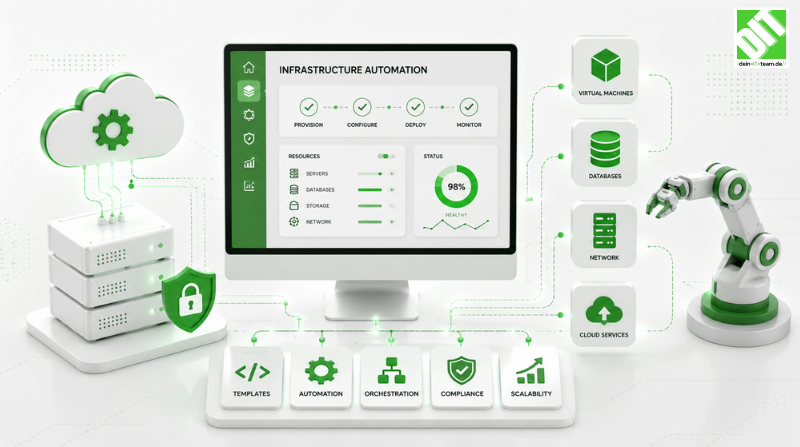
Infrastructure automation encompasses various practices including Infrastructure-as-Code, configuration management, continuous deployment pipelines and automated monitoring. Understanding what is infrastructure automation fundamentally changes how organizations approach IT operations, shifting from reactive maintenance to proactive, scalable infrastructure management. This comprehensive guide explores infrastructure automation in depth, examining core concepts, benefits, tools, implementation strategies and best practices enabling modern IT operations to achieve unprecedented efficiency and reliability.
Key Takeaways
Infrastructure automation utilizes software tools automating manual infrastructure tasks reducing human errors and operational burden.
Infrastructure automation encompasses Infrastructure-as-Code, configuration management, deployment pipelines and monitoring enabling consistent, repeatable operations.
Automated infrastructure deployment dramatically reduces provisioning time from hours or days to minutes enabling rapid scaling.
Benefits include cost reduction, improved reliability, enhanced security, faster deployment and improved team productivity.
Infrastructure automation tools like Terraform, Ansible, Chef and Kubernetes enable managing infrastructure at scale efficiently.
Implementation requires establishing automation frameworks, version control, testing procedures and monitoring systems.
Organizations overcoming infrastructure automation challenges through proper planning, team training and gradual implementation achieve significant operational improvements.
Modern IT operations increasingly depend on infrastructure automation for competitive advantage and operational excellence.
Infrastructure automation enables organizations focusing on strategic initiatives rather than routine infrastructure management tasks.
Future infrastructure automation trends include increased artificial intelligence integration, enhanced security automation and improved cloud-native capabilities.
Understanding Infrastructure Automation
What Is Infrastructure Automation?
Infrastructure automation refers to using software tools and frameworks to automatically execute infrastructure management tasks eliminating manual intervention. Rather than administrators manually logging into servers, configuring network settings, installing software and managing infrastructure updates, automation frameworks handle these tasks automatically based on defined policies and configurations. This approach enables consistent, repeatable infrastructure deployment across thousands of servers, cloud instances and network devices simultaneously.
Infrastructure automation operates at multiple levels. At the lowest level, it automates basic tasks like server provisioning and configuration. At higher levels, it orchestrates complex workflows including application deployment, load balancing, scaling and monitoring. Modern infrastructure automation integrates with cloud platforms enabling automatic infrastructure creation and destruction based on application requirements, creating truly dynamic, responsive IT environments.
The term "what is infrastructure automation" encompasses a philosophy shift in IT operations. Rather than managing individual servers and devices, teams define infrastructure requirements through code and allow automation systems to translate those requirements into actual infrastructure deployments. This code-driven approach introduces versioning, testing and collaboration capabilities to infrastructure management previously reserved for software development.
Why Infrastructure Automation Matters
Modern organizations face unprecedented infrastructure management complexity. Cloud platforms offer virtually unlimited resources but require sophisticated management. Containers and microservices enable scalable applications but demand orchestrated infrastructure. Distributed teams operate across multiple geographic regions requiring consistent infrastructure deployment. Infrastructure automation addresses these challenges by enabling teams to manage complexity at scale.
Automation eliminates time-consuming manual tasks freeing teams for strategic work. Provisioning new servers, updating configurations, applying patches and managing infrastructure changes consume significant time when performed manually. Automation completes these tasks in minutes rather than hours, enabling faster response to business needs. Teams redirect time from routine maintenance to innovation, security improvements and architecture planning.
Consistency represents another critical benefit. Manual infrastructure management introduces variability—different administrators configure servers differently, patches apply inconsistently and policies implement unevenly. Automation ensures identical configurations across infrastructure, reducing unexpected behaviors and security vulnerabilities. Consistency improves troubleshooting since known configurations enable faster problem identification and resolution.
Core Components of Infrastructure Automation
Infrastructure-as-Code
Infrastructure-as-Code represents the foundation of modern infrastructure automation. Rather than manually configuring infrastructure, teams write code defining infrastructure specifications. Tools like Terraform and CloudFormation translate this code into actual infrastructure resources. Version control systems track infrastructure changes enabling rollback capabilities. Code review processes ensure quality and security before infrastructure deployment.
Infrastructure-as-Code provides multiple advantages. Teams version control infrastructure changes enabling tracking who changed what and when. Code enables testing infrastructure configurations before deployment. Documentation becomes executable—infrastructure code serves as definitive documentation of actual deployments. Reproducibility improves dramatically—deploying identical infrastructure across multiple environments becomes trivial.
Configuration Management
Configuration management automates applying and maintaining consistent configurations across infrastructure. Tools like Ansible, Chef and Puppet define desired system states and automatically achieve those states on target systems. When configurations drift from desired states, configuration management tools detect and correct drift automatically ensuring consistent operations.
Configuration management handles complex requirements including package installation, service configuration, security hardening and application deployment. Teams define configurations once and apply across thousands of systems automatically. Updates and patches apply consistently across infrastructure without manual intervention on individual systems. Configuration management enables predictable, reliable infrastructure reducing unexpected failures from misconfiguration.
Continuous Deployment and Orchestration
Continuous deployment pipelines automatically move applications and infrastructure changes through development, testing and production environments. Code commits trigger automated testing, validation and deployment processes. Orchestration tools coordinate complex workflows involving multiple systems, services and dependencies. Kubernetes has become the standard for container orchestration while workflow engines handle complex multi-step deployments.
These systems enable rapid deployment while maintaining stability. Automated testing catches issues before production deployment. Automated rollback capabilities enable quick recovery if deployments introduce problems. Gradual deployment strategies like canary deployments reduce risk by deploying changes to subset of infrastructure initially before full rollout.
Monitoring and Remediation
Automation extends beyond deployment to ongoing operations. Monitoring systems continuously assess infrastructure health and application performance. Alerting systems notify teams of issues requiring attention. Automated remediation systems attempt resolving issues automatically without human intervention. These capabilities enable self-healing infrastructure that automatically recovers from common failures.
Monitoring automation collects metrics, logs and traces across distributed infrastructure. Analytics identify patterns and anomalies indicating problems. Automated responses can restart failed services, scale capacity when demand increases or trigger incident response procedures. This shift from reactive to proactive operations dramatically improves reliability.
Benefits of Infrastructure Automation
Reduced Operational Costs
Infrastructure automation significantly reduces operational expenses through labor savings and resource optimization. Automation eliminates time-consuming manual tasks enabling smaller teams managing larger infrastructure. Tools automate routine work allowing skilled personnel focusing on strategic initiatives providing greater business value than manual maintenance.
Resource optimization reduces infrastructure costs. Automated scaling ensures infrastructure matches application demands—over-provisioning wastes resources while under-provisioning causes performance issues. Automation identifies unused resources and enables right-sizing infrastructure. Cost monitoring automation highlights expensive resources enabling optimization opportunities.
Improved Reliability and Consistency
Automated infrastructure deployment ensures consistent configurations across all systems. Consistency reduces unexpected failures from misconfigurations or missed updates. Automated testing catches issues before production deployment. Self-healing capabilities enable infrastructure automatically recovering from common failures without human intervention.
Reliability improves measurably through reduced downtime and faster incident resolution. Automated monitoring detects issues immediately enabling rapid response. Automated remediation resolves many issues automatically. When human intervention required, automated diagnostics provide detailed information accelerating troubleshooting. Mean time to recovery decreases substantially improving overall system availability.
Faster Deployment and Time-to-Market
Infrastructure automation dramatically accelerates deployment timelines. What previously required hours or days of manual work now completes in minutes. Teams deploy applications and infrastructure changes multiple times daily instead of monthly releases. This rapid deployment velocity enables faster response to market opportunities and competitive pressures.
Faster deployment enables continuous improvement. Organizations deploy changes frequently enabling rapid iteration based on user feedback. A/B testing becomes practical enabling data-driven improvements. Quick rollback capabilities enable experimenting with new features confidently knowing problems can reverse immediately.
Enhanced Security
Infrastructure automation enables consistent security implementations across infrastructure. Security policies defined in code apply uniformly across all systems. Automation enforces security configurations preventing deviations. Patch automation applies security updates immediately reducing vulnerability exposure windows.
Compliance automation enforces regulatory requirements automatically. Audit logging captures all infrastructure changes enabling compliance documentation. Configuration scanning identifies non-compliant configurations triggering remediation. Security automation reduces manual compliance work freeing security teams for strategic security improvements.
Infrastructure Automation Tools and Technologies
Popular Infrastructure Automation Platforms
Terraform represents the leading Infrastructure-as-Code tool enabling defining infrastructure across cloud providers using HCL language. Terraform manages infrastructure state enabling consistent deployments and safe updates. CloudFormation provides AWS-native infrastructure automation while Azure Resource Manager serves Microsoft Azure environments. Modern organizations increasingly rely on Cloud integration services to connect these infrastructure automation systems with existing applications and platforms enabling seamless operations across diverse environments.
Configuration management tools like Ansible enable agentless configuration automation while Chef and Puppet provide agent-based approaches. Ansible appeals through simplicity while Chef and Puppet offer advanced features for complex environments. Ansible executes commands over SSH while Chef and Puppet maintain agents on managed systems.
Container orchestration platforms led by Kubernetes automate container deployment, scaling and management. Kubernetes handles complex container networking, storage and application lifecycle management. Docker Swarm provides simpler alternative for smaller deployments. Container orchestration enables consistent application deployment across diverse infrastructure.
Emerging Technologies
Artificial intelligence integration into infrastructure automation enables predictive capabilities. Machine learning models predict failures before they occur enabling proactive remediation. AI analyzes patterns identifying optimization opportunities. Intelligent automation handles increasingly complex scenarios reducing human oversight requirements.
GitOps approaches treat infrastructure definitions like application code enabling Git workflows for infrastructure management. Teams manage infrastructure through pull requests with automated validation and deployment. GitOps enables audit trails tracking all infrastructure changes through Git history.
API Development and Integration
API development services enable connecting automation platforms with existing systems and applications. APIs expose infrastructure automation capabilities to applications enabling programmatic infrastructure provisioning. Microservices architectures heavily depend on infrastructure APIs for dynamic resource provisioning.
Integration platforms connect multiple automation tools into cohesive workflows. API orchestration enables complex multi-step processes involving various systems. Webhook integrations enable event-driven automation responding to application events with infrastructure changes.
Implementation Best Practices
Planning and Assessment
Start with thorough assessment of current infrastructure and operations. Identify manual processes consuming significant time or introducing errors. Prioritize automation opportunities by impact and complexity. Quick wins building momentum and demonstrating value should be prioritized initially.
Establish clear automation objectives aligned with business goals. Define success metrics measuring efficiency improvements, cost reduction and reliability enhancements. Create automation strategy considering current tools, team skills and budget constraints.
Establishing Version Control and Testing
Infrastructure code requires same rigor as application code. Version control systems track all infrastructure changes enabling rollback capabilities. Code review processes ensure quality before deployment. Branching strategies enable team collaboration while preventing premature changes affecting production.
Testing infrastructure code catches errors before production deployment. Unit tests validate configuration syntax. Integration tests verify infrastructure behaves correctly. Policy-as-Code tests ensure configurations meet compliance requirements. Automated testing catches errors early reducing deployment failures.
Gradual Implementation
Avoid attempting complete automation transformation immediately. Prioritize critical systems initially, gradually expanding automation. Pilot projects demonstrate value enabling organizational buy-in for broader initiatives. Gradual implementation reduces risk and enables learning from early projects.
Start with well-defined, repeatable processes easier to automate. Successful early wins build confidence enabling tackling more complex automation. Team learning improves as they gain automation experience. Gradual approaches enable course correction before investing heavily in wrong approaches.
Team Training and Skills Development
Infrastructure automation requires different skills than traditional operations. Teams need programming fundamentals, cloud platform knowledge and automation tool expertise. Provide formal training on selected automation tools. Encourage learning through hands-on labs and experimentation.
Create documentation and runbooks capturing automation knowledge. Internal knowledge sharing sessions enable learning from team members with particular expertise. Consider hiring specialized skills if internal capabilities insufficient. Investment in team development ensures long-term automation success.
Common Challenges and Solutions
Skills and Knowledge Gaps
Many organizations lack infrastructure automation expertise preventing effective adoption. Solution involves investing in team training and development. Hiring experienced personnel with automation backgrounds accelerates capability building. Consulting firms help organizations implement automation frameworks and train internal teams.
Starting simple ensures early success while teams develop expertise. Automation expertise develops gradually through hands-on experience. External resources through consultants or managed service providers bridge capability gaps while internal teams develop expertise.
Tool Selection Complexity
Selecting appropriate automation tools from numerous options challenges many organizations. Solution involves evaluating tools based on specific requirements. Consider tool maturity, community support, integration capabilities and learning curve. Pilot evaluation prevents committing heavily to inappropriate tools.
No single tool perfectly handles all scenarios. Organizations often use multiple complementary tools creating integrated automation platforms. Evaluating tools against actual requirements rather than feature checklists enables better decisions.
Legacy System Integration
Legacy systems lacking modern APIs resist automation. Solution involves identifying integration approaches for legacy systems. Some legacy systems support standard protocols enabling API development. Others require custom integration solutions. Gradual modernization enables improving integrations over time.
Some organizations maintain parallel systems during transitions. Automation gradually migrates workloads to modern platforms while legacy systems continue supporting remaining workloads. Integration automation bridges legacy and modern systems during transitions.
Conclusion
Infrastructure automation fundamentally transforms how modern organizations manage IT operations. What is infrastructure automation ultimately answers how organizations achieve operational excellence, cost efficiency and rapid innovation. Automation eliminates manual processes, ensures consistency, reduces errors and enables teams focusing on strategic initiatives. Organizations embracing infrastructure automation gain competitive advantages through faster deployment, improved reliability and enhanced security.
Successful infrastructure automation requires thoughtful planning, appropriate tool selection, team skill development and gradual implementation. Quick wins build momentum and demonstrate value enabling broader automation adoption. Organizations investing in infrastructure automation capabilities position themselves for sustained growth and operational excellence in increasingly complex IT environments.
For deeper understanding of automation extending beyond infrastructure, explore What is Backup Automation? Benefits, Types, and Best Practices for 2026, which details automation approaches for critical data protection. This comprehensive resource explains how backup automation complements infrastructure automation creating comprehensive operational resilience.
Custom software development services can extend infrastructure automation capabilities through custom solutions addressing unique organizational requirements. Organizations with specialized needs benefit from tailored automation implementations beyond off-the-shelf tool capabilities.
What is infrastructure automation ultimately represents investment in organizational capability enabling sustainable operations at scale. Taking time to implement automation thoughtfully ensures maximum value and long-term success supporting business objectives.
Frequently Asked Questions
What exactly does infrastructure automation do?
Infrastructure automation automatically executes infrastructure management tasks including provisioning, configuration, deployment and monitoring. It eliminates manual server configuration, patch management and infrastructure updates replacing them with automated workflows. Automation ensures consistent configurations across infrastructure while dramatically reducing required manual work.
How does infrastructure automation differ from traditional operations?
Traditional operations involve manual server configuration, updates and management. Infrastructure automation defines infrastructure through code enabling automatic deployment. Automation provides version control, testing capabilities and rollback options unavailable in manual approaches. Automation scales to thousands of systems while maintaining consistency impossible manually.
What tools are needed for infrastructure automation?
Infrastructure automation requires Infrastructure-as-Code tools like Terraform, configuration management tools like Ansible or Chef, container orchestration platforms like Kubernetes, and monitoring systems. Organizations select tools based on their environments and requirements. Most organizations use multiple complementary tools creating integrated automation platforms.
How long does infrastructure automation implementation take?
Implementation timelines vary based on organization size and automation scope. Simple automation projects complete in weeks while comprehensive transformation requires months or years. Gradual implementation approaches enable starting immediately with quick wins while building toward comprehensive automation. Phased approaches allow learning and course correction throughout implementation.
What skills do teams need for infrastructure automation?
Infrastructure automation requires programming fundamentals, cloud platform knowledge and specific tool expertise. Teams need understanding of network concepts, storage systems and application deployment. Development mindset helps—treating infrastructure like code introduces programming practices to operations. Training and hands-on experience develop necessary skills over time.
How much cost savings result from infrastructure automation?
Cost savings vary by organization but typically range from 20-50% through labor reduction, resource optimization and eliminated downtime. Labor savings result from eliminating manual tasks enabling smaller teams managing larger infrastructure. Resource optimization reduces cloud spending through intelligent scaling and waste elimination.
Can infrastructure automation work with legacy systems?
Legacy systems lack modern automation capabilities but often support standard protocols enabling integration. Custom integration solutions bridge legacy systems with automation platforms. Gradual modernization improves automation integration. Organizations often maintain parallel systems during transitions integrating gradually over time.
How does infrastructure automation improve security?
Automation enforces consistent security configurations across infrastructure. Security policies defined in code apply uniformly preventing deviations. Patch automation applies security updates immediately reducing vulnerability windows. Compliance automation ensures regulatory requirements compliance while reducing manual work.
What's the difference between infrastructure automation and containerization?
Infrastructure automation manages server and network provisioning while containerization packages applications. Containers provide consistent application environments while infrastructure automation provisions resources those containers run on. Both technologies complement each other enabling modern cloud-native operations.
How do we start with infrastructure automation?
Start by assessing current infrastructure identifying high-impact manual processes. Prioritize quick wins building momentum. Select appropriate tools evaluating against specific requirements. Invest in team training and skills development. Implement gradually starting with simple processes enabling teams developing expertise while demonstrating value.