Real Time Data Processing for Businesses: Benefits, Use Cases, and Challenges
Learn how real time data processing works, where it pays off, and what to watch for. Benefits, use cases, architecture, and challenges explained.
Real time data processing is the practice of collecting, analyzing, and acting on data within milliseconds or seconds of it being created, instead of waiting for it to pile up and run in a scheduled batch. A payment gets scored for fraud before it clears. A delivery route changes while the driver is still on the road. A machine on a factory floor is flagged before it fails.
If your business still relies on reports that show what happened yesterday, you are making today's decisions with old information. That gap is what real time data processing closes. This guide explains what it is, how it works under the hood, where it delivers value, and which problems tend to catch teams off guard. It's written for decision makers and technical leads who are weighing whether to invest, and how.
What Is Real Time Data Processing?
Real time data processing means handling data continuously as it arrives and producing results fast enough that people or systems can act on them immediately. The defining feature is low latency, the time between an event happening and your system responding to it.
"Real time" isn't one fixed speed. A stock trading engine may need responses in microseconds. A retail dashboard might be perfectly fine with a two second refresh. What matters is that the delay is short enough that the result is still useful when it arrives.
Real Time vs Near Real Time vs Batch Processing
These three terms get mixed up constantly, so it helps to separate them.
| Approach | Typical latency | How data is handled | Typical example |
| Batch processing | Minutes to hours or longer | Data is collected, then processed in scheduled jobs | Nightly sales reports, payroll runs |
| Near real time | Seconds to a few minutes | Data is processed in small, frequent micro batches | Inventory dashboards, marketing analytics |
| Real time | Milliseconds to seconds | Each event is processed as it arrives | Fraud detection, live vehicle tracking, sensor alerts |
Most companies don't need everything in real time, and that's fine. Batch is still the right choice for work like month end accounting or large historical analysis. The skill is knowing which processes genuinely lose value when they are delayed.
How Real Time Data Processing Works
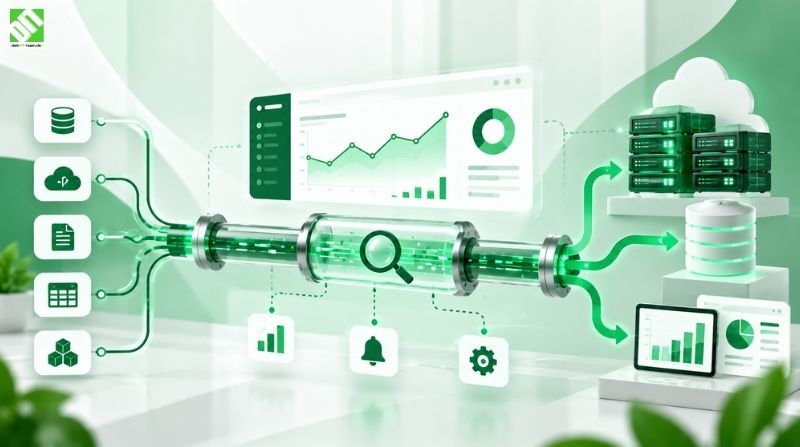
At a high level, a real time pipeline moves data through five stages. The tools differ from project to project, but the pattern stays remarkably consistent.
Ingestion. Data enters the system from its sources: application events, user clicks, IoT sensors, transactions, logs, third party services, or databases emitting change events.
Transport. The data is passed into a streaming layer or message broker that buffers it, keeps it in order, and delivers it reliably to whatever needs it.
Processing. A stream processing engine filters, enriches, aggregates, or analyzes each event, often comparing it against recent history or a machine learning model.
Storage. Results and raw events are written to databases, caches, or data lakes, depending on whether they're needed instantly, shortly after, or for long term analysis.
Action and delivery. The output reaches its destination: a live dashboard, an alert, an automated workflow, a customer facing screen, or another system through an interface.
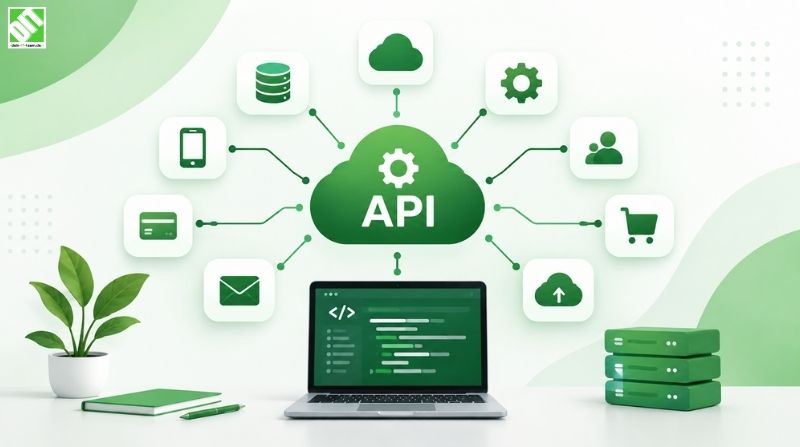
The first stage is where many projects quietly succeed or fail. Real time systems are only as good as the data feeding them, and most of that data arrives through connections between systems. Well designed, secure interfaces matter here, which is why many teams invest early in API development and integration so that events flow cleanly from source applications into the pipeline without brittle workarounds.
Core Architecture Components
You don't need to memorize product names to understand a real time architecture. It helps to think in terms of roles.
| Component | What it does | Common technology category |
| Data sources | Generate events | Applications, sensors, databases, payment systems |
| Message broker or event streaming platform | Receives, orders, and distributes events | Distributed log and queue systems |
| Stream processing engine | Transforms and analyzes events in motion | Stream processing frameworks |
| Serving and storage layer | Holds results for fast reads and long term analysis | In memory stores, time series databases, data lakes, warehouses |
| Visualization and action layer | Presents or triggers on results | Dashboards, alerting tools, workflow engines |
The exact stack depends on your volume, latency target, budget, existing systems, and the skills your team already has. There's no universally best combination, and anyone who claims otherwise is probably selling one.
Event Driven Architecture
Most modern real time systems are built around events. An event is simply a record that something happened: an order was placed, a temperature crossed a threshold, a driver arrived. Instead of systems repeatedly asking each other "anything new?", they publish events and let interested systems subscribe. This reduces coupling, scales more gracefully, and makes it easier to add new consumers later without rewriting what already works.
Stream Processing and Windowing
Streams never end, so you can't wait for "all the data" before calculating something. Stream processors use windows instead: a sliding five minute average of transactions, for example, or a count of failed logins per user in the last sixty seconds. Choosing window types and handling events that arrive late or out of order are some of the subtler design decisions in this field.
Why Integration Comes First
A streaming platform doesn't deliver much on its own if your CRM, ERP, and operational databases still talk to each other through nightly exports. Connecting those systems in a way that keeps data moving is a topic of its own, and we cover the reasoning in more depth in our article on why businesses need real time data integration. The short version: processing speed only helps if the data reaches the processor in the first place.
Benefits of Real Time Data Processing
The advantages are easy to list, but they only matter when tied to a specific decision in your business.
Faster, better informed decisions. When teams see current conditions instead of last week's summary, they can respond while there's still something to change. A stock shortage spotted in the morning can be fixed before the afternoon rush.
Reduced risk and fraud losses. Suspicious activity can be flagged while a transaction is in flight, not days later during a review. The same principle applies to security events and compliance monitoring.
Better customer experience. Live order tracking, accurate availability, instant personalization, and responsive support all depend on fresh data. Customers notice when information is stale, even if they can't say why.
Operational efficiency. Continuous monitoring catches bottlenecks, equipment drift, and process errors early. Fixing a small problem is almost always cheaper than recovering from a big one.
Automation that actually works. Workflows that trigger on live events (reordering stock, rerouting a shipment, escalating a ticket) remove manual checking and cut delays between "something happened" and "someone did something about it."
A stronger foundation for AI. Many machine learning use cases, such as recommendations, anomaly detection, and demand forecasting, perform better when models are fed current signals rather than stale snapshots.
Real Time Data Processing Use Cases by Industry
The examples below are illustrative scenarios that show how the technology is typically applied. They are not specific client projects.
Finance and Banking
Card transactions can be scored against behavioral patterns in a fraction of a second, allowing a system to approve, decline, or challenge a payment before the customer leaves the checkout page. Trading platforms, risk monitoring, and anti money laundering checks also depend on streaming data.
Retail and Ecommerce
Live inventory synchronization prevents overselling across web shops, marketplaces, and physical stores. Dynamic pricing, personalized product recommendations, and abandoned cart triggers all rely on reading customer behavior as it happens.
Logistics and Transportation
A fleet management platform ingests GPS positions, traffic conditions, and delivery status updates continuously. Dispatchers see where every vehicle is, estimated arrival times update automatically, and routes can be adjusted when conditions change. The same pattern applies to ride booking and mobility apps, where matching riders with nearby drivers is fundamentally a streaming problem.
Manufacturing and Industrial IoT
Sensors on production equipment emit vibration, temperature, and pressure readings every few seconds. A stream processor compares them against normal ranges and raises an alert when a pattern suggests a failing bearing or an overheating motor. This is the foundation of predictive maintenance, and it is one of the clearest places where IoT development and real time processing work hand in hand, since the quality of the result depends on reliable device connectivity, data collection, and device management.
Healthcare
Remote patient monitoring devices can stream vital signs to clinicians, with automatic alerts when readings leave a safe range. Hospitals also use live data for bed management, staffing, and equipment tracking. Because health data is sensitive, security and privacy requirements shape the design from the start.
Energy and Utilities
Smart meters and grid sensors produce constant readings. Real time analysis helps balance load, detect outages quickly, and integrate variable renewable generation.
Telecommunications
Network performance data is analyzed continuously to detect congestion, dropped connections, and unusual traffic, so operators can intervene before customers complain.
Challenges of Real Time Data Processing
This is the part that vendor brochures tend to skip. Real time systems are harder to build and run than batch systems, and the difficulties are mostly predictable.
Latency and throughput trade-offs. Pushing latency lower usually costs more in infrastructure and engineering effort. You need a clear, business based target, not a vague desire for "as fast as possible."
Data quality. Bad data moves just as quickly as good data. Duplicate events, missing fields, inconsistent formats, and out of order messages need to be handled in the pipeline, because there's no overnight cleanup step to rescue you.
Scalability and spikes. Traffic is rarely smooth. A flash sale, a market event, or a faulty device flooding the system can multiply volume in seconds. The architecture should scale up and down without manual intervention.
Fault tolerance and consistency. What happens if a node fails halfway through processing an event? Teams must decide how strictly they need to avoid lost or duplicated results, and that decision affects design and cost significantly.
Integration with legacy systems. Older ERP, CRM, and on premise databases weren't designed to emit events. Connecting them often requires change data capture, adapters, or gradual application modernization.
Security and compliance. Data in motion needs encryption, access control, auditing, and careful handling of personal information, particularly for organizations subject to GDPR and similar regulations. Streaming doesn't exempt you from retention and deletion obligations.
Monitoring and operations. A pipeline that silently stalls is worse than one that fails loudly. You need observability for lag, error rates, throughput, and data freshness, plus clear ownership for when something breaks at 3 a.m.
Skills and cost. Stream processing is a specialized discipline. Underestimating the engineering effort, infrastructure spend, and ongoing support is one of the most common reasons projects stall.
How to Implement Real Time Data Processing: A Practical Approach
A sensible rollout is incremental. Trying to convert an entire data landscape at once usually ends badly.
Start with a business question. Identify one or two decisions that lose value when delayed. "Detect payment fraud before authorization" is a good starting point. "Be more real time" is not.
Define the latency requirement. Decide what speed is actually useful. Seconds are often enough, and that choice changes the cost significantly.
Map your data sources. List where the relevant data lives, how it's structured, how often it changes, and who owns it.
Choose the architecture. Select the streaming, processing, and storage layers based on volume, skills, existing infrastructure, and growth plans.
Build a thin slice first. Deliver a single end to end pipeline, from source to action, before expanding. This surfaces integration and data quality issues early.
Test under realistic load. Simulate peak traffic, failures, and bad data, not just the happy path.
Secure and monitor. Apply encryption, access policies, alerting, and data freshness monitoring before go live.
Iterate. Add sources, consumers, and use cases once the first one proves its value.
Cost Factors to Expect
There's no honest single price for a real time data processing project, because scope varies enormously. The main drivers are:
Data volume and velocity
Number and complexity of data sources
Latency targets
Processing complexity, including any machine learning
Integration with existing systems
Security and compliance requirements
Cloud or infrastructure choices
Testing, monitoring, and ongoing maintenance
Team size and expertise
A focused pilot with one source and one outcome is a very different investment from a company wide event platform. Scoping the first phase carefully is the best way to keep both risk and budget under control.
Build, Buy, or Combine
Managed cloud streaming services can shorten time to value and reduce operational burden. Custom development gives more control over logic, integrations, and user experience. Many organizations combine the two: managed infrastructure underneath, with custom applications, rules, and workflows on top. The right balance depends on how specific your requirements are and how much operational responsibility you want to carry in house.
Best Practices
Keep the first use case small and measurable.
Design for failure from the start: retries, dead letter handling, and replay.
Make events self describing, with clear schemas and versioning.
Separate what must be real time from what can stay batch.
Treat data quality checks as part of the pipeline, not a later cleanup.
Monitor data freshness as closely as you monitor uptime.
Document ownership so someone is always accountable for each stream.
Revisit costs regularly, since always on processing can quietly grow.
Where Real Time Data Processing Is Heading
Three developments are worth watching. First, AI is moving closer to the stream, with models scoring and classifying events as they arrive rather than in offline jobs. Second, processing is moving closer to the source through edge computing, so devices can filter and act locally before sending data onward. Third, the line between streaming and analytics platforms keeps blurring, which makes it easier to query live and historical data together. None of this removes the need for solid fundamentals: clean data, sound architecture, and clear business goals.
Conclusion
Real time data processing isn't about speed for its own sake. It's about closing the gap between something happening and your business doing something useful about it. The companies that benefit most start with a specific decision, set a realistic latency target, fix their data sources and integrations first, and expand gradually.
The challenges are real: data quality, scaling, security, legacy systems, and operational discipline. They are manageable with the right planning. If you're at the stage of mapping data sources, choosing between managed and custom components, or deciding how a streaming pipeline should connect to your existing platforms, a solid cloud integration approach is often what keeps the architecture scalable and maintainable over time.
If you'd like a second opinion on where real time processing would pay off in your organization, you can discuss your project with the DEIN IT TEAM and talk through your goals, systems, and constraints before committing to anything.
Frequently Asked Questions
What is real time data processing in simple terms?
It is the continuous handling of data the moment it is created, so results are available in milliseconds or seconds instead of hours. Think of a live fraud check on a card payment rather than a report reviewed the next day.
What is the difference between real time and batch processing?
Batch processing collects data and processes it in scheduled groups, so results arrive later. Real time processing handles each event as it arrives. Batch suits large, non urgent workloads, while real time suits situations where delays reduce value.
What is the difference between real time and near real time?
Real time typically means responses in milliseconds to a couple of seconds. Near real time allows a delay of several seconds to a few minutes, often through frequent micro batches. Many business dashboards work well with near real time.
What are examples of real time data processing?
Common examples include payment fraud detection, live GPS tracking in fleet and ride booking apps, inventory updates across online stores, predictive maintenance from machine sensors, and remote patient monitoring.
Which industries benefit most from real time data processing?
Finance, retail and ecommerce, logistics, manufacturing, healthcare, energy, and telecommunications see strong benefits, mainly because their decisions depend on rapidly changing conditions.
How much does a real time data processing system cost?
It depends on data volume, number of sources, latency targets, integrations, security needs, and infrastructure choices. A narrow pilot costs far less than a company wide platform, so scope is the biggest variable.
Can real time data processing work with legacy systems?
Yes, though it usually takes extra effort. Techniques such as change data capture, adapters, and interfaces let older systems feed event streams without being fully replaced, and some companies modernize them gradually.
Is real time data processing secure?
It can be, provided security is designed in. That means encryption in transit and at rest, access controls, audit logging, and careful handling of personal data to meet regulations such as GDPR.
Does every business need real time data processing?
No. It makes sense when a delayed decision costs money, increases risk, or hurts customer experience. For many reporting needs, batch or near real time processing is simpler and cheaper.
How long does it take to implement?
A focused pilot with a single use case can often be delivered in weeks to a few months, while broader platforms take longer. Timelines depend on integration complexity, data quality, and approval and security requirements.
Recent Posts
September 30, 2026
September 29, 2026
September 24, 2026