

Custom Software vs SAAS: A Strategic Comparison for Enterprise Growth
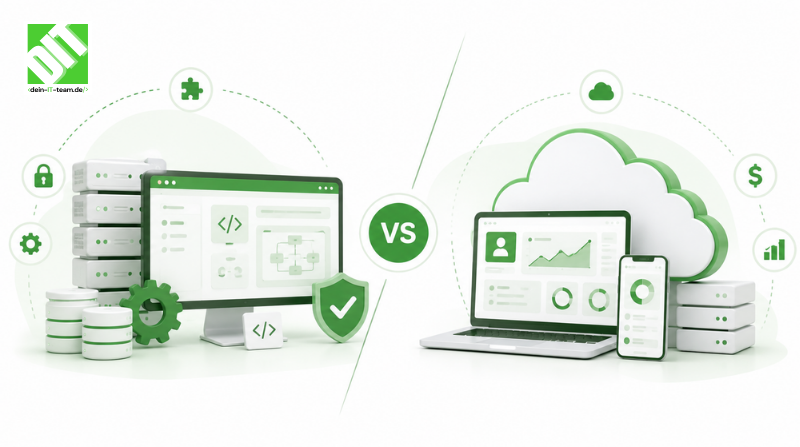
Compare custom software and SAAS solutions for enterprise needs. Learn which is best for your business growth, scalability, and long-term ROI.
In today's digital landscape, enterprises face a critical decision when choosing software solutions. The choice between custom software and Software-as-a-Service (SAAS) can significantly impact your business operations, costs, and growth trajectory. Both approaches offer distinct advantages and limitations, and understanding these differences is essential for making an informed decision that aligns with your organizational goals.
Custom software represents a tailored approach where applications are built specifically for your business requirements, while SAAS provides cloud-based, subscription-based solutions that serve multiple users across different organizations. Neither approach is universally superior the right choice depends on your specific business needs, budget, scalability requirements, and long-term vision.
When evaluating these solutions, organizations must consider factors beyond simple cost comparisons. Deployment timelines, customization capabilities, integration possibilities, security requirements, and team expertise all play crucial roles in determining which path leads to genuine competitive advantage.
What Is Custom Software Development?
Custom software development involves creating applications built from the ground up to address your specific business processes and requirements. Unlike off-the-shelf solutions, custom software is designed exclusively for your organization's unique workflows, pain points, and goals.
Custom applications typically require collaboration between your internal teams and development partners who understand your business domain. The development process involves requirements gathering, design, coding, testing, and deployment phases, with your team maintaining significant input throughout the lifecycle. With API development services, custom solutions can integrate seamlessly with your existing technology stack.
Key Characteristics of Custom Software
Custom software offers complete ownership and control over your application's architecture and functionality. Your development team can implement precisely the features your business needs without the bloat of unnecessary capabilities present in generic solutions. This level of customization extends to user interfaces, workflows, integrations, and reporting capabilities tailored to how your teams actually work.
Unlike SAAS applications that update on the vendor's schedule, custom software allows you to control release cycles and feature deployments. Your organization owns the intellectual property, meaning you retain full control over your competitive advantages embedded within the application code.
Custom solutions provide flexibility in technology stack selection, allowing your team to choose programming languages, databases, and architectures that best serve your performance and scalability requirements. This flexibility often leads to more efficient, maintainable systems compared to forcing your business processes into predetermined SAAS structures.
Understanding SAAS Solutions
SAAS represents a cloud-based software delivery model where applications are hosted by the vendor and accessed through web browsers or mobile applications. Users typically subscribe on a monthly or annual basis, eliminating the need for installation, maintenance, or infrastructure management on your end.
SAAS solutions are designed to serve multiple organizations simultaneously, with each tenant operating within isolated environments. The vendor manages all updates, security patches, server maintenance, and infrastructure scaling. This vendor-managed approach means your organization can focus on core business operations rather than technical infrastructure concerns.
Advantages of the SAAS Model
The SAAS approach provides rapid deployment and implementation. Most SAAS platforms can be operational within weeks rather than the months or years required for custom software development. This quick time-to-value appeals to organizations seeking immediate solutions without extended development timelines.
Cost predictability is a significant SAAS advantage. Subscription fees follow a straightforward model, making budgeting and financial forecasting straightforward. There's no need for expensive infrastructure investments, dedicated development teams, or ongoing maintenance staff. Updates and security patches are handled automatically by the vendor, reducing your operational burden.
SAAS solutions provide built-in scalability managed by the vendor. As your user base grows, the platform automatically handles additional load distribution without requiring your involvement. This managed scalability can be particularly valuable for rapidly growing organizations without in-house infrastructure expertise.
Custom Software vs SAAS: Detailed Comparison
The choice between custom software and SAAS involves examining multiple dimensions affecting your business outcomes. A comprehensive comparison across key factors reveals the nuances that should guide your decision-making process.
Cost Considerations
SAAS applications present lower upfront costs through subscription-based pricing models. There's no significant capital expenditure required, making SAAS attractive for organizations with limited budgets or those unwilling to commit substantial resources upfront.
However, SAAS costs accumulate over time. A platform that costs $500 monthly will cost $6,000 annually and $60,000 over a decade. As your user base expands, SAAS expenses multiply. An enterprise supporting 500 users paying $20 per user monthly faces monthly expenses of $10,000, totaling $120,000 annually and potentially over one million dollars in a decade.
Custom software requires substantial upfront investment but typically costs significantly less over extended periods. A custom application requiring six months of development effort and costing $200,000 initially might cost $30,000 annually for maintenance, totaling just $380,000 over a decade. Beyond the break-even point, custom software often becomes more economical.
Customization and Control
SAAS solutions offer limited customization within predefined parameters. Vendors provide configuration options but rarely modify core functionality for individual customers. This limitation means your business processes must adapt to the SAAS platform's design rather than technology adapting to your needs.
Custom software development provides unlimited customization possibilities. Your application adapts precisely to how your business operates, eliminating process workarounds and inefficiencies inherent in SAAS solutions designed for generic use cases. This alignment between software and business processes often yields significant productivity gains.
The custom software development approach ensures your competitive advantages become embedded in your technology infrastructure. Unique processes that differentiate your business can be protected and optimized through custom applications.
Security and Compliance
SAAS providers implement enterprise-grade security infrastructure, including encryption, threat monitoring, and regular security audits. For many organizations, this vendor-managed security exceeds what they could achieve independently. However, your sensitive data resides on external servers, creating potential compliance challenges in regulated industries.
Custom software allows complete control over data storage and security implementation. Your organization determines how data is encrypted, stored, backed up, and accessed. This control is invaluable for enterprises handling sensitive information subject to strict regulatory requirements like HIPAA, GDPR, or industry-specific compliance mandates.
Scalability and Performance
SAAS platforms automatically scale to accommodate growing user bases and data volumes. The vendor manages infrastructure expansion, ensuring consistent performance as demand increases. This automatic scaling eliminates capacity planning concerns for organizations experiencing rapid growth.
Custom software scalability depends on your architecture decisions during development. Well-architected custom solutions scale efficiently, but poorly designed systems require significant refactoring to handle increasing load. The advantage lies in your ability to architect specifically for your anticipated growth patterns rather than adapting to vendor-provided infrastructure.
Integration Capabilities
SAAS applications increasingly offer API integrations and pre-built connectors to popular business software. However, integration is often limited to the vendor's approved connections and predefined data flows. Complex integrations or unusual requirements may prove impossible within SAAS constraints.
Custom software integrates seamlessly with your entire technology ecosystem through cloud integration services. APIs can be designed specifically for your integration needs, and real-time data synchronization can be implemented exactly as your business requires. This integration flexibility often eliminates the need for cumbersome workarounds and manual data transfers.
When Custom Software Makes Strategic Sense
Certain organizational circumstances favor custom software investment. When your business requires unique workflows that differentiate you from competitors, custom development becomes strategic rather than optional. Industries with specialized requirements financial services, healthcare, manufacturing often benefit significantly from custom solutions.
Organizations experiencing rapid growth requiring continuous feature development find custom software advantageous. Rather than being constrained by SAAS vendor roadmaps, you control your application's evolution aligned with business strategy. Companies with unique security or compliance requirements also benefit from the control that custom software provides.
If your long-term projections show substantial total cost of ownership favoring custom solutions, the upfront investment becomes justified. Many enterprises reaching maturity find that custom systems built five or ten years ago have paid for themselves multiple times over compared to equivalent SAAS costs.
Why Scaling Your Company Requires Custom Digital Tools: Learn how custom digital tools become essential as your organization grows, providing scalability and competitive advantages that off-the-shelf solutions cannot match.
When SAAS Solutions Deliver Value
SAAS excels when you need rapid implementation without custom development complexity. Organizations seeking quick solutions for well-defined problems email management, project tracking, accounting benefit significantly from proven SAAS platforms.
Small businesses and startups with limited technical resources find SAAS attractive. The vendor handles technical concerns, allowing small teams to focus on business growth rather than system administration. Predictable monthly costs also suit organizations preferring expense budgeting over capital investment.
When your requirements align with SAAS vendors' design philosophy, adopting their solution makes economic sense. If the platform handles your needs adequately without significant workarounds, the lower total cost of ownership and faster deployment often justify the choice.
Hybrid Approaches and Modern Solutions
Many enterprises adopt hybrid strategies combining custom and SAAS components. You might use best-of-breed SAAS applications for standard business functions while developing custom solutions for competitive differentiation. This approach balances rapid implementation benefits with customization advantages.
Modern development practices also enable faster custom software delivery. Agile methodologies, no-code platforms, and pre-built component libraries reduce development timelines compared to traditional approaches. Organizations should evaluate whether new development paradigms change cost-benefit analyses favoring custom solutions.
Making Your Decision: Key Questions
Before committing to either path, ask yourself whether unique business processes justify custom development investment. Evaluate your total cost of ownership over five, ten, and fifteen-year horizons, accounting for growth projections and feature requirements. Assess how each approach supports your strategic goals and competitive positioning.
Consider your team's technical expertise and capacity. Do you have or can you attract development talent to build and maintain custom systems? Alternatively, can your team effectively adopt SAAS platforms and adapt workflows accordingly? Resource availability significantly impacts implementation success regardless of which path you choose.
Conclusion
The custom software versus SAAS decision lacks universal answers the optimal choice depends on your specific circumstances, strategic objectives, and organizational capabilities. Custom software delivers superior long-term value when your business operates with unique requirements, faces substantial user growth, or competes on distinctive capabilities. The ability to control your entire technology stack, customize workflows precisely, and maintain competitive advantages justifies the investment for many enterprises.
SAAS solutions provide genuine value through rapid implementation, predictable costs, and vendor-managed infrastructure. Organizations seeking quick solutions, favoring expense over capital models, or operating with standard business requirements find SAAS compelling and practical.
Many successful enterprises adopt hybrid approaches, combining SAAS solutions for standard functions with custom systems for competitive differentiation. This strategy balances speed, cost, and customization to align technology with business reality.
Regardless of your choice, remember that software selection represents a strategic decision influencing your organization's capabilities and competitiveness. Thoroughly evaluate your requirements, perform financial modeling across extended periods, and ensure your choice aligns with your business strategy and growth projections. By making an informed decision based on your unique circumstances, you position your organization to leverage technology effectively for sustainable growth.
Frequently Asked Questions
Q1: What is the main difference between custom software and SAAS?
Custom software is built specifically for your organization's unique needs and requirements, while SAAS is a cloud-based application provided by a vendor to multiple clients simultaneously. Custom software requires significant upfront investment but offers complete control, while SAAS provides lower upfront costs with limited customization.
Q2: Is custom software always more expensive than SAAS?
Not necessarily over the long term. While custom software requires larger upfront investment, SAAS costs accumulate through monthly subscriptions that multiply over time. For enterprises with hundreds of users, custom software often becomes more economical after five to seven years despite higher initial costs.
Q3: How long does custom software development typically take?
Development timelines vary significantly based on complexity and scope, typically ranging from three months for relatively simple applications to two years or more for enterprise systems. SAAS implementations usually occur within weeks, making them faster for immediate needs.
Q4: Can SAAS applications be customized to match our business processes?
SAAS customization is typically limited to configuration options within vendor-provided parameters. Your business processes must adapt to the SAAS platform's design rather than technology adapting to your needs. This limitation makes SAAS challenging for organizations with unique workflow requirements.
Q5: Which option offers better security for sensitive data?
Both approaches can provide robust security, but they differ philosophically. SAAS relies on vendor-managed security infrastructure, while custom software allows you to control data storage, encryption, and access protocols. For regulated industries handling highly sensitive data, custom solutions often provide superior compliance control.
Q6: What happens if a SAAS vendor goes out of business?
Your access to the application ends, potentially leaving your organization without critical business tools. Data migration becomes necessary, and transitioning to alternative solutions requires time and resources. Custom software mitigates this risk by ensuring your organization retains ownership and independence.
Q7: How do integration capabilities differ between custom and SAAS solutions?
SAAS applications offer pre-built integrations with popular tools, but complex or unique integration requirements may be impossible. Custom software integrates seamlessly with your entire technology ecosystem through purpose-built APIs designed for your specific data flows and requirements.
Q8: Which solution scales better as our business grows?
SAAS automatically scales infrastructure to handle growth, while custom software scalability depends on architecture decisions. Well-designed custom systems scale efficiently, but poorly architected solutions may require significant refactoring. The advantage lies in designing custom solutions specifically for your growth projections.
Q9: Can we switch from SAAS to custom software or vice versa?
Switching is possible but involves data migration challenges, workflow redesign, and transition costs. Moving from SAAS to custom software requires exporting historical data and rebuilding workflows in new systems. Planning for potential transitions during initial implementation helps reduce future switching costs.
Q10: What approach works best for startups versus mature enterprises?
Startups typically favor SAAS for rapid implementation and lower upfront costs with limited resources. As organizations mature with unique requirements and hundreds of users, custom software investment becomes justified. Many successful enterprises transition from SAAS to custom systems as growth justifies the investment.
Recent Posts
October 15, 2026