

Business Process Improvement: Steps, Methods, and Best Practices
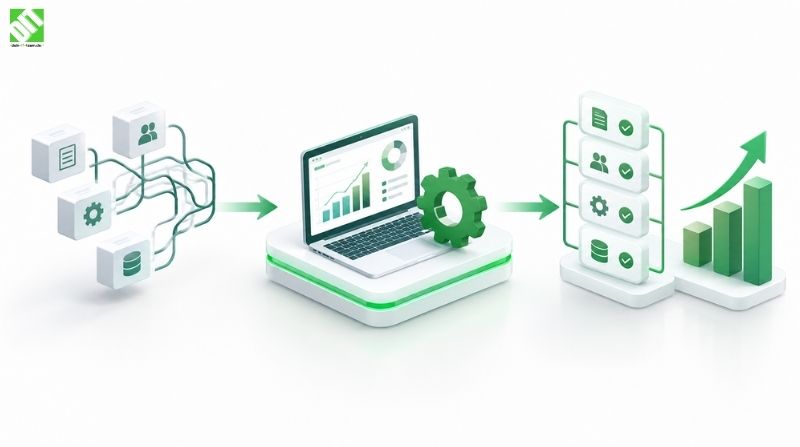
Learn what business process improvement is, the key steps, proven methods like Lean and Six Sigma, and best practices to improve efficiency.
Most companies do not have a people problem. They have a process problem. An invoice sits in someone's inbox for six days, a customer request gets re-typed into three systems, and a manager approves the same purchase twice because nobody can see what the other department already did. The work gets done, but at a cost nobody has measured.
Business process improvement (BPI) is the practice of analyzing how work currently flows through an organization, finding the steps that waste time, money, or effort, and redesigning them so the outcome is faster, cheaper, or more reliable. In short, you study the process, fix what is broken, and check that the fix worked.
This guide covers what business process improvement means, why it matters, a step-by-step approach you can follow, the main methods (Lean, Six Sigma, Kaizen, and others), the role of technology, common mistakes, and how to measure results. If you are deciding where to start, the steps and best practices sections are the most practical places to begin.
What Is Business Process Improvement?
Business process improvement is a structured approach to analyzing existing workflows and making them more efficient, accurate, and consistent. A "process" here means any repeatable series of tasks that turns an input into an output: onboarding a customer, approving an expense, fulfilling an order, resolving a support ticket, or releasing a software update.
BPI works on what already exists. You do not start from a blank page. You map the current state, measure where it performs poorly, and change specific parts of it. The improvements can be small (removing a redundant approval) or large (rebuilding a workflow around a new system).
Business Process Improvement vs. Optimization, Management, and Reengineering
These terms are often used as if they mean the same thing, and they overlap, but the distinctions are useful.
| Term | What it means | Typical scale |
| Business process improvement | Finding and fixing problems in existing processes | Incremental to moderate |
| Business process optimization | Tuning a process to get the best possible performance from it | Targeted, often data-driven |
| Business process management | The ongoing discipline of designing, running, monitoring, and governing processes | Organization-wide, continuous |
| Business process reengineering | Radically redesigning a process from scratch | Large, disruptive |
A simple way to think about it: improvement is the broad effort to make things better, optimization is the fine-tuning stage within it, management is the system that keeps everything under control, and reengineering is the nuclear option when incremental change will not be enough. If you want a deeper look at the tuning side, this guide on optimizing business processes for modern organizations walks through it in detail.
Why Business Process Improvement Matters
Every process has a cost, even when nobody tracks it. Poorly designed workflows quietly drain budgets through rework, delays, duplicate data entry, and errors that have to be corrected later. Because these costs are spread across many people and many small moments, they rarely show up as a single line item.
Well-run BPI projects typically deliver benefits in a few areas:
Lower operating costs. Fewer manual steps and less rework mean the same output needs less labor.
Faster cycle times. Orders ship sooner, approvals clear faster, and customers wait less.
Fewer errors. Standardized steps and validation reduce mistakes, especially in data-heavy work like finance and logistics.
Better customer and employee experience. Customers get consistent service, and employees spend less time on tedious tasks.
Stronger compliance. Documented, consistent processes are easier to audit and easier to defend.
Room to scale. A process that works for 50 orders a week often breaks at 500. Fixing it early avoids growth pains later.
Repetitive, rule-based work is usually where the quickest gains sit. Tasks like copying data between systems, sorting incoming documents, or generating routine reports follow predictable logic, which makes them good candidates for robotic process automation once the underlying process has been cleaned up. The order matters here: fix the process first, then automate it. Automating a broken process only makes it fail faster.
Business Process Improvement Steps
There is no single official sequence, but most successful projects follow the same logical path. Here is a practical eight-step approach.
Choose the process and define the goal
Assemble the right people
Map the current process
Measure and analyze performance
Identify root causes
Design the improved process
Implement and test
Monitor, measure, and iterate
1. Choose the Process and Define the Goal
Start with a process that matters, not one that is merely annoying. Good candidates are processes that affect revenue or customers directly, consume a lot of staff time, produce frequent errors, or create regular complaints.
Then write down a specific goal. "Make invoicing better" is not a goal. "Reduce average invoice approval time from nine days to four" is. A measurable target gives the project a finish line and makes it easier to prove value later.
2. Assemble the Right People
The people who do the work every day understand it better than anyone. Include them early. A good team usually has a process owner who is accountable for results, frontline staff who run the process, someone from IT or systems who knows the technical constraints, and a sponsor with the authority to approve changes.
Leaving out the frontline is the fastest way to design something that looks great on paper and fails in practice.
3. Map the Current Process
Document how the process actually works today, not how the manual says it should work. These two versions are rarely the same.
Common mapping formats include flowcharts, swimlane diagrams (which show which team or role owns each step), and value stream maps (which separate steps that add value from steps that only add waiting time). Walk through the process with the people who run it and note every handoff, decision point, system, delay, and workaround.
The workarounds are especially revealing. A spreadsheet that someone maintains "just in case" usually points to a gap in the official system.
4. Measure and Analyze Performance
Collect data on how the process performs. Useful measures include cycle time (start to finish), processing time versus waiting time, error or rework rate, cost per transaction, volume, and customer satisfaction.
If the process runs through software, system logs can supply much of this. If it does not, a short period of manual sampling is often enough to reveal where the problems are. The point is to replace opinions with evidence.
5. Identify Root Causes
Symptoms are easy to spot. Causes take more effort. If invoices are late, ask why, then ask why again. Techniques such as the "5 Whys" and cause-and-effect (fishbone) diagrams help teams move past the obvious answer.
You may find that late invoices are not a finance problem at all. They might trace back to incomplete purchase orders from another department. Fixing the wrong layer wastes the whole effort.
6. Design the Improved Process
Now redesign. Look for steps you can eliminate, combine, reorder, or automate. Ask which approvals are genuinely required and which exist out of habit. Check where data is entered more than once, and where one system could pass information to another automatically.
Sketch the future-state process and compare it with the current one. Estimate the expected gains, and consider who will be affected and what training they will need.
7. Implement and Test
Resist the urge to roll everything out at once. Pilot the new process with one team, one region, or one product line. Watch how it behaves under real conditions and collect feedback.
Pilots catch problems cheaply. They also build internal supporters, which matters more than most project plans admit, because people trust changes that colleagues have already tested.
8. Monitor, Measure, and Iterate
Once the new process is live, keep measuring against the baseline from step four. Improvements fade if nobody is watching. Staff drift back to old habits, edge cases appear, and the business itself changes.
Treat BPI as a cycle rather than a one-off project. Each round of measurement points to the next improvement.
Business Process Improvement Methods
Several established methodologies give structure to the steps above. Each has a different emphasis, so the best choice depends on what you are trying to fix.
Lean
Lean grew out of the Toyota Production System and focuses on removing waste, meaning any activity that consumes resources without adding value for the customer. Classic categories of waste include waiting, overproduction, unnecessary motion, excess inventory, defects, and over-processing. Lean is a strong fit when the main issue is delay, handoffs, or clutter in the workflow.
Six Sigma and DMAIC
Six Sigma, which originated at Motorola, focuses on reducing variation and defects through statistical analysis. Its most common improvement framework is DMAIC: Define, Measure, Analyze, Improve, Control. It works well when quality and consistency are the central problem and when you have enough data to analyze properly.
Lean Six Sigma
Many organizations combine the two. Lean removes waste and speeds up flow, while Six Sigma tightens quality and reduces variation. The combined approach suits larger processes where both speed and accuracy matter.
Kaizen
Kaizen means continuous improvement through small, frequent changes suggested by the people doing the work. Rather than a big project, it builds improvement into daily habits. It is a good cultural complement to any other method and works particularly well where employee engagement is high.
PDCA (Plan, Do, Check, Act)
PDCA is a simple four-stage loop for testing a change on a small scale, checking the result, and then adopting, adjusting, or abandoning it. It is lightweight enough for a single team to use without formal training.
Business Process Reengineering
Reengineering throws out the existing design and rebuilds the process around the desired outcome. It carries more risk and disruption than incremental methods, so it is usually reserved for situations where the process is fundamentally unfit for purpose, such as after a merger or when moving off an obsolete legacy platform.
Choosing Between Methods
| Method | Best for | Main strength | Main limitation |
| Lean | Slow, wasteful workflows | Simplicity and speed of results | Less rigorous on statistical quality |
| Six Sigma | Quality and consistency problems | Data-driven precision | Needs reliable data and trained staff |
| Lean Six Sigma | Complex, high-volume processes | Balances speed and quality | Heavier to set up |
| Kaizen | Building an improvement culture | Low cost, high involvement | Gains are gradual |
| PDCA | Small, quick experiments | Easy to adopt | Not suited to large redesigns |
| Reengineering | Fundamentally broken processes | Large potential gains | High risk and disruption |
In practice, teams mix and match. It is common to use Lean thinking to spot waste, DMAIC to structure the project, and Kaizen to keep improving afterward.
The Role of Technology in Process Improvement
Technology does not replace good process design, but it often determines how far an improvement can go. A redesigned workflow that still depends on emailed spreadsheets will hit a ceiling quickly.
Technology tends to contribute in four ways:
Visibility. Dashboards and process mining tools show how work really flows, which makes the analysis stage faster and more accurate.
Automation. Software handles repetitive, rule-based steps, which cuts both effort and error.
Integration. Systems share data directly instead of relying on people to move it.
Control. Built-in rules enforce approvals, validations, and audit trails.
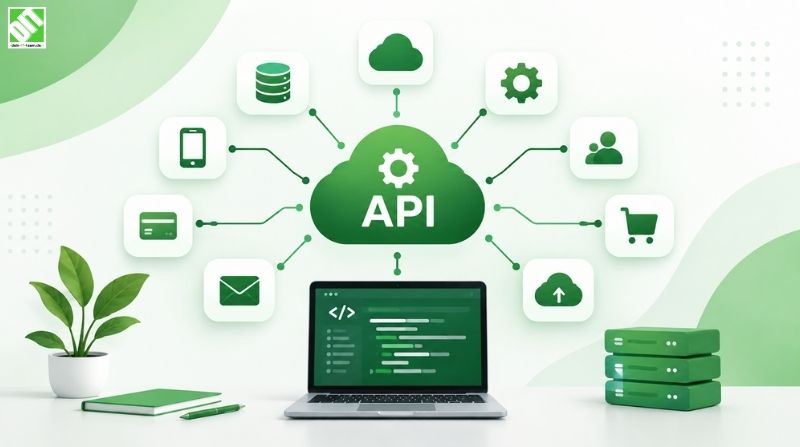
Integration deserves special attention because it is where many improvement projects quietly stall. A company may have a CRM, an ERP, a finance tool, and a support platform, each holding part of the picture. If those systems cannot exchange data, people become the connectors, and every handoff becomes a delay or a mistake waiting to happen. Well-designed API development and integration lets those systems talk to each other securely, so a customer order entered once can flow through billing, inventory, and fulfillment without being retyped.
When evaluating tools, look at how well they fit your actual process rather than how many features they list. Questions worth asking include:
Does it connect to the systems we already use?
Can it handle our exceptions, not only the happy path?
Will it scale as volume grows?
How does it handle security, permissions, and audit requirements?
Who maintains it after launch?
Sometimes off-the-shelf software covers the need. In other cases, a process is specific enough to the business that configuring a generic tool means bending the workflow to fit the software instead of the reverse. That is when custom-built solutions start to make sense.
A Practical Example: Improving an Invoice Approval Process
The following example is illustrative and does not describe a specific client project.
Imagine a mid-sized distribution company whose invoices take about nine days to approve. Mapping the process reveals the following:
Invoices arrive by email and are manually entered into the finance system.
Each invoice is forwarded to a department head by email for approval.
Approvers often lack the matching purchase order, so they reply asking for it.
Approved invoices are re-keyed into a payment schedule.
The root-cause analysis shows that most delays come from missing purchase order data and email back-and-forth, not from slow approvers.
The improved design might include extracting invoice data automatically on arrival, matching each invoice to its purchase order in the system, routing it to the right approver with all supporting data attached, and posting approved invoices straight to the payment schedule. Only mismatches go to a human for review.
After a pilot with one department, the team compares cycle time, error rate, and staff hours against the original baseline. If the numbers improve, the process rolls out to the rest of the business. The specifics will differ for every organization, but the pattern of map, measure, find the cause, redesign, pilot, and monitor holds almost everywhere.
Business Process Improvement Best Practices
These habits separate projects that deliver lasting results from those that fade after the first quarter.
Tie improvements to business goals. A project that cannot be linked to cost, speed, quality, or customer outcomes will struggle to keep support.
Start small and prove value. A focused pilot that works is more persuasive than an ambitious plan that has not been tested.
Involve the people who do the work. They know where the real friction is, and they will carry the change forward.
Base decisions on data. Measure the before and after so success is visible and arguments are settled with evidence.
Fix the process before automating it. Automation amplifies whatever it is applied to, good or bad.
Document clearly and keep documentation current. An outdated process map is worse than none because it creates false confidence.
Plan for change management. Communicate early, explain the reason for the change, and provide training. Resistance usually comes from uncertainty, not stubbornness.
Assign clear ownership. Every process needs a named owner who is responsible for its performance after the project team has moved on.
Build in feedback loops. Give frontline staff an easy way to flag problems and suggest improvements.
Review regularly. Revisit key processes at least once or twice a year, and sooner when systems, regulations, or business models change.
Common Mistakes to Avoid
Improving the wrong process. Teams sometimes pick the most visible problem rather than the most valuable one.
Skipping the baseline. Without starting measurements, you cannot prove the improvement happened.
Designing without frontline input. The result often ignores real-world exceptions.
Trying to fix everything at once. Broad projects lose momentum. Narrow ones finish.
Treating technology as the solution. Software supports a good process but cannot compensate for a confused one.
Neglecting adoption. A better process that people do not follow delivers nothing.
Declaring victory too early. Gains need monitoring to survive.
How to Measure Business Process Improvement Success
Choose a small set of metrics linked to your original goal, and track them before and after the change.
| Metric | What it tells you |
| Cycle time | How long the process takes from start to finish |
| Processing time vs. waiting time | How much of the elapsed time is real work |
| Error and rework rate | How often outputs need correcting |
| Cost per transaction | The actual expense of running the process once |
| Throughput | How much the process handles in a given period |
| First-pass yield | The share of work completed correctly the first time |
| Customer satisfaction | How the outcome feels from the outside |
| Employee effort or satisfaction | Whether the change reduced friction for staff |
Do not rely on a single number. Cycle time may improve while quality quietly declines, so a balanced set of measures gives a more honest picture.
Business Process Improvement and AI
Artificial intelligence is changing both the analysis and execution sides of process work. Process mining tools can reconstruct how work actually flows from system event logs, which exposes bottlenecks that interviews might miss. Machine learning models can classify documents, flag unusual transactions, and predict delays before they happen. Language models can draft routine responses, summarize cases, and extract information from unstructured text such as emails and contracts.
These capabilities are most useful when they are attached to a clearly defined process with clean data. If the underlying workflow is confused, AI will not clarify it. For organizations that have already mapped and stabilized their key processes, AI development and machine learning solutions can add a layer of prediction and decision support, such as automatically routing requests, forecasting workload, or detecting exceptions early.
It is also worth being realistic. AI projects need quality data, clear success criteria, and human oversight for decisions with real consequences. Starting with a narrow use case and expanding after it proves its value is a safer path than attempting a company-wide transformation.
Conclusion
Business process improvement is less about dramatic transformation and more about disciplined attention to how work actually gets done. The essentials are simple: pick a process that matters, map it honestly, measure it, find the real cause of the problem, redesign it, test the change on a small scale, and keep monitoring afterward. Methods like Lean, Six Sigma, Kaizen, and PDCA give that effort structure, and technology such as integration, automation, and AI can extend what is possible once the process itself is sound.
A sensible next step is to choose one process that is costing you time or money, write a specific improvement target, and map the current workflow with the people who run it. That alone often surfaces quick wins.
Some improvements need software built around the way your business actually works, whether that means connecting separate systems, automating a workflow, or replacing a tool that no longer fits. If you are at that point, you can discuss your project with the DEIN IT TEAM and talk through what the right technical approach might look like.
Frequently Asked Questions
What is business process improvement in simple terms?
Business process improvement is the practice of studying how a task or workflow currently runs, finding what slows it down or causes errors, and changing it so it works better. The aim is usually lower cost, faster delivery, or higher quality.
What are the main steps of business process improvement?
The typical sequence is: choose a process and set a goal, assemble a team, map the current process, measure performance, identify root causes, design the improved process, pilot and implement it, and then monitor results and iterate.
What is the difference between business process improvement and business process management?
Improvement is focused on making specific processes better. Management is the ongoing discipline of designing, running, monitoring, and governing all of an organization's processes. Improvement projects usually sit inside a broader management practice.
Which business process improvement method is best?
No single method is best for every situation. Lean suits workflows with a lot of waste and delay, Six Sigma suits quality and variation problems, Kaizen builds a steady improvement habit, and PDCA works for small tests. Many organizations combine them.
How long does a business process improvement project take?
It depends on scope. A small, focused improvement can take a few weeks, while a cross-department project involving system changes may run several months. Factors include process complexity, data availability, number of stakeholders, and whether new software is needed.
How do you measure the success of process improvement?
Compare metrics before and after the change. Common measures are cycle time, error rate, cost per transaction, throughput, and customer satisfaction. Setting a baseline at the start is what makes the comparison possible.
Should you automate a process before improving it?
Generally no. Streamline and simplify first, then automate. Automating an inefficient or unclear process locks in its problems and often makes them harder to fix later.
Can small businesses benefit from business process improvement?
Yes. Small businesses often see results quickly because they have fewer layers and faster decision-making. Even a simple exercise, such as mapping the order-to-payment flow and removing duplicate steps, can save significant time.
When does a business need custom software for process improvement?
Custom software becomes worth considering when off-the-shelf tools cannot handle your specific workflow, cannot integrate with your existing systems, or force the business to work around the software instead of the other way around. A clear process map helps determine what you actually need.
Recent Posts
September 24, 2026

September 29, 2026