Payment Gateway Integration: A Complete Guide for Businesses
Master payment gateway integration. Learn how to securely process payments, reduce cart abandonment, and increase conversion rates.
Your e-commerce store is ready. You've built a beautiful website, optimized product pages, and are ready to take customer orders. But without proper payment gateway integration, you can't actually process transactions. Customers can browse but can't pay. Revenue potential remains unrealized.
Payment gateway integration is the critical bridge between your business and your customers' money. It's the technology that makes online transactions possible, secure, and seamless. Yet many businesses treat it as an afterthought, implementing it hastily or choosing the wrong solution. This creates friction, lost sales, security risks, and customer frustration.
The organizations that excel understand that payment gateway integration isn't just a technical detail. It's a competitive advantage. Businesses with smooth, secure payment processes convert more customers, reduce abandonment, attract more sales, and build customer trust. Businesses with poor payment gateway integration lose revenue and reputation.
This guide walks you through everything you need to know about payment gateway integration: what it is, why it matters for business success, what challenges exist, how to implement it correctly, and how to choose the right solution for your specific needs.
Key Takeaways
Poor payment gateway integration costs businesses 20-30% in lost revenue through cart abandonment, failed transactions, and customers choosing competitors with better payment experiences.
Payment gateway integration complexity varies dramatically - from simple out-of-the-box solutions to complex custom implementations - and choosing the wrong approach wastes time and money.
Security is non-negotiable in payment gateway integration - PCI DSS compliance, encryption, tokenization, and fraud detection are mandatory, not optional features.
Payment gateway integration affects customer experience directly - slow checkout, payment failures, and security concerns cause customers to abandon carts and switch to competitors.
The right payment gateway integration can increase conversion rates by 10-15% through faster checkout, more payment options, and reduced transaction failures.
Payment gateway integration goes beyond just processing payments - it includes data management, reconciliation, fraud prevention, reporting, and ongoing maintenance.
What Is Payment Gateway Integration?
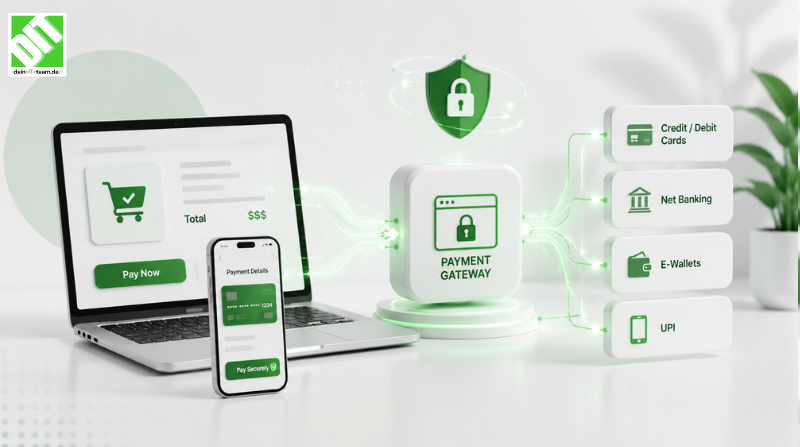
Payment gateway integration is the process of connecting your e-commerce platform or business application to a payment gateway service that processes customer payments securely and reliably.
A payment gateway is a technology service that enables the secure authorization and capture of customer payments. It's the intermediary that sits between your business, the customer's bank, and the payment network (Visa, Mastercard, etc.). When a customer enters their payment information on your checkout page, the payment gateway encrypts it, validates it, passes it through the payment network, and returns approval or decline.
Payment gateway integration means building the technical connection that allows this process to happen automatically and securely. It involves:
Authorization: Verifying the customer has sufficient funds and the payment information is valid.
Encryption: Protecting sensitive payment data using security protocols like TLS and tokenization so raw card data is never stored on your servers.
Transaction Processing: Routing the transaction through the payment network (Visa, Mastercard, American Express, etc.).
Settlement: Depositing the funds into your business account after successful transaction completion.
Reporting and Reconciliation: Providing data so you can track transactions, reconcile with your accounting, and identify issues.
Fraud Detection: Identifying suspicious transactions and preventing fraud.
Payment gateway integration complexity ranges from simple. A small blog using Stripe's pre-built checkout button is basic payment gateway integration. A complex SaaS platform supporting multiple payment methods, currencies, subscription management, and custom billing is sophisticated payment gateway integration.
The right payment gateway integration is invisible to customers - they don't notice it's there, it just works. The wrong integration is painfully obvious - slow checkout, payment failures, security warnings, and lost transactions.
Why Payment Gateway Integration Matters for Business Success
Most businesses underestimate the importance of payment gateway integration. Here's why it actually determines business viability.
Payment Gateway Integration Directly Impacts Revenue
Every transaction that fails is revenue lost. Every customer who abandons checkout due to friction is revenue lost. Every customer who chooses a competitor with a better payment experience is revenue lost.
Research shows that payment issues account for 5-10% of e-commerce cart abandonment. For a $1 million revenue e-commerce business, that's $50,000-$100,000 in lost annual revenue from failed transactions and payment friction. That's not acceptable. It's an easy problem to solve with proper payment gateway integration.
Conversely, optimizing payment gateway integration increases conversion rates. Offering multiple payment methods increases conversion 5-10%. Fast, frictionless checkout increases conversion 5-10%. The cumulative effect of proper payment gateway integration is significant revenue improvement.
Payment Gateway Integration Protects Customer Trust
Customers are increasingly security-conscious about online payments. If your payment gateway integration doesn't feel secure, they won't complete transactions, even if it actually is secure.
A checkout page with visible security indicators, multiple payment options, clear payment processing information, and professional design builds trust. A checkout page with warnings, security vulnerabilities, limited payment options, or concerns erodes trust.
Payment gateway integration done well is invisible security that customers trust. Payment gateway integration done poorly is an obvious security concern that customers fear.
Payment Gateway Integration Enables Business Growth
As your business scales, payment gateway integration complexity increases. What worked when you processed 100 transactions monthly breaks when you process 10,000 monthly. What works for a single currency breaks when you operate internationally. What works for one-time purchases breaks when you need subscriptions.
Proper payment gateway integration architecture scales with business growth. Poor architecture creates technical debt that constrains growth.
Payment Gateway Integration Reduces Operational Overhead
Manual payment handling is expensive and error-prone. Automatic payment gateway integration reduces manual work, reduces errors, and improves efficiency.
When payment reconciliation is automated, your accounting team doesn't manually match transactions. When fraud detection is automated, you catch problems before they cost money. When payment processing is automated, disputes are handled systematically instead of reactively.
Payment Gateway Integration Enables Global Business
International payment gateway integration is complex - different countries have different payment methods, regulations, currencies, fraud patterns. But proper integration enables your business to accept payments globally.
Businesses without international payment gateway integration miss market opportunities. Businesses with proper integration compete globally.
Common Payment Gateway Integration Challenges
Understanding challenges is the first step to overcoming them.
Choosing the Right Payment Gateway
Hundreds of payment gateway providers exist. Each has different features, pricing, supported payment methods, integration complexity, reporting, and fraud detection capabilities. Choosing wrong creates technical debt and limits capabilities later.
Many businesses choose based on lowest cost, then regret it when the provider doesn't support needed features or has poor customer service.
Security and Compliance
PCI DSS (Payment Card Industry Data Security Standard) compliance is legally required when you handle payments. Compliance requirements include encryption, tokenization, secure infrastructure, regular security audits, and incident response processes.
Non-compliance creates legal liability, regulatory fines, and reputation damage. Many businesses don't understand compliance requirements and implement payment gateway integration insecurely.
Payment Method Diversity
Customers expect multiple payment options. Credit cards, debit cards, digital wallets (Apple Pay, Google Pay), bank transfers, buy-now-pay-later services, international payment methods. Supporting all of these requires sophisticated payment gateway integration.
Each payment method has different security requirements, fraud patterns, settlement timelines, and costs. Integrating all of them correctly is complex.
International Transactions
Processing payments across countries requires handling multiple currencies, different regulations, higher fraud rates, and different payment preferences by country. Payment gateway integration that works domestically often doesn't work internationally.
Transaction Failures and Recovery
Transactions fail for many reasons: insufficient funds, expired cards, network issues, fraud detection blocks, payment provider issues. Handling these failures gracefully requires sophisticated payment gateway integration that informs customers, enables retry, and logs what happened for analysis.
Payment Reconciliation
After payment is processed, you need to reconcile with your accounting system, track settlement dates (which can be days after transaction), handle refunds, manage chargebacks, and report on payments. Poor payment gateway integration makes reconciliation manual and error-prone.
Fraud Detection
Fraud is a constant threat. Fraud detection requires analyzing transaction patterns, card data, customer behavior, geographic inconsistencies, velocity checks. Proper fraud detection prevents losses, but overly aggressive fraud detection blocks legitimate transactions.
Integration Complexity
Depending on your platform and payment gateway, integration can be simple (a few lines of code with a pre-built solution) or complex (building custom integration with payment APIs). Many businesses underestimate complexity and run over budget and schedule.
Best Practices for Payment Gateway Integration
Here are the practices that separate successful implementations from problematic ones.
Practice 1: Choose the Right Payment Gateway
Don't choose based only on cost. Evaluate:
Supported Payment Methods: Does it support all payment methods your customers want? Will it support new methods as they emerge?
Global Reach: Do you operate or plan to operate internationally? Does the gateway support needed countries and currencies?
Security: What certifications does it have? What fraud detection capabilities does it provide?
Developer Experience: Is it easy to integrate? Is documentation good? Is customer support responsive?
Pricing: Understand all fees - transaction fees, monthly fees, setup fees, gateway fees, settlement fees. Calculate total cost for your transaction volume.
Reporting and Analytics: Can you get the data you need for business intelligence and accounting?
Scalability: Will it scale as your transaction volume grows?
Most businesses benefit from payment gateways that support multiple payment methods and methods, have strong security, and offer good documentation and support. Stripe, Square, PayPal, Adyen, and others are popular because they balance these factors well.
Practice 2: Implement PCI DSS Compliance
PCI DSS compliance is not optional. It's legally required if you process, store, or transmit payment card data. Compliance includes:
Data Encryption: Payment card data must be encrypted in transit (TLS) and at rest.
Tokenization: Never store raw card data. Use tokenization where the payment gateway stores the card and returns a token you store instead.
Access Controls: Restrict who can access payment data.
Network Security: Implement firewalls, intrusion detection, secure configuration.
Security Monitoring: Continuously monitor for security issues.
Regular Audits: Third-party audits validate compliance.
Many businesses use payment gateways that handle PCI compliance for them, so they don't store raw card data. This dramatically reduces compliance burden.
Practice 3: Prioritize Customer Experience in Payment Gateway Integration
Payment gateway integration directly affects checkout experience. Optimize for:
Speed: Slow checkout causes abandonment. Optimize page load time, minimize required fields, enable one-click checkout for returning customers.
Mobile Optimization: Most e-commerce is mobile. Ensure checkout works perfectly on mobile.
Payment Method Options: Offer multiple payment methods. Different customers prefer different methods.
Clear Error Messages: When payment fails, tell customers why and how to fix it. Vague errors cause frustration.
Trust Indicators: Show security badges, SSL indicators, clear return policies, customer reviews. These increase conversion.
A/B testing different checkout experiences reveals what works best for your customers.
Practice 4: Implement Robust Fraud Detection
Fraud detection is essential, but must be balanced with customer experience. Overly aggressive fraud detection blocks legitimate transactions. Insufficient fraud detection allows fraudulent transactions.
Implement:
Velocity Checks: Detect unusual patterns (multiple transactions from same card in short time).
Geographic Anomalies: Detect transaction from different geographic locations close together in time.
Card Verification: Verify CVV, address, ZIP code.
3D Secure: Challenge customer to verify identity for higher-risk transactions.
Machine Learning: Analyze patterns to identify suspicious transactions.
Balance security with conversion - too aggressive fraud detection loses revenue through false declines.
Practice 5: Implement Proper Error Handling and Retry Logic
Transactions fail sometimes. Network issues, temporary payment provider issues, fraud checks, insufficient funds. Your payment gateway integration must handle failures gracefully:
Retry Logic: Automatically retry failed transactions if failure is temporary.
Customer Notification: Inform customer clearly if payment failed and why.
Recovery Options: Enable customer to retry, try different payment method, or contact support.
Logging and Analysis: Log all failures for analysis to identify patterns.
This prevents lost transactions from being truly lost.
Practice 6: Automate Payment Reconciliation
Manual reconciliation of transactions to accounting records is error-prone and time-consuming. Automate it:
API-Driven Reconciliation: Payment gateway provides APIs that let you automatically pull transaction data and match to your accounting system.
Scheduled Processes: Run reconciliation daily or more frequently.
Exception Handling: Flag mismatches for manual investigation.
Reporting: Generate reports showing transaction volumes, fees, settlements, disputes.
Automation reduces errors and frees accounting staff for higher-value work.
Practice 7: Monitor and Optimize Continuously
Payment gateway integration should be monitored continuously:
Transaction Success Rates: What percentage of transactions succeed? Are failures increasing? Investigate if they are.
Fraud Rates: What percentage of transactions are fraudulent? Are fraud detection rules too aggressive or too lenient?
Customer Support Issues: Are customers reporting payment problems? This indicates integration issues.
Performance: How long does payment processing take? Is it slowing down?
Costs: Are transaction fees, gateway fees, or settlement times increasing?
Use this data to optimize and improve payment gateway integration.
Practice 8: Implement Proper Refund and Dispute Handling
Refunds and chargebacks are inevitable. Handle them systematically:
Refund Process: Automate refunds for cancelled orders or customer requests.
Reconciliation: Match refunds to original transactions.
Dispute Resolution: Implement process to gather documentation and respond to chargebacks.
Fraud Prevention: Analyze dispute patterns to prevent recurrence.
Poor refund and dispute handling damages customer relationships and increases costs.
Types of Payment Gateways for Integration
Different payment gateways serve different needs.
Hosted Payment Gateways
Customers are redirected to the payment gateway's secure page to enter payment information. Your website never touches payment data.
Advantages: Simplest to implement from security perspective (you don't handle payment data), low PCI DSS compliance burden.
Disadvantages: Customers leave your website during checkout (higher abandonment), less control over checkout experience.
Example: PayPal Standard, 2Checkout.
Embedded Payment Gateways
Payment form is embedded on your checkout page but tokenized before it reaches your servers.
Advantages: Seamless checkout experience (customers don't leave your site), you can customize checkout appearance, better conversion than hosted gateways.
Disadvantages: More complex integration, higher PCI DSS compliance requirements.
Example: Stripe, Square.
API-Based Payment Gateways
You handle all communication with the payment gateway through APIs. Maximum flexibility and control.
Advantages: Highly customizable, can implement exactly what your business needs, best performance for high-volume operations.
Disadvantages: Most complex integration, highest PCI DSS compliance requirements (though tokenization reduces this), requires strong technical expertise.
Example: Adyen, Stripe API, PayPal Commerce Platform.
Mobile Wallet Integration
Integration with Apple Pay, Google Pay, and other digital wallets for frictionless mobile checkout.
Advantages: Fastest checkout experience, high conversion on mobile, addresses mobile commerce growth.
Disadvantages: Requires separate integration for each wallet, customer adoption varies by region.
Subscription and Recurring Payment Integration
For businesses with subscription models, integration must support recurring billing, automatic renewal, upgrade/downgrade, and cancellation.
Advantages: Enables subscription business model, reduces manual invoicing.
Disadvantages: More complex setup, requires careful reconciliation.
Example: Stripe Billing, Zuora, Recurly.
Payment Gateway Integration Implementation Roadmap
Implementing payment gateway integration correctly requires systematic approach.
Phase 1: Planning and Assessment (Weeks 1-2)
Understand your requirements: What payment methods do you need? What's your transaction volume? Do you operate internationally? What are your security requirements? What systems need to integrate with payment processing?
Based on assessment, evaluate payment gateways. Document selection rationale.
Phase 2: Environment Setup (Weeks 2-3)
Create sandbox/test environment with your chosen payment gateway. Get API credentials. Set up development environment.
Most payment gateways provide free sandbox for testing without real transactions.
Phase 3: Integration Development (Weeks 3-6)
Build payment gateway integration in development environment:
Implement payment form or embedded payment component
Build backend processing of payments
Implement encryption and security protocols
Build error handling and retry logic
Implement reconciliation process
Build admin dashboards for transaction management
The timeline varies based on complexity. Simple checkout might take 1-2 weeks. Complex multi-method, multi-currency, subscription integration might take 4-6 weeks.
Phase 4: Testing (Weeks 5-7)
Comprehensive testing is critical:
Test all payment methods in sandbox
Test success and failure paths
Test fraud detection behavior
Test reconciliation processes
Performance testing under load
Security testing (penetration testing, vulnerability scanning)
Never skip thorough testing. Payment processing bugs are expensive.
Phase 5: Compliance Verification (Week 6-7)
Verify PCI DSS compliance:
Confirm you're not storing raw payment data
Verify encryption is properly implemented
Confirm access controls are in place
Document security measures
Prepare for compliance audit
Phase 6: Pilot Deployment (Week 7-8)
Deploy to production with limited traffic. Monitor carefully for issues. This is the lowest-risk way to validate everything works.
Phase 7: Full Deployment (Week 8-9)
Once pilot is successful, migrate all traffic to new payment gateway integration.
Phase 8: Monitoring and Optimization (Ongoing)
Continuously monitor transaction success rates, fraud rates, customer support issues, costs. Optimize based on data.
Most implementations from planning to production deployment take 6-10 weeks.
Real-World Payment Gateway Integration Examples
Example 1: E-Commerce Store Implements Payment Gateway Integration
A small e-commerce store selling handmade products needed to accept online payments.
Requirements: Accept credit cards domestically, simple checkout, low cost.
Solution:
Chose Stripe for balance of simplicity and features
Implemented embedded payment form on checkout page
Integrated with WooCommerce e-commerce platform
Automated reconciliation to accounting system
Implemented basic fraud detection
Results:
Payment checkout takes <2 minutes to implement
99.9% payment success rate
Fraud detection prevents 95%+ of fraudulent transactions
Reconciliation is fully automated
Conversion rate 30% higher than before payment gateway integration (checkout now works)
Example 2: SaaS Company Implements Complex Payment Gateway Integration
A SaaS company with global customers needed sophisticated payment processing.
Requirements: Support multiple currencies, multiple payment methods, subscription management, global expansion, detailed reporting.
Solution:
Chose Adyen for global reach and payment method diversity
Built custom API-based integration with SaaS platform
Implemented multi-currency support with real-time conversion rates
Built subscription management with upgrade/downgrade
Integrated with advanced fraud detection
Built comprehensive reporting dashboard
Results:
Accept payments in 200+ countries in 135 currencies
Support 100+ payment methods
Automatic reconciliation across all currencies and payment methods
Fraud detection reduces chargebacks 40%
Reporting enables data-driven decisions about product pricing and packaging
Example 3: Marketplace Implements Payment Gateway Integration with Seller Payouts
An online marketplace connecting buyers and sellers needed payment gateway integration that routes payments to multiple sellers.
Requirements: Accept customer payments, automatically split payments to sellers, handle commissions, support seller payouts.
Solution:
Chose Stripe Connect for marketplace capabilities
Built custom integration that captures payment, deducts commission, automates seller payout
Implemented seller reporting dashboards
Built fraud detection that protects both marketplace and sellers
Results:
Transactions automatically routed to sellers
Commission deduction and payout fully automated
Sellers can withdraw payouts on-demand
Fraud detection reduced seller fraud 50%
Technology Enablement for Payment Gateway Integration
The right tools and approach matter for successful payment gateway integration.
Payment Gateway APIs
Most modern payment gateways provide REST APIs for integration. These enable programmatic communication with the payment gateway rather than using hosted redirects.
Tokenization Services
Tokenization abstracts raw payment card data. The payment gateway returns a token representing the card. You store the token, not the card. This dramatically reduces PCI DSS compliance requirements.
3D Secure
3D Secure is a protocol that authenticates the cardholder for higher-risk transactions. This reduces fraud and provides liability shift to the cardholder's bank.
Webhook Support
Webhooks enable the payment gateway to notify your system when transactions complete, so you can trigger fulfillment, send confirmation emails, update accounting records.
For businesses implementing payment gateway integration requiring secure backend infrastructure and custom payment processing logic, API Development Services can build the integration layer that connects your systems to payment gateways securely and reliably.
Similarly, for complex payment gateway integration across multiple systems - e-commerce platforms, ERP systems, subscription management, reporting - Cloud Integration Services enable seamless data flow between your payment gateway and all systems that need transaction data.
For businesses with unique payment processing requirements or needing a fully tailored payment gateway integration solution, Custom Software Development can architect and build payment gateway integration precisely matching your business needs.
Understanding how payment processing integrates with overall business processes is important. For businesses managing customer data and transactions, read "CRM Integration Best Practices for Growing Businesses" to learn how customer data and payment data integrate for complete customer view.
Choosing Your Payment Gateway Integration Approach
The right approach depends on your business model, technical capabilities, and requirements.
Simple Hosted Checkout
For small businesses with basic checkout needs, a simple hosted checkout is fastest and easiest. Stripe Checkout, PayPal, Square are good options. Implementation takes days, compliance burden is minimal.
Embedded Payment Form
For businesses wanting branded checkout experience and basic customization, embedded payment forms work well. Stripe Elements, Square Payment Form enable building custom checkout while payment gateway handles security.
Full API Integration
For complex requirements - multiple payment methods, subscription management, marketplace payments, custom workflows - full API integration is necessary. This requires more development but enables maximum flexibility.
Hybrid Approach
Many businesses start with simple checkout and evolve to more complex integration as business grows. This is practical approach that balances simplicity with future flexibility.
Troubleshooting Common Payment Gateway Integration Issues
High Decline Rates
If many legitimate transactions are declining, investigate:
Fraud detection settings too aggressive? Try tuning rules.
Payment method unsupported? Add more payment methods.
Billing address validation too strict? Relax requirements.
Velocity limits too low? Increase limits for returning customers.
Transaction Timeouts
If transactions take too long or timeout:
Network issues? Check connectivity between your systems and payment gateway.
Performance issues? Optimize integration code.
Payment provider issues? Contact support.
Reconciliation Mismatches
If transaction records don't match between payment gateway and your accounting:
Timezone issues? Align timezones between systems.
Fee deductions? Ensure accounting records account for gateway fees.
Refunds/reversals? Confirm all refunds are recorded.
Settlement delays? Some transactions settle days after processing.
Fraud False Positives
If fraud detection is blocking legitimate customers:
Review declined transactions to find patterns.
Tune fraud rules to be less aggressive.
Use 3D Secure to verify customers instead of blocking.
Implement customer support to help blocked customers.
PCI Compliance Violations
If you receive compliance violations:
Ensure raw payment data is never logged or stored.
Confirm encryption is implemented properly.
Verify access controls restrict payment data access.
Conduct security audit to find vulnerabilities.
Conclusion
Payment gateway integration is far more than just technical plumbing to process payments. It's the foundation that enables revenue collection, customer trust, operational efficiency, and business growth.
The organizations that excel at payment gateway integration invest in choosing the right provider, implementing it securely and correctly, optimizing for customer experience, and continuously monitoring and improving. The result is seamless, secure, efficient payment processing that customers trust and business operations depend on.
The organizations that treat payment gateway integration as an afterthought struggle with cart abandonment, transaction failures, security vulnerabilities, compliance risk, and operational inefficiency.
Payment gateway integration is one of the highest ROI investments you can make in your e-commerce or online business. A small investment in getting it right pays dividends in increased conversion, reduced friction, lower fraud, improved efficiency, and customer trust.
Evaluate your current payment gateway integration. Does it serve your customers well? Does it scale with your business? Does it support all payment methods customers want? Does it protect your security and compliance? If the answer to any of these is no, prioritize improving your payment gateway integration.
The competitive advantage of seamless, secure payment processing is significant. Your competitors are investing in this. You should too.
Frequently Asked Questions
What's the difference between a payment gateway and a payment processor, and do I need both for payment gateway integration?
A payment gateway authorizes and secures transactions. A payment processor actually moves money between accounts. For payment gateway integration purposes, most modern payment providers (Stripe, Square, PayPal, Adyen) combine both functions - they handle authorization, security, and settlement. You technically need both functions, but you get them from one provider in most cases. Understanding the difference helps when evaluating specific providers and understanding fees.
How much does payment gateway integration cost, and what's included in the fees?
Most payment gateways charge: per-transaction fees (1.5-3% of transaction value), monthly fees (if any), and sometimes setup fees. Total cost varies by provider and transaction volume. For $1M annual revenue, expect $15K-$40K annually in payment processing fees. Additional costs might include PCI compliance, fraud detection add-ons, custom integration development. Calculate total cost of ownership, not just per-transaction fees, when evaluating providers.
Is it difficult to switch payment gateways after implementing payment gateway integration?
It's possible but not trivial. Switching requires: rebuilding integration with new gateway, testing thoroughly, coordinating with customer support, potentially re-issuing payment tokens. To minimize switching costs, use payment abstraction libraries that minimize gateway-specific code. But switching is easier than many realize, so don't let fear of switching lock you into a bad gateway.
Can I accept payments without payment gateway integration if I'm very small?
You could use services like Square Cash or Venmo for very small businesses, but this doesn't scale. For any serious business, proper payment gateway integration is essential. It's not expensive - even simple hosted checkout solutions cost $0 to start. Invest in proper integration from the beginning rather than building technical debt.
How do I ensure payment gateway integration is secure without being a security expert?
Use payment gateways that handle security for you - you don't store raw card data, you use tokenization, the gateway handles encryption. Follow their integration guide. Get a third-party security audit. Implement their recommended security practices. Don't try to build custom security - use what the payment gateway provides.
What payment methods should I support in my payment gateway integration?
Support what your customers want. Credit cards (Visa, Mastercard, Amex) are baseline for most businesses. Digital wallets (Apple Pay, Google Pay) are increasingly important for mobile. Bank transfers are important in some markets. Buy-now-pay-later is growing. Start with what your customers use most, add more as your business grows. Your payment gateway provider can advise on what's important by region.
How long does payment gateway integration typically take to implement?
Simple hosted checkout: 1-2 weeks. Embedded payment form: 2-4 weeks. Full API integration: 4-8 weeks. This assumes you have development resources. If outsourcing, add time for vendor selection and coordination. Don't rush - thorough testing is critical.
What happens if my payment gateway provider shuts down or discontinues service?
Most providers provide sunset periods (30-90 days) to migrate to another provider. You'll need to rebuild integration with new provider, but this is manageable with advance notice. To minimize risk, choose established providers with strong financial positions. Don't rely on tiny startups as your only payment provider.
Can I integrate multiple payment gateways for redundancy?
Yes. Some businesses use two payment gateways so if one goes down, transactions route through the other. This adds complexity and cost but provides uptime assurance. For most businesses, one stable provider is sufficient. For mission-critical payment processing, redundancy might be worth the cost.
How do I optimize payment gateway integration to reduce cart abandonment?
Focus on: speed (fast checkout), mobile optimization, multiple payment methods, clear error messages, trust indicators, saved payment information for returning customers, one-click checkout. A/B test variations. Track abandonment reasons. Each percentage point of conversion improvement has significant revenue impact. Payment gateway integration optimization is one of highest ROI initiatives.
Recent Posts
September 9, 2026

September 4, 2026