RAG vs Fine-Tuning Enterprise Data: A Complete Guide for AI Implementation
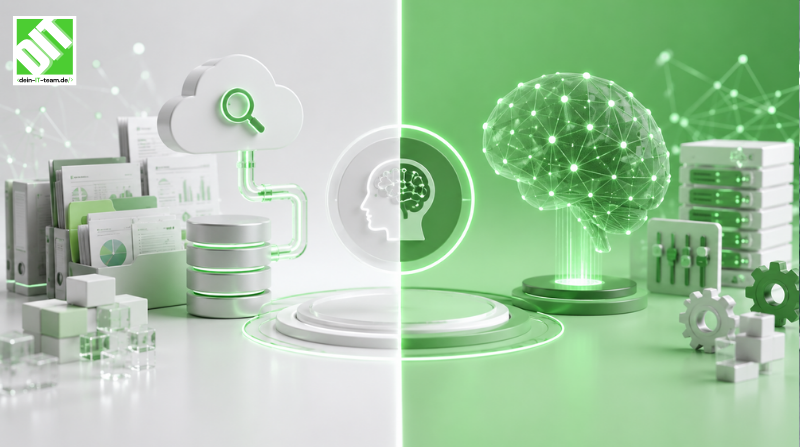
Understand RAG vs fine-tuning for enterprise data. Learn when to use each approach, cost analysis, and how to build successful enterprise AI agents.
Your enterprise has mountains of data. Customer information, proprietary documents, internal processes, historical decisions, market research, industry knowledge. This data contains competitive advantage. Yet most large language models know nothing about it.
You need AI that understands your business. But how? Two approaches dominate enterprise AI implementation: Retrieval-Augmented Generation (RAG) and fine-tuning. Both let AI systems work with your data. Both have passionate advocates. Both solve real problems. But they're fundamentally different in how they work, what they cost, and when they make sense.
The wrong choice wastes money and delivers mediocre results. You build systems that don't improve. You spend on fine-tuning when RAG would work better. You implement RAG when fine-tuning is actually the answer. You use hybrid approaches when simpler solutions exist. The costs compound: wasted infrastructure, slower time-to-value, disappointed stakeholders, redundant projects.
Yet most enterprise teams don't understand the tradeoffs. RAG vs. fine-tuning enterprise data isn't a simple either/or decision. It's about understanding your specific problem, data, performance requirements, budget constraints, and timeline. Then matching the right solution.
This guide walks you through everything you need to know about RAG vs. fine-tuning enterprise data. What each approach is. How they work. When to use each. Real examples. Cost analysis. Performance comparison. Hybrid approaches. Decision frameworks. By the end, you'll know exactly which is right for your enterprise data scenarios.
Key Takeaways
RAG vs Fine-Tuning enterprise data represents fundamentally different approaches - RAG retrieves relevant data to give context to AI models, fine-tuning changes the model itself to encode knowledge, and choosing the wrong one between them determines the success or failure of enterprise AI initiatives.
RAG works immediately with your enterprise data - no training time, no GPU resources, immediate results- making it ideal for enterprises with urgent enterprise AI agents and knowledge workers needing AI assistance quickly.
Fine-tuning improves model quality over time but requires significant infrastructure - GPU resources, training time, and ongoing management- but produces models that deeply understand your enterprise digital transformation requirements and specific business patterns.
Cost difference is dramatic - RAG typically costs 10-20% of fine-tuning budgets, making it attractive for enterprises starting enterprise digital transformation but potentially leaving performance on the table.
Performance gap exists for certain enterprise data patterns - fine-tuned models outperform RAG for domain-specific knowledge, proprietary reasoning, and specialized workflows requiring deep understanding of custom software solutions built with your exact business logic.
Hybrid approaches combining RAG and fine-tuning capture benefits of both - retrieval for knowledge, fine-tuning for reasoning- optimal for complex enterprise AI agents handling multiple business domains.
Enterprise data preparation is equally important as which approach you choose - data quality, structure, and governance matter more than methodology selection for ultimate success.
What Is Retrieval-Augmented Generation (RAG)?
Retrieval-Augmented Generation is an architecture that gives AI models access to your external data at the moment they generate responses.
Here's how RAG works in simple terms:
You ask an AI system a question about your enterprise data. The system searches your database or document repository for relevant information. It retrieves the most relevant pieces. It feeds that context to the language model. The model generates an answer using both its base knowledge and the context you provided.
Unlike fine-tuning, which changes the model itself, RAG leaves the model unchanged. The model is like a consultant who gets hired to solve problems. Fine-tuning is like hiring the consultant and having them specialize for months. RAG is like having the consultant access your company's archives before answering questions.
Core Components of RAG Architecture
RAG systems have several essential pieces:
Document Processing: Your enterprise data (PDFs, emails, internal documents, databases) gets converted to a format AI systems can search. This includes extracting text, splitting documents into chunks, cleaning up formatting, handling images and tables.
Embedding Generation: Each chunk of text gets converted to a mathematical representation (embedding) that captures meaning. Similar documents have similar embeddings. This allows semantic search - finding documents by meaning, not just keywords.
Vector Database: Embeddings get stored in a vector database optimized for fast similarity search. Traditional databases search by exact matches. Vector databases search by similarity - "find documents similar to this query." Systems like Pinecone, Weaviate, Milvus, or Chroma specialize in this.
Retrieval Pipeline: When a user asks a question, the system converts that question to an embedding, searches the vector database for similar documents, retrieves the most relevant ones.
Context Integration: The retrieved documents get inserted into the prompt sent to the language model. The model uses this context to generate better answers.
Response Generation: The language model generates a response using both its training knowledge and the retrieved context.
Advantages of RAG for Enterprise Data
RAG has compelling advantages for many enterprise situations:
RAG works with enterprise data immediately. No training time. No infrastructure requirements. You upload documents today, get AI-powered search and question-answering tomorrow. For enterprises in enterprise digital transformation, this speed matters.
RAG is cost-effective. No expensive GPU infrastructure. No training compute costs. You pay for vector database storage and language model API calls. Typically 10-20% of fine-tuning costs.
RAG keeps models generic and flexible. The same base model works for multiple domains. A single model can answer questions about sales, marketing, operations, and finance by retrieving relevant documents. No need for separate fine-tuned models.
RAG retrieves source documents. Users can verify answers by checking source material. This transparency builds confidence and enables fact-checking. Fine-tuned models generate text without showing sources.
RAG scales with your data. Add more documents, retrieve more context. No retraining required. Your knowledge base grows independently from your AI model.
RAG preserves exact knowledge. If information needs to be exact (legal terms, compliance requirements, specific customer data), RAG retrieves verbatim sources. Fine-tuning approximates knowledge, sometimes getting details wrong.
Limitations of RAG for Enterprise Data
Yet RAG has real constraints:
RAG struggles with reasoning tasks. If answering a question requires combining multiple pieces of information across different documents, RAG must retrieve all relevant pieces and hope the model can integrate them. For complex business logic or strategic decisions, this often fails.
RAG requires good documents. If documents are poorly written, poorly structured, or ambiguous, RAG will retrieve irrelevant results. The "garbage in, garbage out" problem is severe.
RAG can hallucinate sources. Sometimes models cite documents that don't contain what they claim. This undermines trust in results, especially for regulated industries.
RAG embedding limitations mean semantic similarity doesn't always work. Questions about "employee turnover" might not retrieve documents about "staff churn" even though they mean the same thing. The embedding model needs to understand your domain vocabulary.
RAG increases latency. Every query requires embedding generation, database search, document retrieval, and context integration before the model generates an answer. This adds seconds to response time compared to direct model calls.
What Is Fine-Tuning?
Fine-tuning is a training process that adapts a pre-trained language model to excel at your specific domain or task.
Here's how fine-tuning works:
A pre-trained model starts with knowledge from its training data (everything its creators trained it on). Fine-tuning takes that base model and trains it on your specific enterprise data. The model learns patterns specific to your business, domain terminology, your style of communication, your specific processes and logic.
Unlike RAG, which keeps the base model unchanged, fine-tuning actually modifies the model. The model's weights change. The model's behavior changes. After fine-tuning, the model is a different model - one that specializes in your enterprise data patterns.
How Fine-Tuning Works
The fine-tuning process follows these steps:
Data Preparation: You gather enterprise data examples showing desired behavior. For customer support, these might be previous customer interactions and ideal responses. For technical documentation, these might be questions and accurate answers. You clean this data, format it consistently, and validate quality.
Model Selection: You choose a base model to fine-tune. Smaller models (7 billion parameters) are cheaper to fine-tune. Larger models (70+ billion parameters) are more capable but expensive. You balance capability with cost.
Training Setup: You configure hyperparameters - learning rate, batch size, number of training epochs, validation strategy. These control how the model learns from your data.
Fine-Tuning Process: The model trains on your enterprise data. During training, the model adjusts its internal weights to better predict outputs for your specific inputs. This is computationally intensive - typically requiring GPU resources for hours or days.
Validation and Testing: As the model trains, it's tested on held-out data to ensure it's learning correctly and not overfitting (memorizing specific examples instead of learning generalizable patterns).
Deployment: The fine-tuned model replaces the base model in production. Inference (using the model) is usually faster than RAG because no retrieval is required.
Advantages of Fine-Tuning for Enterprise Data
Fine-tuning delivers significant benefits for specific enterprise AI agents and custom software solutions:
Fine-tuned models internalize enterprise knowledge. The model literally learns your business patterns, terminology, logic, and reasoning style. For complex domains, this deep understanding enables better responses than retrieval alone.
Fine-tuned models are faster at inference time. No document retrieval needed. The model directly generates answers from learned knowledge. For user-facing applications, this faster response time improves experience.
Fine-tuned models reason better. Because knowledge is embedded in the model itself, it can more effectively combine knowledge pieces, apply complex logic, and make nuanced decisions. Fine-tuned customer support models understand context from the entire conversation history better than RAG systems.
Fine-tuned models work in restricted environments. If you can't access external vector databases or internet connectivity during inference, fine-tuning works. RAG requires retrieval infrastructure available at inference time.
Fine-tuned models maintain consistency. All instances of the model behave identically. RAG results depend on what documents were retrieved - different queries might get different document sets. Fine-tuned models are more predictable.
Limitations of Fine-Tuning for Enterprise Data
Yet fine-tuning has significant downsides:
Fine-tuning requires substantial infrastructure. Training modern language models requires GPU clusters. Smaller models need $1,000-5,000 in compute. Larger models need $10,000-50,000+. This barrier prevents many enterprises from experimenting.
Fine-tuning requires significant data. You need hundreds or thousands of quality training examples. Preparing this data takes time and effort. Enterprises with limited labeled data struggle with fine-tuning.
Fine-tuning takes time. Even small fine-tuning jobs take hours. Large ones take days or weeks. If you need results quickly, fine-tuning delays enterprise digital transformation initiatives.
Fine-tuned knowledge becomes stale. When your enterprise data changes, the model becomes outdated. You must retrain. This creates overhead for continuously evolving domains.
Fine-tuned models are knowledge-frozen at training time. If a document is updated, the model doesn't automatically know the new version. You must retrain.
Fine-tuned models are expensive to maintain. Each model needs versioning, monitoring, and retraining pipelines. Managing dozens of fine-tuned models becomes operationally complex.
Direct Comparison: RAG vs Fine-Tuning Enterprise Data
Understanding the tradeoffs between RAG vs fine-tuning enterprise data requires examining key dimensions:
Speed to Implementation
RAG wins decisively. Upload documents today, search tomorrow. Fine-tuning takes weeks of data preparation plus days of training.
For enterprises in urgent enterprise digital transformation, RAG enables faster time-to-value. Fine-tuning is better when you have time to prepare properly.
Cost
RAG is dramatically cheaper. Vector database costs are modest. Language model API calls cost pennies. Fine-tuning requires expensive GPU infrastructure. For medium-sized enterprises, RAG might cost $500/month while fine-tuning costs $5,000-20,000/month in infrastructure.
This cost difference makes RAG attractive for budget-conscious initiatives. But fine-tuned models often reduce inference costs over time because they don't require external API calls.
Knowledge Freshness
RAG stays fresh automatically. Update a document in your repository, and it's immediately available to RAG systems. Fine-tuning requires retraining when knowledge changes.
For rapidly evolving domains (news, regulations, market data), RAG is superior.
Reasoning Quality
Fine-tuning excels at complex reasoning. Models learn to apply your specific business logic. For customer support requiring understanding of your company's policies, fine-tuning produces better results.
RAG handles reasoning tasks adequately but requires better prompt engineering to combine multiple retrieved documents effectively.
Integration with Existing Systems
RAG easily integrates with existing data sources. Connect to your document management system, database, or knowledge base. Data flows automatically.
Fine-tuning requires exporting data, formatting it consistently, and uploading for training. More manual integration work.
Compliance and Data Privacy
RAG can be configured to keep data on-premises. Vector databases run in your infrastructure. Language model and API calls can use private endpoints.
Fine-tuning requires uploading your enterprise data to training infrastructure. This raises compliance concerns for regulated industries.
Accuracy for Specific Tasks
Fine-tuning usually produces more accurate results for well-defined tasks where you have good training data. Customer service fine-tuned models often achieve 90%+ accuracy compared to 75-85% for RAG.
For open-ended questions or new domains, RAG is often comparable or better.
Scalability
RAG scales by adding documents to your vector database. No model retraining needed.
Fine-tuning scaling requires training separate models for different domains or creating larger models. This adds complexity.
When to Use RAG for Enterprise Data
RAG is the right choice for:
Knowledge-Heavy Applications: Your business value comes from accessing the right information. Customer support powered by your company's documentation. Research-heavy analysis. Competitive intelligence. Document search and summarization.
In these situations, RAG's strength (finding and retrieving relevant information) directly matches what you need.
Rapidly Changing Information: Regulations, market data, customer information, pricing, policies - all changing constantly. Fine-tuning would fall behind immediately. RAG stays current by retrieving from live data sources.
For compliance and risk management applications, RAG's ability to stay current is invaluable.
Enterprise Data with Privacy Concerns: Healthcare data, financial records, personal information. You need AI capabilities without uploading sensitive data to external training infrastructure. RAG can process data entirely on-premises or in controlled environments.
For regulated industries, RAG's privacy benefits often outweigh performance advantages fine-tuning might offer.
Transparent Reasoning: Users need to understand why the AI gave a particular answer. RAG retrieves and shows source documents. Users can verify answers. For compliance audits or legal applications, this transparency is essential.
Fine-tuning produces answers without showing reasoning or sources, which undermines trust.
Multiple Domains: You need AI across sales, marketing, operations, finance, and legal. One RAG system can service all domains by retrieving from different document repositories. Fine-tuning requires separate models.
For enterprise digital transformation spanning multiple business functions, RAG's generality is an advantage.
Limited Training Data: You don't have hundreds of labeled examples for fine-tuning. You have documents. RAG works with documents directly.
Many enterprises have vast document repositories but limited labeled training data.
Urgent Timeline: You need AI capabilities within weeks, not months. RAG deployment takes 2-4 weeks. Fine-tuning takes 2-4 months, including data preparation.
For competitive or time-sensitive initiatives, RAG's speed matters.
Budget Constraints: Your infrastructure budget is limited. RAG costs less than fine-tuning. You can deliver AI value with modest infrastructure investment.
Financially conservative enterprises often choose RAG for this reason.
When to Use Fine-Tuning for Enterprise Data
Fine-tuning is the right choice for:
Complex Business Logic: Your competitive advantage isn't just having information - it's knowing how to use it. Complex pricing models. Risk assessment. Strategic decision-making. These require deep domain understanding that fine-tuning enables.
If your value proposition requires sophisticated reasoning within your domain, fine-tuning can produce superior results that justify its cost.
Specialized Vocabularies: Your industry or company uses specialized terminology that generic models don't understand. Medical diagnosis. Legal contracts. Manufacturing processes. Fine-tuning adapts the model to understand your vocabulary deeply.
In highly specialized domains, fine-tuning often produces better results than RAG dramatically.
Customer-Facing AI Agents: Performance and speed matter for user experience. Fine-tuned models respond faster without external API calls. For consumer applications where milliseconds matter, fine-tuning is justified.
Enterprises building commercial AI products often fine-tune for speed and reliability.
Proprietary Reasoning Patterns: Your business logic is proprietary. You don't want to send business reasoning queries to external APIs where competitors might see them. Fine-tuning keeps reasoning in-house.
For competitive intelligence or proprietary processes, fine-tuning's privacy can be worth the cost.
Large-Scale Enterprise AI Agents: You're deploying AI across thousands of users with heavy usage. Fine-tuned models reduce dependency on expensive external APIs. At scale, fine-tuning becomes cost-effective.
For widely-deployed enterprise AI agents, the reduction in per-query costs can exceed training costs.
Real-Time Applications: Your application can't tolerate retrieval latency. Trading decisions, emergency response, real-time manufacturing control. Every millisecond matters. Fine-tuning's faster inference is essential.
For latency-critical applications, fine-tuning may be necessary.
Limited Internet Connectivity: You're deploying AI in environments without reliable external connectivity. Oil rigs. Aircraft. Field locations. Fine-tuning's self-contained inference works where RAG's retrieval would fail.
For remote or disconnected deployments, fine-tuning enables AI where RAG doesn't work.
Accuracy Requirements: Your application requires 95%+ accuracy with no false positives acceptable. Medical diagnosis. Safety-critical systems. Compliance decisions. Extensive fine-tuning can approach these accuracy levels. RAG usually can't.
In safety- or compliance-critical applications, fine-tuning's accuracy advantage justifies cost.
Real-World Examples: RAG vs Fine-Tuning Enterprise Data
Understanding these approaches in practice reveals when each excels.
Example 1: Customer Support - RAG Works Better
A mid-size SaaS company manages support tickets for 10,000+ customers. They have 50,000 pages of documentation covering products, configurations, troubleshooting, FAQs, and known issues.
Challenge: Support representatives spend too much time searching documentation for answers. Customers want self-service support through chat.
Solution Considered: Fine-tune a model on company documentation and historical support tickets.
Why RAG Was Better: Fine-tuning would have taken 2 months of data preparation plus 2 weeks of training. Support documentation changes weekly as products evolve. Fine-tuned knowledge would be outdated immediately.
Implemented Solution: Built RAG system connecting to documentation repository. Support staff and customers can now ask questions in natural language. System retrieves relevant documentation and generates answers. Deployment took 3 weeks.
Results: Support response time dropped 60%. Customers answered 40% of questions themselves. Documentation updates instantly flow through to the AI system. Cost: $800/month in vector database and API usage. Fine-tuning would have cost $8,000/month in infrastructure plus $4,000/month for retraining the pipeline.
Example 2: Specialized Medical Diagnosis - Fine-Tuning Wins
A healthcare organization built an AI system to assist radiologists in diagnosing cardiac conditions from medical images and patient history.
Challenge: Accuracy matters - incorrect diagnoses harm patients. Generic models often miss subtle patterns in cardiac imaging.
Solution Considered: Use RAG to retrieve similar historical cases from medical literature.
Why Fine-Tuning Was Better: Cardiac diagnosis requires recognizing subtle patterns. Comparing to historical cases (RAG) helps but isn't enough. The model needed to internalize what radiologists have learned about how disease manifests in cardiac imaging.
Implemented Solution: Fine-tuned specialized medical model on 5,000 validated cardiac imaging cases with expert annotations. Model learned to recognize disease patterns, assess severity, and identify complications.
Results: Fine-tuned model achieved 94% accuracy compared to 82% for RAG approach. At healthcare scale (hundreds of diagnoses per day), the 12% accuracy improvement justified the $30,000 training and infrastructure cost. The model catches real diseases others missed.
Example 3: Regulatory Compliance - Hybrid Approach Optimal
A financial services firm needed AI system for regulatory compliance checking across complex rules, regulations, client agreements, and internal policies.
Challenge: Regulations change constantly. Policies are highly specific. Reasoning combines rules with specific circumstances.
Solution Considered: Fine-tune on regulations and historical compliance decisions vs use RAG to retrieve relevant regulations.
Decision: Hybrid approach combining both.
Implementation: Built RAG system retrieving current regulations, client agreements, policies. Used a fine-tuned model to interpret regulations and apply them to specific situations. The fine-tuned model was trained on 2,000 historical compliance decisions to learn how the firm interprets rules.
Results: The hybrid approach got the best of both worlds. RAG kept regulations current. Fine-tuned model applied sophisticated reasoning. System caught compliance issues that would have been missed with either approach alone.
Hybrid Approaches: Combining RAG and Fine-Tuning
For complex enterprise AI agents, the best solution often combines both approaches.
RAG for Knowledge, Fine-Tuning for Reasoning
Architecture: Use RAG to retrieve relevant information from your knowledge base. Feed retrieved context to a fine-tuned model for interpretation and reasoning.
When to use: Complex domains requiring both current information and specialized interpretation. Compliance, legal analysis, medical diagnosis, strategic planning.
Example: Legal analysis AI retrieves relevant case law (RAG) and applies specialized legal reasoning (fine-tuned model) to your specific situation.
Fine-Tuning for Routing, RAG for Retrieval
Architecture: Fine-tune model to understand questions and decide what information is needed. Route to the appropriate RAG system that retrieves from relevant domain-specific knowledge bases.
When to use: Multi-domain enterprises where different questions need different knowledge sources.
Example: Enterprise AI assistant understands your question, decides if it's about sales, operations, or finance, routes to appropriate RAG system with relevant documentation.
RAG with Fine-Tuned Retriever
Architecture: Fine-tune embedding model for your domain. Use fine-tuned embeddings in the RAG system to better understand semantic similarity in your domain vocabulary.
When to use: Specialized domains where generic embeddings fail to capture domain-specific meaning.
Example: Legal AI fine-tunes an embedding model to understand legal concepts. RAG system using fine-tuned embeddings retrieves more relevant legal documents.
Cascade Architecture
Architecture: Start with a fast fine-tuned model. If confidence is low, trigger RAG to retrieve additional context, then re-answer with more context.
When to use: Applications requiring both speed and accuracy.
Example: Customer support AI quickly answers with a fine-tuned model. For complex questions with low confidence, it retrieves documentation and provides a more detailed answer.
Implementation Considerations for Enterprise Data
Choosing between RAG and fine-tuning requires considering infrastructure, data, and organizational factors.
Data Preparation Requirements
RAG: Requires well-structured documents. Benefits from good metadata, clear organization, and consistent formatting. Needs embeddings generation infrastructure.
Fine-Tuning: Requires labeled training examples. Needs consistent format (question-answer pairs, input-output examples). Quality matters more than quantity - 100 high-quality examples beats 10,000 poor examples.
Your existing data preparation capability should influence the choice.
Infrastructure Requirements
RAG: Minimal infrastructure. Vector database (can run on modest server). Language model API (serverless). Deploy in 2-4 weeks.
Fine-Tuning: Significant infrastructure. GPU resources. Training pipelines. Model serving. Deploy in 2-4 months after data preparation.
Your infrastructure capability and budget should be factored in.
Governance and Compliance
RAG: Source documents are retrieval records. Easier to audit what information AI used. Better for explainability requirements.
Fine-Tuning: Knowledge is internalized in model weights. Harder to audit what influenced decisions. Harder to explain reasoning.
Regulated industries often prefer RAG's explainability.
Organizational Maturity
RAG: Works well with existing documentation and processes. Doesn't require significant organizational change.
Fine-Tuning: Requires data science expertise, infrastructure management, and model lifecycle processes. Needs a dedicated team.
Early-stage AI initiatives benefit from RAG's simplicity. Mature AI organizations leverage fine-tuning's power.
Time-to-Value
RAG: Quick wins. Deploy in weeks. Start delivering value immediately.
Fine-Tuning: Long lead times. Requires 2-4 months before deployment. But delivers higher value once deployed.
Project timeline should influence choice.
Continuous Learning
RAG: Knowledge base can be continuously updated. New documents immediately available. No retraining needed.
Fine-Tuning: Static at training time. When knowledge changes, retraining is required. Retraining takes time and resources.
For continuously evolving domains (regulations, market data), RAG's continuous learning is valuable.
Performance Comparison for Enterprise AI Scenarios
How RAG and fine-tuning actually compare on real metrics:
Accuracy
RAG: 75-85% accuracy for knowledge retrieval tasks. Quality depends on document quality and embedding model.
Fine-Tuning: 85-95% accuracy for tasks with good training data. Superior pattern recognition.
Advantage: Fine-tuning for accuracy-critical applications.
Latency
RAG: 500-2000ms per query (retrieval + generation). External API calls add latency.
Fine-Tuning: 100-500ms per query. No external dependencies.
Advantage: Fine-tuning for latency-sensitive applications.
Cost per Query
RAG: $0.001-0.01 per query (embedding + language model API).
Fine-Tuning: $0.0001-0.001 per query after amortizing training cost. At high volume, fine-tuning becomes cheaper.
Advantage: RAG for low volume. Fine-tuning for high volume (break-even often around 100k-500k queries).
Knowledge Freshness
RAG: Minutes (new documents immediately available).
Fine-Tuning: Weeks (retraining pipeline).
Advantage: RAG for frequently changing knowledge.
Source Attribution
RAG: Retrieves and shows source documents.
Fine-Tuning: Generates text without showing sources.
Advantage: RAG for transparency requirements.
Reasoning Capability
RAG: Adequate for combining multiple information pieces. Struggles with complex logic.
Fine-Tuning: Excellent for complex reasoning and domain-specific logic.
Advantage: Fine-tuning for complex reasoning.
Cost Analysis: RAG vs Fine-Tuning Enterprise Data
Actual costs depend on your specific scenario, but here's how economics work:
RAG Cost Structure
Vector Database: $500-2000/month depending on data size and query volume.
Language Model API: $0.001-0.01 per query. At 100k queries/month: $100-1000/month.
Development: $20k-40k for implementation.
Ongoing maintenance: $5k-10k/month for monitoring and updates.
Total First Year RAG: $50k-80k development plus $15k-24k/month operational = ~$230k-368k first year.
Fine-Tuning Cost Structure
Data Preparation: $10k-30k (labor to prepare training examples).
Training Infrastructure: $5k-50k depending on model size and data quantity.
Model Serving Infrastructure: $2k-10k/month.
Retraining Pipeline: $3k-8k/month (infrastructure for periodic retraining).
Development: $25k-50k for implementation.
Ongoing maintenance: $3k-8k/month for monitoring and optimization.
Total First Year Fine-Tuning: $40k-80k development plus $35k-130k data/training plus $36k-96k operational = ~$111k-306k first year. But ongoing operational costs are higher.
Economics by Volume
At 10k queries/month: RAG is ~70% cheaper than fine-tuning.
At 100k queries/month: RAG is ~40% cheaper than fine-tuning.
At 1M queries/month: Fine-tuning is ~20% cheaper than RAG (training cost amortized).
At 10M+ queries/month: Fine-tuning is ~60% cheaper than RAG.
Total Cost of Ownership
Year 1: RAG usually cheaper.
Year 2-3: Costs equalize. RAG saves on retraining. Fine-tuning saves on per-query costs if high volume.
Year 3+: At high volume, fine-tuning becomes cheaper. At low volume, RAG remains cheaper.
Your query volume significantly influences economics.
Choosing Between RAG and Fine-Tuning for Enterprise Data
Here's the decision framework for your enterprise data scenarios:
Choose RAG if:
You need results quickly (timeline < 3 months).
You have good documents but limited labeled training data.
Knowledge changes frequently and needs to stay current.
You need to show sources and reasoning for compliance or trust.
You have privacy concerns about uploading data externally.
You have multiple domains needing a single AI system.
Your budget is limited ($50k-150k annual).
Your organization lacks AI infrastructure expertise.
Your use case is primarily knowledge retrieval.
Choose Fine-Tuning if:
You have excellent labeled training data (500+ examples).
You need highest possible accuracy (95%+).
You require fast inference without external dependencies.
You're deploying at very high volume (millions of queries).
Your competitive advantage depends on specialized domain reasoning.
You have safety or compliance requirements that need explainability.
You're building commercial AI products.
You have dedicated AI infrastructure and talent.
Your use case requires complex reasoning or pattern recognition.
Choose Hybrid if:
You need current information and specialized reasoning.
You operate across multiple domains with domain-specific needs.
You require both speed and high accuracy.
You have budget for more complex architecture.
Your organization has mature AI capabilities.
You're optimizing for long-term competitive advantage.
Building Enterprise AI Agents with RAG vs Fine-Tuning
Enterprise AI agents - autonomous systems that understand your business and take actions - represent the future of business automation. Whether to use RAG or fine-tuning is central to agent architecture.
RAG-Based Enterprise AI Agents
These agents access your knowledge base to understand context, retrieve relevant information, and reason about actions.
Example: A sales agent retrieves customer history (RAG), reads current pipeline status, and suggests follow-up actions. The agent knows what your company knows about this customer through retrieval.
Advantage: Agents stay current as information changes. Scale across different customer segments by retrieving appropriate context.
Limitation: Agents can't reason about information they can't retrieve. Complex business logic that requires synthesis might fail.
Fine-Tuned Enterprise AI Agents
These agents internalize business logic through training. They understand your company's way of doing business at a deep level.
Example: A hiring agent understands your company culture, values, required skills, and team dynamics from training on hiring decisions. It makes hiring decisions consistent with how your company actually hires.
Advantage: Deep understanding of business patterns. Consistent decision-making aligned with company values and practices.
Limitation: Agents become outdated if business practices change. Retraining required to update business logic.
Optimal Enterprise AI Agents
Best-performing enterprise AI agents combine both approaches. They retrieve current information (RAG) but apply fine-tuned business logic and reasoning. They're grounded in current data but make decisions aligned with company culture and practices.
For organizations building custom software solutions with enterprise AI agents, this hybrid approach is often optimal.
For enterprise digital transformation initiatives deploying AI across the organization, understanding this tradeoff is critical to success.
Knowledge Management for Enterprise Data Success
Whether you choose RAG or fine-tuning, knowledge management makes or breaks implementation.
Document Quality Matters
Poorly written, disorganized, or contradictory documents doom both RAG and fine-tuning.
Before committing to either approach, audit your documentation. Is it clear? Organized? Accurate? Updated? Good knowledge management practices must precede AI implementation.
Organizational Readiness
Organizations often focus on the AI technology but neglect the organizational side. Who maintains the knowledge base? Who reviews and updates documents? Who is accountable for accuracy?
RAG requires continuous document management. Fine-tuning requires managing training data. Both require organizational processes that many companies lack.
Data Governance
What information is used for training or retrieval? Are there privacy concerns? Compliance requirements? Sensitive information?
Proper data governance, classification, and access controls must be in place before deploying RAG or fine-tuning at scale.
Source of Truth
Your knowledge management system must be the source of truth. Multiple contradictory versions undermine both RAG and fine-tuning.
Before implementing AI on enterprise data, establish a single source of truth for each type of knowledge.
Continuous Improvement
Monitor how RAG and fine-tuning perform. Collect feedback. Improve documents (for RAG) or refine training (for fine-tuning). This continuous improvement cycle is where sustained value comes from.
Technology Stack for RAG vs Fine-Tuning Implementation
Choosing the right tools matters for implementation success.
RAG Technology Stack
Document Processing: LangChain, Llama Index (formerly GPT Index), Apache Airflow.
Embeddings Generation: OpenAI Embeddings, Cohere, Hugging Face models.
Vector Databases: Pinecone, Weaviate, Milvus, Chroma, Qdrant.
Language Models: OpenAI GPT-4, Anthropic Claude, Open-source Llama 2.
Orchestration: LangChain, Semantic Kernel, Custom Python.
For custom solutions with complex enterprise data requirements, Custom Software Development can build optimized RAG pipelines tailored to your specific knowledge domains and retrieval patterns.
Fine-Tuning Technology Stack
Training Frameworks: Hugging Face Transformers, OpenAI Fine-Tuning API, Anthropic Fine-Tuning.
Infrastructure: AWS SageMaker, Google Cloud AI, Azure ML, Lambda Labs GPU cloud.
Model Management: Weights & Biases, MLflow, Hugging Face Hub.
Inference Serving: Hugging Face Inference API, BentoML, vLLM.
Monitoring: Grafana, Datadog, custom Python monitoring.
Hybrid Technology Stack
Combines tools from both RAG and fine-tuning stacks.
Often includes an orchestration layer coordinating retrieval with fine-tuned model reasoning.
Requires more sophisticated infrastructure and DevOps.
For enterprise digital transformation initiatives deploying sophisticated AI systems across the organization, AI Services can architect, build, and deploy optimized implementations whether RAG, fine-tuning, or hybrid approaches.
Understanding RAG vs fine-tuning enterprise data is essential context for building enterprise AI agents that truly serve your business. To understand how RAG and fine-tuning fit into broader AI agent architecture and strategy, read "AI Agents vs AI Assistants: What's the Difference?" to learn how different AI agent approaches solve different enterprise data and automation problems.
Common Implementation Mistakes
Learning from failures accelerates success.
RAG Mistakes
Uploading documents without cleaning. Messy documents create retrieval failures. Invest in document preparation.
Using generic embeddings for specialized domains. Domain-specific embedding fine-tuning often improves retrieval quality dramatically.
Not validating retrieval quality. Poor retrieval ruins RAG. Always verify that retrieval is returning relevant documents before blaming the language model.
Forgetting to update documents. RAG is only as current as your documents. Establish processes for keeping documents fresh.
Over-retrieving. Feeding 20 documents to the model when 3 would suffice creates confusion. Balance retrieval quantity with quality.
Fine-Tuning Mistakes
Insufficient training data. Attempting to fine-tune on 50 examples rarely works. Invest in data preparation.
Poor quality training data. Garbage training data creates garbage models. Spend time on data quality over data quantity.
Over-fitting. Training too long on limited data creates models that memorize instead of learning. Use proper validation and early stopping.
Forgetting to evaluate on domain-specific metrics. Generic accuracy metrics miss important performance aspects. Define metrics that actually matter for your use case.
Not versioning models and data. Without versioning, you can't reproduce results or debug issues. Establish proper MLOps practices.
Both
Focusing on technology instead of business value. The best RAG or fine-tuning system that doesn't solve real business problems is a waste. Start with business problems, then match technology.
Ignoring change management. AI systems change how work gets done. Resistance from staff kills projects. Include organizational change in your plan.
Insufficient governance. Who decides what information is used? What happens when models make mistakes? Governance prevents escalation.
Conclusion
RAG vs. fine-tuning enterprise data isn't either/or. It's about understanding your specific problem, data, requirements, timeline, and budget. Then matching the right solution.
RAG works today with your enterprise data. It stays fresh. It's transparent. It costs less upfront. Use it for knowledge retrieval when data changes frequently, when you need sources, when budget is limited, when timeline is urgent.
Fine-tuning excels at reasoning. It understands your domain deeply. It responds faster. It costs less at high volume. Use it for complex business logic, when you have good training data, when you need maximum accuracy, when you're deploying at scale, when you need specialized reasoning.
Hybrid approaches capture benefits of both. They're optimal for complex enterprise digital transformation initiatives where you need current information grounded in sophisticated business logic.
The organizations succeeding with enterprise AI agents aren't choosing between RAG and fine-tuning. They're using both strategically. They retrieve information to keep current. They fine-tune to reason deeply. They combine both in systems that are both smart and grounded in reality.
Start with your business problem. Understand your data. Assess your infrastructure and budget. Match the technology to your actual needs. Build systematically. Measure results. Improve continuously.
That's how enterprise digital transformation with AI succeeds.
Frequently Asked Questions
Can we switch from RAG to fine-tuning later if RAG doesn't work well?
Yes. Many successful implementations start with RAG to validate the use case and gather training data, then fine-tune once they understand patterns. This is a reasonable approach - prove value first, then invest in fine-tuning. The data and learnings from RAG inform better fine-tuning.
How much training data do we need for fine-tuning?
Minimum 100 high-quality examples, but 500-1000 is better. Data quality matters more than quantity. 100 excellent examples usually beats 1000 poor examples. For specialized domains, you might need 2000-5000 examples. Start with what you have and expand if results are inadequate.
Can we fine-tune on proprietary enterprise data without sharing it with third parties?
Yes. Use open-source models or models you can fine-tune in-house. You can fine-tune smaller models (7-70 billion parameters) on your own infrastructure. Larger models might require cloud GPU resources, but you can use private endpoints and data retention policies. For extremely sensitive data, fine-tune locally.
What's the best way to keep RAG systems current when documents change frequently?
Establish automated document ingestion from your source systems (CMS, database, document management). When documents update, new versions automatically flow to your vector database. This keeps RAG current without manual intervention. Version documents and track which version was retrieved so users know when information is from.
How do we know if fine-tuning actually improved performance over the base model?
Establish metrics before training. Use held-out test data your model never saw during training. Compare the fine-tuned model against the base model on these metrics. Also compare against RAG baseline. Sometimes the effort of fine-tuning doesn't produce meaningful improvement - the data and testing reveal this.
Can we use RAG and fine-tuning for different parts of the same application?
Absolutely. Use RAG for knowledge retrieval and fine-tuning for reasoning. Different product features might use different approaches. Route user queries to the appropriate system. This hybrid approach is sophisticated but increasingly common in mature enterprises.
How does enterprise data security impact RAG vs fine-tuning decisions?
RAG: Data stays in your vector database. You control access. Sensitive data never goes to external APIs if you use on-premises models. Usually better for security.
Fine-tuning: Your data goes to training infrastructure. If using cloud services, your data leaves your systems. For highly sensitive data, this is a risk unless you have strict data processing agreements and use on-premise fine-tuning.
What's the typical timeline for RAG vs fine-tuning implementation?
RAG: 2-4 weeks to production if documents are ready. 2-8 weeks if documents need preparation.
Fine-Tuning: 2-4 weeks for data preparation plus 2-8 weeks for fine-tuning and deployment = 4-12 weeks total.
Hybrid: 6-16 weeks for production.
These assume experienced teams and clear requirements. Less experienced teams should add 50% more time.
How often do we need to retrain fine-tuned models?
It depends. If your enterprise data and business logic are stable, you might retrain quarterly or semi-annually. If business changes frequently, you might retrain monthly. Model performance monitoring should guide retraining cadence - retrain when performance degrades. This is an ongoing operational cost.
For enterprise AI agents, is RAG or fine-tuning better?
Neither alone. Both together. Agents need current information (RAG) and deep business understanding (fine-tuning). The best enterprise AI agents retrieve information dynamically and apply fine-tuned reasoning. This hybrid approach combines knowledge currency with business logic consistency.
Recent Posts

September 16, 2026
September 9, 2026