

Public Vs Private Cloud: A Step-by-Step Selection Guide For Businesses
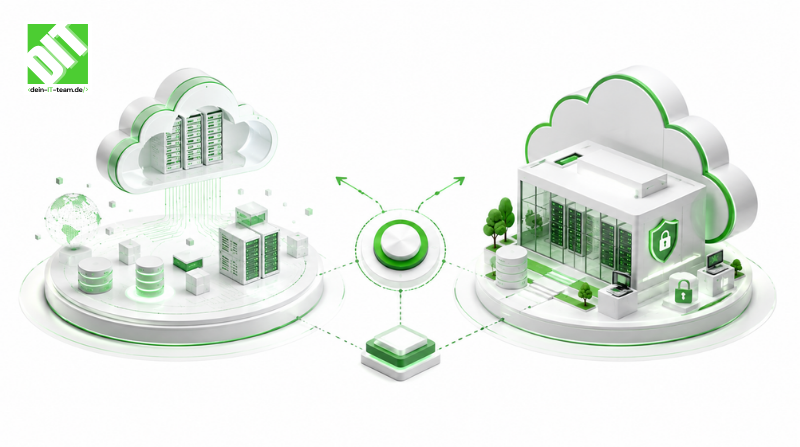
Public vs Private Cloud comparison guide. Learn differences, costs, security and how to choose best cloud model for business.
Public vs Private Cloud decision represents one of the most critical infrastructure choices organizations make when transitioning to cloud computing. Cloud computing has transformed how businesses operate, eliminating need for expensive on-premise data centers and enabling flexible, scalable infrastructure. However, choosing between public and private cloud approaches significantly impacts costs, security, performance and operational complexity.
Public cloud providers like Amazon Web Services, Microsoft Azure and Google Cloud offer shared infrastructure serving thousands of customers simultaneously. Organizations leverage this shared model paying only for consumed resources without capital investment in hardware. Private clouds provide dedicated infrastructure serving single organizations, offering greater control and customization. Public vs Private Cloud decision depends on business requirements, security needs, budget constraints and technical expertise.
Many organizations struggle choosing between public and private clouds because each approach offers distinct advantages and disadvantages. Public clouds provide cost-efficiency, global scalability and continuous innovation. Private clouds offer security, compliance and performance control. Understanding differences between public and private clouds enables informed decisions aligning infrastructure choices with business objectives.
This comprehensive guide walks through public vs private cloud comparison systematically, helping organizations make optimal selection decisions. Whether you prioritize cost efficiency, security control or operational flexibility determines whether public or private cloud better serves your needs. Many enterprises use hybrid approaches combining both models, leveraging strengths of each. Understanding public vs private cloud fundamentals enables strategic infrastructure planning supporting business growth.
Key Takeaways
Public vs Private Cloud choice depends on business requirements rather than universal superiority of either approach.
Public clouds offer cost efficiency, scalability and innovation while requiring accepting less control and potential multi-tenancy concerns.
Private clouds provide dedicated resources, enhanced security and compliance capabilities at higher costs with greater operational responsibility.
DevOps services manage cloud infrastructure effectively ensuring optimal performance regardless of public or private cloud selection.
Public clouds suit startups and organizations with variable workloads while private clouds serve enterprises requiring strict compliance.
Hybrid cloud approaches enable organizations leveraging public cloud cost efficiency alongside private cloud security and control.
Security, compliance, performance and cost considerations determine public vs private cloud selection more than marketing claims.
Public cloud providers handle infrastructure management reducing operational burden compared to private clouds requiring dedicated teams.
Multi-tenancy in public clouds raises data isolation concerns while private clouds guarantee exclusive infrastructure access.
Migration complexity, existing investments and regulatory requirements significantly influence public vs private cloud decisions.
Understanding Public Cloud
What Defines Public Cloud
Public cloud represents computing infrastructure owned and operated by third-party providers accessible to multiple organizations over the internet. Cloud providers maintain data centers hosting hardware, networking, storage and computing resources serving thousands of customers simultaneously. Organizations access public cloud services through web interfaces, paying subscription fees for consumed resources. Public clouds follow utility computing model organizations pay only for what they use similar to electricity consumption.
Public cloud providers offer Infrastructure-as-a-Service enabling renting virtual servers, storage and networking. Servers and storage scale instantly responding to demand. Organizations avoid purchasing expensive hardware, managing physical infrastructure or hiring dedicated infrastructure teams. This model enables small organizations competing with large enterprises through affordable infrastructure access.
Major public cloud providers including Amazon Web Services, Microsoft Azure, Google Cloud Platform and IBM Cloud operate global data centers. Organizations select regions hosting data closest to users minimizing latency. Public clouds provide high availability through multiple data centers protecting against single-location failures.
Public Cloud Advantages
Cost efficiency represents primary public cloud advantage. Organizations avoid capital expenditure for servers, switches and storage requiring enormous upfront investment. Instead, pay operational expenses proportional to usage. This cost structure suits organizations with variable workloads during peak periods, scale resources up; during low periods, scale down minimizing unnecessary spending.
Scalability enables handling sudden demand spikes without provisioning hardware in advance. Adding servers takes minutes rather than days or weeks waiting for hardware delivery and configuration. Global reach through worldwide data centers enables serving customers globally with minimal latency.
Public clouds continuously innovate introducing new services and features. Machine learning, artificial intelligence and big data tools become accessible without specialized expertise. Organizations leverage cutting-edge technology accelerating development without maintaining advanced infrastructure.
Reduced operational burden frees teams from infrastructure management. Cloud providers handle security patches, backups, disaster recovery and capacity planning. Organizations focus on applications rather than infrastructure.
Public Cloud Disadvantages
Security concerns emerge from multi-tenancy architecture. Multiple organizations share infrastructure raising data isolation questions. While providers implement strong isolation, sharing resources theoretically increases breach risk compared to dedicated infrastructure. Regulatory compliance becomes complex different jurisdictions impose different data handling requirements.
Performance variability occurs with resource sharing. Other customers' high usage occasionally impacts your application performance. Bandwidth constraints between users and cloud infrastructure sometimes introduce latency. Sensitive applications requiring consistent performance may suffer.
Vendor lock-in represents long-term risk. Applications built specifically for cloud provider services become difficult to migrate elsewhere. Switching providers requires significant reengineering. Pricing changes by providers create cost uncertainty.
Limited control over underlying infrastructure prevents customization. Organizations cannot optimize hardware for specific workloads. Security configurations follow provider defaults rather than custom requirements.
Understanding Private Cloud
What Defines Private Cloud
Private cloud represents cloud computing infrastructure serving single organization using either on-premise or hosted data centers. Unlike public clouds serving multiple customers, private clouds dedicate all resources to one organization. Organizations maintain complete infrastructure control and responsibility. Private clouds operate within organizational firewalls providing isolated, secure computing environment.
Private clouds can be deployed on-premise within organizational data centers or hosted with third-party providers offering dedicated infrastructure. Hosted private clouds provide some operational relief while maintaining exclusive resource access. Organizations manage private clouds using same cloud management software as public clouds enabling similar user experience and operational practices.
Private cloud infrastructure mirrors public cloud capabilities through virtualization, containers and orchestration. Organizations build private clouds using OpenStack, CloudStack or proprietary solutions. Management interfaces resemble public cloud platforms enabling similar developer experience.
Private Cloud Advantages
Security and data isolation represent primary private cloud advantages. Dedicated infrastructure used exclusively by single organization eliminates multi-tenancy security concerns. Data remains within organizational control with no sharing between customers. Encryption, access controls and security policies customize to organizational requirements.
Compliance becomes simpler with private clouds. Regulatory requirements like HIPAA for healthcare or PCI-DSS for financial services demand strict data handling. Private clouds enable implementing specific compliance controls. Data residency requirements mandating storing data in specific geographic locations become achievable.
Performance consistency enables reliable operations. Without resource contention from other customers, performance remains predictable. Bandwidth between applications and storage remains consistent. Sensitive applications requiring consistent performance thrive in private clouds.
Customization enables optimizing infrastructure for specific workloads. Organizations configure hardware, network and storage matching application requirements. Custom security policies implement organizational standards without compromising for other customers.
Private Cloud Disadvantages
High costs represent primary private cloud disadvantage. Capital expenditure for hardware and infrastructure requires significant upfront investment. Ongoing operational costs for maintenance, staffing and cooling accumulate. Organizations must maintain infrastructure even during low-usage periods increasing per-unit costs. Economies of scale benefiting public cloud providers don't apply organizations shoulder entire cost burden.
Operational responsibility falls on organizations rather than providers. Hiring skilled operations teams costs money and requires time. Managing updates, patches, capacity planning and disaster recovery demands expertise. Smaller organizations lacking infrastructure expertise struggle with operational complexity.
Limited innovation results from not leveraging provider expertise. Organizations implement features available in software rather than accessing cutting-edge services. Machine learning, artificial intelligence and advanced analytics require building custom implementations.
Scalability constraints emerge from finite on-premise resources. Expanding capacity requires purchasing additional hardware, space and power. Scaling takes weeks rather than minutes. Geographic distribution requires deploying multiple data centers.
Cloud integration services enable connecting public and private cloud infrastructure with existing systems creating seamless hybrid environments.
Public vs Private Cloud: Key Differences
Security and Compliance
Public clouds offer strong security through provider expertise and investment in security infrastructure. Providers employ security specialists and implement sophisticated threat detection. However, multi-tenancy introduces theoretical breach risk and regulatory concerns about data location.
Private clouds guarantee exclusive access to infrastructure eliminating multi-tenancy security concerns. Organizations implement custom security policies matching specific requirements. Compliance becomes simpler through dedicated infrastructure under organizational control. Data remains within organizational networks meeting strict residency requirements.
Cost Structure
Public clouds follow utility pricing organizations pay only for consumed resources. Variable workloads benefit from cost efficiency during low-usage periods. Startups and growing companies avoid capital expenditure enabling bootstrap operations. However, unpredictable usage patterns create cost uncertainty.
Private clouds require capital investment in infrastructure alongside ongoing operational costs. Fixed costs remain regardless of utilization. High minimum costs suit large organizations amortizing costs across many applications. Small organizations with underutilized infrastructure face excessive per-unit costs.
Performance and Control
Public clouds provide standardized performance through provider guarantees. Service level agreements specify uptime percentages and response times. However, performance varies based on other customers' usage. Customizing infrastructure for specific workloads proves difficult.
Private clouds enable performance customization through dedicated infrastructure. Organizations optimize hardware, network and storage for specific workloads achieving superior performance. Predictable performance suits sensitive applications. However, organizations cannot scale instantly hardware constraints limit expansion.
Operational Responsibility
Public cloud providers handle infrastructure management reducing organizational burden. Security patches, backups and maintenance become provider responsibility. Organizations focus on applications rather than infrastructure. Smaller organizations without infrastructure expertise benefit from outsourced operations.
Private clouds shift operational responsibility to organizations. Hiring infrastructure teams becomes necessary. Ongoing maintenance, capacity planning and security management consume resources. Larger organizations with existing infrastructure expertise better handle operational burden.
Selection Criteria for Public vs Private Cloud
Assessing Business Requirements
Start by understanding actual business needs rather than assuming public or private cloud fits. Identify workload characteristics stable or variable? Predictable or unpredictable traffic patterns? Sensitive to latency or cost-focused?
Evaluate compliance requirements. Healthcare and financial services face strict regulations potentially requiring private clouds. Data residency requirements mandating specific geographic storage favor private clouds. Standard business applications with minimal compliance requirements suit public clouds.
Consider budget constraints. Organizations with capital available might prefer private clouds while budget-conscious companies prefer public clouds. Total cost of ownership including acquisition, operations and staffing determines actual costs.
Assess technical expertise. Organizations with infrastructure expertise better manage private clouds. Smaller organizations lacking expertise better suited for public clouds reducing operational burden.
Workload Analysis
Different workloads suit different cloud types. Stable, predictable workloads running continuously on consistent resources suit private clouds reducing costs. Variable workloads with traffic spikes suit public clouds enabling cost-efficient scaling.
Sensitive applications requiring consistent performance benefit from private clouds. Public-facing web applications with variable traffic benefit from public cloud scalability. Development and testing environments favor public clouds due to cost efficiency and quick provisioning.
Mission-critical applications requiring guaranteed performance and security suit private clouds. Applications tolerating occasional performance variations and requiring rapid innovation suit public clouds.
Security and Compliance Assessment
Evaluate data sensitivity. Financial information, healthcare records and personally identifiable information require strict security. Private clouds better protect sensitive data. General business information suits public clouds.
Understand regulatory requirements. Different jurisdictions and industries impose different requirements. Private clouds better satisfy strict compliance. Simpler compliance situations suit public clouds.
Assess data residency requirements. Some jurisdictions mandate storing citizen data within borders. Private clouds on-premise easily satisfy residency. Public clouds require regional deployment understanding geographic data handling.
Hybrid Cloud Approaches
Benefits of Hybrid Strategies
Hybrid cloud combines public and private cloud strengths. Organizations run sensitive applications on private clouds while cost-optimizing public cloud usage for development, testing and variable workloads. This balanced approach provides security where needed while leveraging cost efficiency elsewhere.
Flexibility enables shifting workloads between public and private clouds responding to changing requirements. Organizations scale to public clouds during peak periods then return to private clouds during low periods optimizing costs.
Risk mitigation results from avoiding complete dependence on single provider or deployment model. Public cloud provider issues don't completely disrupt operations. On-premise failures don't eliminate public cloud fallback.
Operational flexibility enables using optimal tools and services for specific requirements. Development teams use public cloud services accelerating development. Security-sensitive applications use private cloud compliance capabilities.
Hybrid Cloud Challenges
Complexity increases significantly with hybrid approaches. Managing multiple platforms, networks and security policies requires expertise. Integration between public and private clouds demands careful architectural planning.
Vendor management becomes more complex. Navigating relationships with multiple cloud providers and managing different service levels requires attention.
Cost optimization becomes challenging. Balancing costs across multiple platforms requires sophisticated usage monitoring and resource allocation.
Evaluating Migration and Implementation
Migration Planning
Assess existing infrastructure and applications. Determine which workloads migrate to public clouds and which remain on private infrastructure. Phased migration approaches enable learning and managing risk.
Evaluate data transfer requirements. Moving massive amounts of data to cloud requires careful planning. Network bandwidth limits transfer speeds. Public cloud providers offer data transfer appliances for large migrations.
Plan application modernization. Legacy applications built for on-premise infrastructure might require refactoring for cloud. Cloud-native applications built using containers and microservices realize greater cloud benefits.
Implementation Considerations
Choose cloud providers offering necessary services and compliance certifications. Evaluate provider stability, financial health and long-term viability. Assess provider lock-in risks through API standards and data portability.
Plan resource allocation. Allocate budget, personnel and time for migration. Budget for unexpected challenges extending timelines and increasing costs.
Establish monitoring and optimization processes. Cloud usage monitoring identifies cost optimization opportunities. Performance monitoring ensures applications meet requirements.
Conclusion
Public vs Private Cloud decision depends fundamentally on organizational requirements rather than universal superiority of either approach. Public clouds offer cost efficiency, scalability and innovation while private clouds provide security, control and compliance capabilities. Many organizations adopt hybrid approaches combining both models leveraging strengths of each.
Strategic evaluation of business requirements, compliance needs, budget constraints and technical expertise enables informed decisions. Organizations should assess specific workloads determining optimal cloud deployment. Smaller organizations with variable workloads and limited infrastructure expertise favor public clouds. Larger organizations with sensitive data and strict compliance requirements benefit from private clouds. Most enterprises ultimately adopt hybrid approaches balancing cost and security considerations.
For deeper understanding of cloud implementation challenges and solutions, explore Cloud Migration Challenges: Common Issues, Risks, and Solutions, which provides comprehensive frameworks addressing migration difficulties. This detailed analysis explains how proper planning and execution overcome common cloud adoption obstacles enabling successful infrastructure transformation.
Public vs Private Cloud selection significantly impacts organizational agility, security posture and operational efficiency. Taking time evaluating requirements and consulting with experienced partners ensures optimal decisions supporting long-term business success in cloud-native environments.
Frequently Asked Questions
Which is cheaper public or private cloud?
Public clouds typically cheaper for variable workloads since you pay only for consumed resources. Private clouds cheaper for consistent, high-volume workloads amortizing infrastructure costs across many users. Hybrid approaches optimize costs by using public clouds for variable workloads and private clouds for baseline stable workloads.
Is public cloud less secure than private cloud?
Public clouds offer strong security through provider expertise and investment. Multi-tenancy creates theoretical security concerns but providers implement robust isolation. Private clouds guarantee exclusive infrastructure reducing multi-tenancy risks. Security depends on implementation poorly configured public clouds can be less secure than well-managed private clouds.
Can we use hybrid cloud with existing infrastructure?
Yes, hybrid approaches enable leveraging existing on-premise infrastructure as private cloud alongside public cloud resources. Cloud management platforms enable unified management across both environments. Integration between public and private clouds enables workload portability.
How long does public vs private cloud migration take?
Migration duration varies based on application complexity and data volume. Simple applications might migrate in weeks while complex systems require months. Data transfer bandwidth limits migration speed for large datasets. Planning and testing add significant time.
What compliance requirements determine cloud selection?
Healthcare requires HIPAA compliance often favoring private clouds. Financial services require SOC 2 and PCI-DSS compliance manageable in public clouds with proper configuration. GDPR requires careful data handling manageable in both but simpler in private clouds. Evaluate specific requirements determining cloud suitability.
Which cloud type scales better?
Public clouds scale instantly adding resources on-demand. Scaling from zero to thousands of servers happens in minutes. Private clouds scale within hardware constraints. Expanding capacity requires purchasing and installing additional hardware taking weeks.
What about data backup and disaster recovery?
Public cloud providers handle backups and disaster recovery simplifying operations. Private clouds require organizations managing backups and implementing disaster recovery procedures. Hybrid approaches can leverage public cloud for disaster recovery backup.
Are there hybrid cloud products?
Yes, solutions like VMware Cloud on AWS and Azure Stack enable deploying private cloud infrastructure running on public cloud providers. These offer private cloud capabilities using public cloud infrastructure. Evaluation required to determine true cost and benefit.
How do we ensure cloud security?
Both public and private clouds require security best practices encryption, access controls, regular updates and monitoring. Choose providers with appropriate compliance certifications. Implement shared responsibility models understanding what provider and organization secure.
What should drive our cloud decision?
Business requirements should drive decisions workload characteristics, compliance needs, budget constraints and technical expertise. Avoid choosing based solely on marketing hype or competitor decisions. Proper evaluation ensures decisions align with business objectives.
Recent Posts

September 29, 2026
September 29, 2026