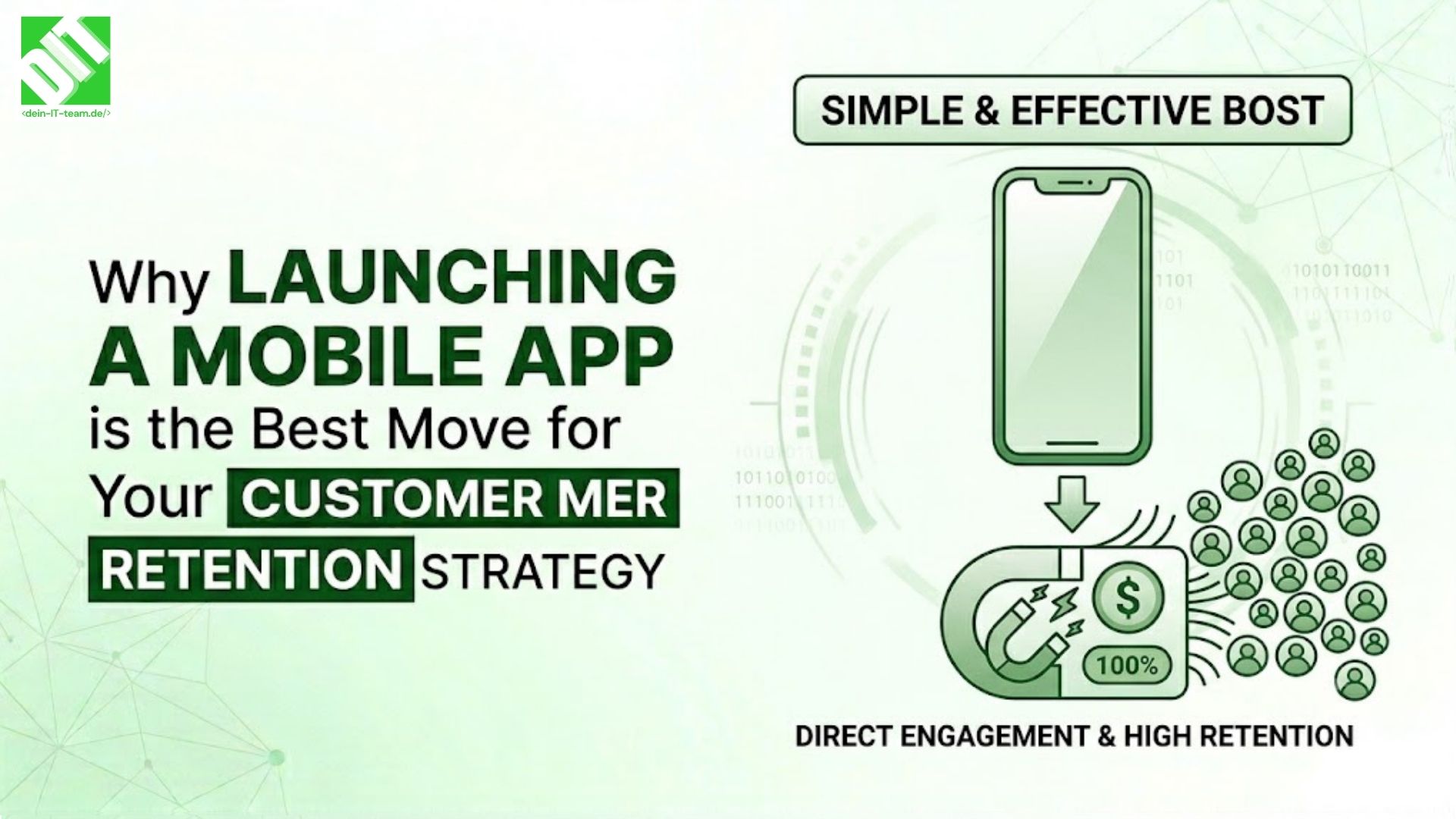
Why Launching a Mobile App is the Best Move for Your Customer Retention Strategy
Learn how custom mobile app development drives customer retention with direct alerts, loyalty rewards, and rapid scaling.
In a highly competitive business landscape, maintaining long-term customer engagement is often far more profitable than continuously funding raw acquisition channels. For expanding companies, a dedicated mobile endpoint acts as a direct line of communication that bypasses the noise of traditional web spaces, allowing brands to build real brand equity. Many organizations rely strictly on standard email newsletters or passive web systems to stay in front of their audience, frequently suffering from low visibility and decreasing retention as a result. Transitioning toward a robust system by working with an expert agency to deliver mobile app development solutions enables your business to embed its utility straight onto your users' devices, cultivating active brand loyalty and driving consistent repeat transactions.
🎯 Key Takeaways
Frictionless Re-Engagement: Personalized notifications allow your operational updates or sales events to achieve exceptional read rates compared to crowded email templates.
Unified Loyalty Frameworks: Integrating rewards directly into the user experience simplifies transactional tracking, making customer retention fully systematic.
Codebase Symmetrical Speed: Deploying centralized, modern software patterns ensures feature enhancements roll out to all active users simultaneously without breaking legacy workflows.
Proprietary Insight Ownership: Collecting first-party interaction signals helps marketing divisions refine their digital strategy with absolute accuracy.
Shifting From Acquisition to Lifetime Value
Many business leaders focus their primary engineering investments entirely on top-of-the-funnel acquisition, neglecting the compounding value of their existing customer base. When a client interacts with your services via a desktop workspace or mobile web browser, the interaction is naturally transactional and fleeting. A single navigation error or external distraction can cause that buyer to abandon your digital ecosystem entirely.
An application permanently secures a highly visible place on a consumer's mobile home screen, serving as an ongoing reminder of your brand's core business utility. This continuous visibility builds steady behavioral routines, transforming occasional purchasers into lifetime clients. By choosing modern cross-platform app development solutions, your company can launch a completely synchronized user interface across both iOS and Android ecosystems out of a single engineering phase. This keeps structural development fast, efficient, and perfectly optimized for real-time customer updates.
Planning this shift requires selecting technical frameworks that balance immediate cost with seamless long-term lifecycle stability. Software architecture choice directly dictates how easily your engineering squad can roll out personalized features to protect your retention metrics. Understanding these development efficiencies is made simple by reviewing our strategic guide on Why Choose Flutter for App Development, which demonstrates how unified rendering engines eliminate codebase fragmentation to guarantee consistent performance for your entire user base.
Maximizing Operational Velocity Through Direct Alerts
The single biggest operational advantage of a dedicated application endpoint is the ability to bypass third-party communication layers entirely. When an organization depends on standard ad networks or email systems to deploy crucial service notifications or product alerts, they face declining open rates and heavy algorithmic filtering. Direct user updates cut right through this noise, arriving instantly on the device interface with near-instant visibility.
Contextual service updates keep users informed by alerting them to system updates, delivery milestones, or account modifications in real time. This baseline communication can be paired with behavioral incentive loops that deploy tailored milestone rewards based on specific user processing pathways or purchase schedules.
Furthermore, embedding asynchronous help windows provides immediate back-office user support directly within the app interface to prevent customer churn. Developers secure this continuous access through predictive asset loading, caching user data locally so that the digital workspace executes cleanly even under poor network conditions. When these direct pipelines are executed with deep consideration for the overall user interface flow, they create a highly responsive experience that makes a brand completely irreplaceable to its users.
Cultivating Structural Loyalty Foundations
When you are ready to modernize your long-term product lifecycle strategy, transitioning away from fragmented web tools toward a cohesive mobile application is paramount. A modular mobile ecosystem allows developers to easily embed features like centralized payment tokens, native identity check locks, and custom transaction boards. This clean integration removes the minor purchasing hurdles that frequently slow down traditional web checkouts.
Consolidating your business layers into an agile, device-native environment ensures that customer loyalty becomes a natural side-effect of using your product. Building these complex data networks requires working with cross-functional development partners who specialize in multi-tenant environments and secure system routing. Aligning with an expert provider of premium custom app development services guarantees that your corporate mobile systems remain secure, lightning-fast, and fully optimized to handle rapid commercial expansion.
Conclusion
Enforcing a dedicated customer retention framework through custom mobile software is a highly deliberate, long-term initiative to maximize client lifetime value and protect core corporate revenue. Moving away from standard, passive web pages toward high-performance cross-platform mobile frameworks allows scaling businesses to maintain exceptional customer touchpoints without driving up ongoing maintenance overhead. This continuous direct communication simplifies customer support, improves your visibility on modern devices, and establishes a secure structural baseline for your data. Investing in a tailored application allows organizations to confidently anchor their presence in global markets, ensuring a seamless user experience that permanently drives long-term commercial growth.
Frequently Asked Questions
Why does a mobile app hold onto customers better than a standard mobile website?
A mobile app sits permanently on a user's home screen, serving as an ongoing reminder of your services. It loads cached data instantly, works offline, and sends direct updates that achieve much higher visibility than traditional mobile websites.
Can cross-platform frameworks deliver the speed needed for real-time customer updates?
Yes. Modern cross-platform frameworks run at near-native speeds. They use a single, unified codebase to deploy identical features across both iOS and Android simultaneously, lowering ongoing maintenance costs while ensuring structural execution velocity.
How do app updates help lower my overall user support overhead?
By embedding direct messaging paths and simple self-service checkouts right inside your mobile application framework, clients can solve common issues instantly. This automation removes routine data bottlenecks from your back-office support divisions.