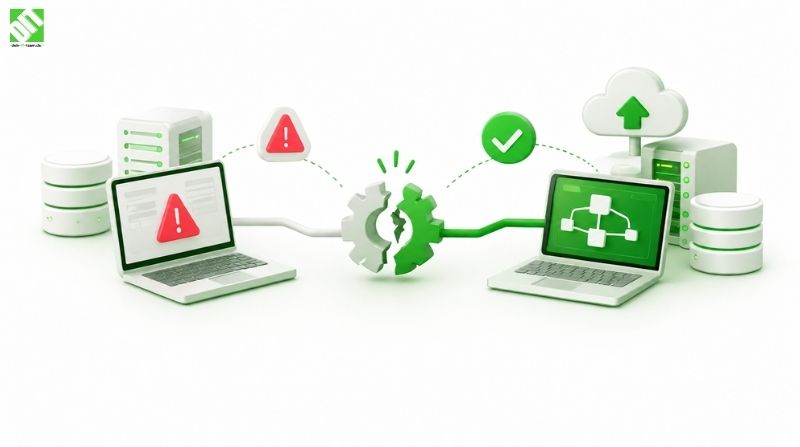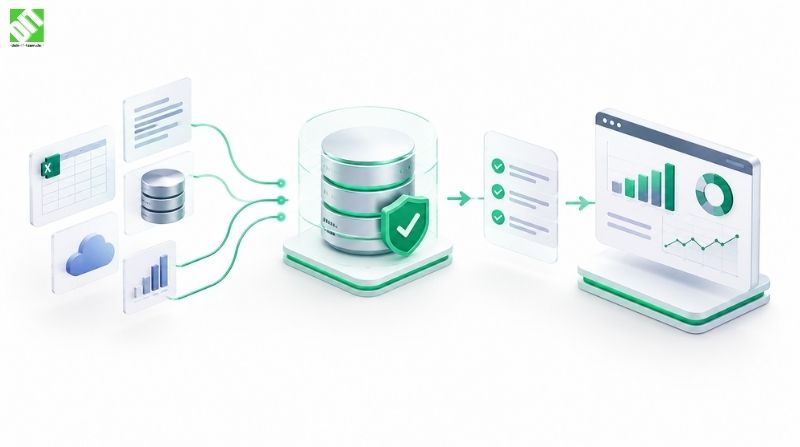
Data Entry Automation: How Businesses Can Eliminate Repetitive Manual Work
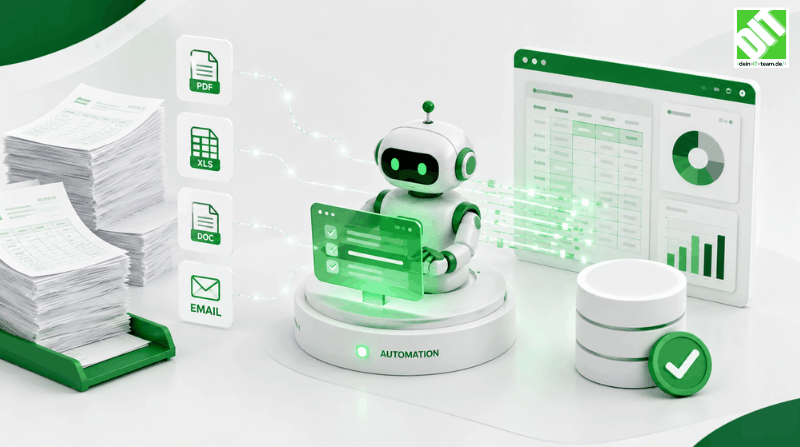
Data entry automation eliminates manual data work using software. Discover how to reduce costs, improve accuracy and scale operations efficiently.
Data entry automation represents a transformational solution for businesses drowning in manual data processing tasks. Every day, organizations across industries waste countless hours manually entering data into systems, transferring information between applications and performing repetitive data management activities. These mundane tasks consume valuable employee time, introduce human errors and divert attention from strategic business activities that drive real value.
The question of how to eliminate repetitive manual work has become critical as businesses scale. Data entry automation addresses this challenge by using software tools and workflows to automatically capture, process and transfer data without human intervention. DevOps services streamline these processes by implementing automation frameworks that enable data to flow seamlessly through business systems. Robotic Process Automation and intelligent automation platforms now enable businesses to reduce data entry workload by up to 90 percent while simultaneously improving accuracy and compliance. What previously required a team of data entry specialists now completes through intelligent automation systems working around the clock.
Data entry automation encompasses various approaches from simple data imports and batch processing to sophisticated AI-powered systems that understand context and make intelligent decisions about data categorization and processing. Understanding how data entry automation works and implementing appropriate solutions enables organizations to dramatically improve operational efficiency, reduce costs and free employees from tedious work allowing them to focus on higher-value activities.
This comprehensive guide explores data entry automation in depth, examining automation technologies, implementation strategies, practical benefits and real-world applications. Whether your organization struggles with invoice processing, customer data management, order entry or other repetitive data tasks, this guide provides actionable insights enabling you to successfully implement automation solutions transforming your operations.
Key Takeaways
Data entry automation uses software tools to automatically capture, process and transfer data eliminating manual keying and reducing human errors significantly.
Robotic Process Automation enables automating repetitive business processes including data entry, invoice processing and customer information management.
Businesses implementing data entry automation typically achieve 70 to 90 percent reduction in manual data entry work freeing employees for strategic tasks.
Automation improves data accuracy by eliminating human errors that occur through manual entry, ensuring consistent formatting and validation.
Cost savings from data entry automation typically range from 30 to 50 percent through labor reduction and improved operational efficiency.
Data entry automation accelerates processing timelines allowing businesses to complete in hours what previously required days of manual work.
Integration with existing systems ensures data flows seamlessly from source systems through processing to destination applications without manual intervention.
Compliance and audit trails improve automatically as automation platforms log all data movements and transformations providing complete visibility.
Organizations experience improved employee satisfaction when automation removes tedious data entry tasks allowing focus on meaningful work.
Successful implementation requires identifying high-impact processes, selecting appropriate technology and building strong change management practices.
Understanding Data Entry Automation
What is Data Entry Automation?
Data entry automation refers to using software applications to automatically collect, process, validate and transfer data without requiring manual human data entry. Rather than employees manually typing information into systems, automation platforms automatically extract data from source documents or systems, perform necessary transformations and validations, and populate destination applications or databases. This approach eliminates the time-consuming manual work while dramatically improving accuracy and consistency.
Data entry automation operates through multiple mechanisms. Optical Character Recognition technology reads printed or scanned documents extracting text and numerical data. Robotic Process Automation bots simulate human interactions with applications performing data entry through user interfaces. API integrations enable direct data transfer between connected systems. Intelligent automation systems use artificial intelligence and machine learning to understand document context and make smart decisions about data categorization and processing.
Why Businesses Need Data Entry Automation
Manual data entry represents one of the most time-consuming and error-prone business processes across industries. Studies consistently show data entry consumes 20 to 30 percent of administrative employee time. Beyond the obvious time wastage, manual data entry introduces quality problems. Human data entry errors range from 0.5 to 3 percent per keystroke. For large volumes this translates to thousands of errors requiring correction and creating downstream problems.
Compliance requirements compound the challenges of manual data entry. Financial regulations, healthcare data protection laws and industry standards mandate accurate data handling and comprehensive audit trails. Manual processes struggle meeting these requirements. Automation provides complete audit trails documenting every data transformation and timestamp. Automated validation ensures data meets required formats and business rules before processing.
Customer experience suffers when businesses operate slow, error-prone manual processes. Invoices processed manually take days to enter and reconcile. Customer inquiries require days to process through manual systems. Automated data entry completes in minutes enabling faster customer response and improved satisfaction. Orders process immediately enabling faster fulfillment and delivery.
How Data Entry Automation Works
Optical Character Recognition Technology
Optical Character Recognition technology forms the foundation for many data entry automation implementations. OCR systems analyze scanned documents or digital images extracting text, numbers and structured data. Modern OCR powered by machine learning achieves accuracy rates exceeding 99 percent for high-quality documents. Handwritten text recognition requires more sophisticated models but now achieves sufficient accuracy for many business applications.
Document classification preprocessing improves OCR accuracy by identifying document types and preparing appropriate processing strategies. Invoice processing requires extracting specific fields like vendor name, invoice number, total amount and line items. Purchase orders require different extraction patterns focusing on item descriptions, quantities and pricing. Intelligent document processing systems learn to handle multiple document types automatically.
Robotic Process Automation
Robotic Process Automation represents the second major data entry automation approach. RPA bots operate at the user interface level automating exactly how human data entry specialists would work. The bot logs into applications, opens the right screens, fills in data fields and clicks submit buttons. From the application perspective, it appears a human is performing the work. This approach enables automating systems that lack APIs or where direct system access proves difficult.
RPA proves particularly valuable for legacy system integration. Older systems built decades ago lack modern integration capabilities making API-based approaches impossible. RPA bots can work with any user interface enabling automation without system modifications. Bots can simultaneously work multiple systems transferring data between incompatible applications that would be impossible to integrate directly.
Intelligent Process Automation
Intelligent automation combines Robotic Process Automation with artificial intelligence creating systems that understand context and make decisions. Simple automation follows rigid rules but intelligent systems adapt to variations and exceptions. Machine learning models learn from example data understanding patterns and making intelligent categorization decisions. Natural language processing enables understanding unstructured text extracting relevant information from emails or documents. Custom software development services build sophisticated automation solutions that address complex business requirements beyond standard platforms and tools.
Intelligent automation handles edge cases and exceptions automatically rather than routing to humans. Mismatched customer names across systems get resolved through intelligent matching algorithms. Missing data fields get populated through intelligent lookups. Unclear data categorizations get handled through confidence scoring and exception handling rules.
Key Benefits of Data Entry Automation
Dramatic Labor Cost Reduction
Data entry automation delivers immediate labor cost savings by eliminating repetitive manual work. Organizations typically reduce data entry headcount by 70 to 90 percent after implementing comprehensive automation. Remaining staff focus on higher-value work including process improvement and customer service rather than mindless data keying.
The financial impact extends beyond simple headcount reduction. Organizations can reallocate employees to more productive roles generating greater business value. Customer service representatives can focus on actual customer issues rather than data entry. Accounting staff can perform analysis and reporting rather than data processing. Sales personnel can focus on customer relationships rather than order entry.
Improved Data Quality and Accuracy
Manual data entry introduces errors at rates of 0.5 to 3 percent per keystroke. For high-volume operations this translates to massive error rates requiring expensive correction. Automation eliminates keystrokes eliminating the primary error source. Data extracted directly from source systems maintains consistency throughout processing.
Automated validation rules ensure data meets required formats and business standards before processing. Invalid entries get flagged for review rather than corrupting downstream systems. Duplicate detection identifies and handles multiple records for same entities. Standardization rules ensure consistent formatting across all records.
Faster Processing and Improved Turnaround Times
Automated data entry processes complete in a fraction of the time of manual work. Batch processing handles thousands of records overnight. Real-time automation processes transactions as they arrive. What previously required days or weeks of manual work now completes in hours or minutes.
Faster processing enables improved customer service. Invoices process immediately enabling faster payment cycles. Customer inquiries complete faster. Orders process instantly enabling faster fulfillment. The organization gains competitive advantage through faster response times and improved customer satisfaction.
Better Compliance and Audit Trails
Regulatory compliance requires maintaining detailed audit trails documenting all data handling. Automated systems log all activities creating complete compliance documentation. Timestamp records show exactly when data was processed. System records document all transformations and validations performed.
Compliance automation prevents violations before they occur. Business rule validation ensures data meets regulatory requirements. Restricted field access prevents unauthorized data modification. Encryption and security measures protect sensitive information throughout processing.
Scalability Without Proportional Cost Increase
Organizations can scale automated data entry to handle substantially higher volumes with minimal cost increase. Adding another automation bot costs a small fraction of hiring and training new data entry staff. Processes that previously maxed out at team capacity now scale seamlessly. Growth no longer requires proportional increases in administrative overhead.
Practical Implementation Approaches
Identifying Automation Opportunities
Start by mapping current data entry processes and identifying high-volume, repetitive tasks. Processes with high transaction volumes deliver greatest automation ROI. Repetitive rule-based processes automate easily. Processes with minimal exceptions or special handling get better automation results.
Analyze effort spent on each process. Processes consuming significant employee time represent prime automation candidates. Processes with poor quality metrics and high error rates benefit greatly from automation accuracy improvements. Processes requiring frequent rework or correction present opportunities for error elimination.
Selecting Appropriate Technologies
Match technology selection to specific requirements. High-volume structured data extraction benefits from OCR and intelligent document processing. System-to-system data integration works well with API approaches. Legacy system integration where APIs unavailable benefits from RPA. Complex decision logic requiring contextual understanding benefits from AI-powered intelligent automation.
Consider existing technology infrastructure. Integrating with current systems proves easier than implementing standalone solutions. Cloud-based automation offers scalability and lower capital investment. On-premise solutions provide more control for sensitive data.
Building and Testing Automation Solutions
Start with pilot implementations testing automation on subset of work. Pilot success builds organizational confidence enabling broader rollout. Controlled testing identifies integration issues before full deployment. Pilot results provide accurate ROI metrics demonstrating business value.
Develop test cases covering normal processing and exception scenarios. Automated testing validates solutions handle edge cases properly. User acceptance testing ensures business stakeholders confirm automation meets requirements. Phased rollout allows monitoring real-world performance and addressing issues before full deployment.
Common Data Entry Automation Challenges
Handling Exceptions and Edge Cases
Real-world data rarely fits perfectly into automation rules. Misspelled names, inconsistent formatting and missing data require special handling. Document variations beyond normal range need manual review rather than failed automation.
Solution involves designing exception handling rules routing unusual cases to human review. Confidence scoring indicates automation certainty enabling selective manual review. Over time machine learning models learn exception patterns improving automation accuracy. Starting with 80 percent automation coverage handling common cases represents realistic initial target.
Data Quality and Standardization Issues
Poor source data quality limits automation effectiveness. Inconsistent formatting, missing fields and data entry errors in source systems propagate through automation. Garbage in garbage out principle applies regardless of automation sophistication.
Solution involves data quality improvement initiatives cleaning source data. Data standardization rules normalize formatting before processing. Validation rules reject data failing quality standards. Master data management ensures reference data consistency across organization.
Integration Complexity
Systems often use incompatible data formats and standards. Legacy systems use outdated formats. Modern cloud systems use different structures. Mapping between incompatible formats requires custom logic.
Solution involves building transformation layers translating between system formats. Middleware platforms handle complex integration scenarios. API-based integration works best where available but requires custom approaches for legacy systems.
Advanced Data Entry Automation Techniques
Artificial Intelligence and Machine Learning
Modern data entry automation increasingly incorporates AI enabling systems to understand context and handle exceptions. Machine learning models trained on example data learn patterns and make intelligent decisions about categorization and processing. Natural language processing enables extracting relevant information from unstructured text.
AI-powered systems improve continuously. Each processed transaction trains the model making it smarter. Over time automation accuracy increases and exception rates decrease. Systems handling 70 percent of transactions initially eventually handle 95 percent as learning improves.
Predictive Analytics for Data Validation
Predictive models identify potentially problematic data before processing. Anomaly detection flags unusual patterns suggesting data quality issues. Predictive validation prevents bad data from corrupting downstream systems. Rules learned from historical data flag suspicious entries requiring manual review.
Real-Time Processing vs Batch Processing
Batch processing handles high volumes efficiently overnight. Real-time automation processes individual transactions immediately. Hybrid approaches batch similar transactions while processing urgent items immediately. Selection depends on business requirements and volume patterns.
Measuring Success and ROI
Key Performance Indicators
Track volume of transactions automated measuring percentage of work eliminated. Monitor error rates comparing manual vs automated processing. Measure processing time improvement from days to hours. Calculate employee hours freed for higher-value work.
Monitor cost per transaction tracking how costs decrease as automation scales. Measure quality metrics including accuracy rates, duplicate detection and compliance adherence. Track customer satisfaction improvements from faster processing.
Financial Metrics
Calculate labor cost savings from headcount reduction and reallocation. Measure error cost reduction from fewer manual entry mistakes. Calculate processing time savings translating to improved cash flow for invoicing processes. Track operational efficiency improvements from reduced rework and correction.
Most organizations achieve ROI within 6 to 12 months after implementation. Simple automation projects often achieve positive ROI within months. More complex implementations require longer payback periods but deliver substantial long-term savings.
Conclusion
Data entry automation fundamentally transforms how businesses handle routine data processing work. By eliminating repetitive manual data entry, organizations achieve dramatic labor cost reduction, improved accuracy and faster processing. Employees freed from tedious data entry can focus on strategic work creating genuine business value. Automation scales seamlessly enabling handling substantially higher volumes without proportional cost increases.
For deeper understanding of broader process optimization beyond data entry, explore What is Backup Automation? Benefits, Types, and Best Practices for 2026, which covers comprehensive approaches to automating critical business operations. This detailed resource explains how data entry automation fits within broader organizational automation strategies.
Robotic Process Automation services enable building comprehensive automation solutions that address repetitive business processes enabling organizations to scale operations efficiently without proportional cost increases. Successful data entry automation requires thoughtful technology selection, careful process analysis and realistic expectations about capabilities and limitations. Starting with high-impact pilot projects builds momentum and demonstrates ROI enabling broader implementation. Organizations embracing data entry automation position themselves for improved competitiveness and operational excellence in increasingly competitive business environments.
Frequently Asked Questions
What exactly does data entry automation do?
Data entry automation uses software to automatically capture, process and transfer data without human manual entry. It extracts data from source documents or systems, validates it against business rules, and populates destination applications or databases automatically. This eliminates the time-consuming and error-prone manual data entry work performed by humans.
How much time can data entry automation save?
Organizations typically reduce data entry work by 70 to 90 percent through automation. Processes requiring days of manual work complete in hours. This frees employees to focus on higher-value activities. The exact savings depend on process complexity and automation approach selected.
What types of data entry can be automated?
Invoice processing, customer onboarding, purchase order entry, expense reporting, data migration and customer record management can all be automated. Any repetitive rule-based data entry task represents a potential automation candidate. Manual processes with high transaction volumes deliver the best automation ROI.
How accurate is automated data entry?
Properly implemented automation achieves 99 plus percent accuracy compared to 97 to 99.5 percent accuracy for manual entry. Automated validation catches errors manual processes miss. The main error source in automation is poor source data quality rather than the automation system itself.
What is the cost of implementing data entry automation?
Implementation costs vary widely depending on complexity. Simple optical character recognition solutions might cost several thousand dollars. Enterprise RPA implementations could cost hundreds of thousands. Most organizations achieve positive ROI within 6 to 12 months through labor savings and error reduction.
Can data entry automation work with legacy systems?
Yes, Robotic Process Automation can automate data entry into any system by working at the user interface level. RPA bots interact with legacy systems exactly like human operators would. This enables automating systems lacking modern APIs making direct integration impossible.
How long does data entry automation implementation take?
Simple projects might take weeks from start to deployment. Complex enterprise implementations could take several months. Phased approaches automate highest-impact processes first delivering early ROI while lower priority processes automate later. Pilot projects help establish realistic timelines.
What happens to employees whose jobs involve data entry?
Automation eliminates the data entry task not the employee. Organizations redeploy employees to higher-value work. Customer service representatives handle more customer issues. Accounting staff perform analysis. Sales personnel focus on customer relationships. Strategic thinking and customer interaction skills become more valuable than data entry speed.
Is data entry automation secure?
Automated systems can be more secure than manual processes. Encryption protects data throughout processing. Access controls prevent unauthorized access. Audit trails document all data movements. Secure coding practices and regular security testing ensure systems remain secure against threats.
How do I determine which processes to automate first?
Focus on high-volume, repetitive processes with minimal exceptions. Identify processes consuming significant employee time. Look for processes with poor quality metrics and high error rates. Prioritize processes directly impacting customer service or financial performance. Start with pilot projects proving ROI before broader rollout.
Recent Posts

October 13, 2026