Top Microsoft Application Development Use Cases by Industry

Explore top Microsoft app development use cases by industry and see how Azure, .NET, and Power Platform drive digital transformation and growth.
Microsoft has become one of the most reliable ecosystems for enterprise application development. Businesses across industries use Microsoft technologies to build scalable applications, automate internal processes, enhance collaboration, and modernize legacy systems. Whether it is a customer-facing web portal or an internal enterprise tool, Microsofts development stack offers stability, performance, and strong security.
Organizations today expect software to do more than basic task management. They want solutions that reduce manual work, improve accuracy, speed up approvals, and integrate seamlessly with existing systems. Microsoft application development supports these goals by combining cloud infrastructure, automation platforms, and development frameworks into one unified ecosystem.
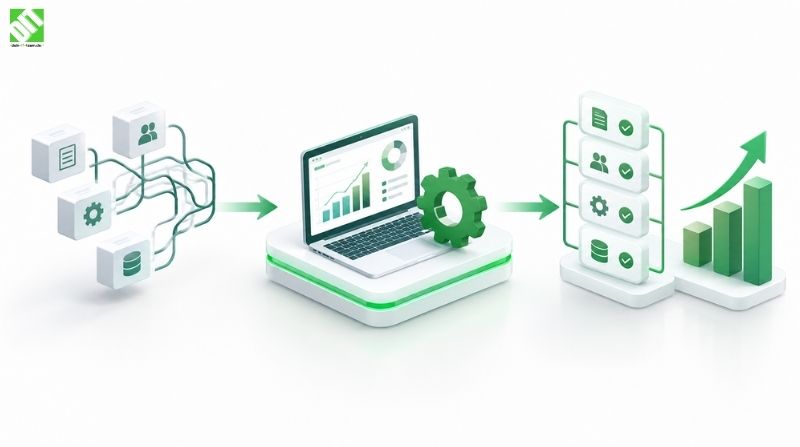
To understand Microsofts role in automation, it is important to clarify what is Microsoft workflow. A Microsoft workflow is a structured automation process that helps businesses complete repetitive tasks like approvals, document routing, employee onboarding, reporting, and notifications. These workflows reduce operational delays and ensure consistency across departments.
In this blog, we will explore the top Microsoft application development use cases by industry and explain how organizations can use Microsoft platforms for measurable business impact.
Key Takeaways
Microsoft supports enterprise-grade application development using Azure, .NET, Power Platform, and Dynamics 365.
Workflow automation improves productivity and reduces manual errors.
Microsoft applications are widely used across healthcare, finance, retail, manufacturing, and government sectors.
Industry-specific applications can be built faster with Microsofts scalable ecosystem.
Microsoft platforms support modern cloud-native development and legacy modernization.
Why Microsoft is a Preferred Platform for Application Development
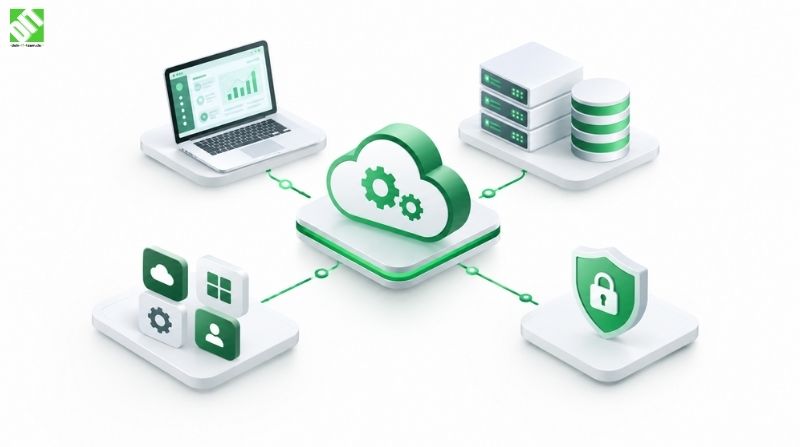
Microsoft provides an end-to-end ecosystem that supports everything from development and deployment to security, analytics, and integration. Businesses can build web apps, mobile apps, internal dashboards, enterprise platforms, and automation systems using a connected technology stack.
A major advantage of Microsoft solutions is that they integrate naturally with tools already used in most organizations, such as Microsoft Teams, Outlook, SharePoint, and Excel. Additionally, Microsoft offers strong compliance support, making it suitable for industries where data security is critical.
Some of the most widely used Microsoft technologies include:
Azure Cloud Services for hosting and scalability
.NET Framework and .NET Core for robust application development
Power Apps and Power Automate for low-code development and automation
Dynamics 365 for CRM and ERP solutions
Power BI for reporting and business intelligence
Top Microsoft Application Development Use Cases by Industry
1. Healthcare Industry
Healthcare organizations require secure, compliant, and reliable systems. Microsoft application development helps hospitals, clinics, and healthcare providers build solutions that support patient care while improving administrative efficiency. Azure cloud services are often used for secure data storage and system scalability.
Healthcare applications also improve patient experience by offering online appointment scheduling, telemedicine support, and faster access to medical reports.
Common Microsoft healthcare use cases include:
Patient record management systems (EHR/EMR platforms)
Appointment scheduling and telemedicine apps
Automated billing and insurance claim processing
Staff communication portals and internal dashboards
Medical inventory and pharmacy tracking systems
2. Banking and Financial Services
The finance industry depends on high-security applications and real-time transaction management. Microsoft solutions are widely used by banks and fintech companies to build customer portals, secure onboarding systems, and fraud monitoring dashboards.
Automation is a key requirement in this sector, and this is where microsoft workflow tools such as Power Automate and Azure Logic Apps become highly valuable. These tools allow financial institutions to automate approvals, compliance workflows, KYC processes, and internal reporting.
Top financial services use cases include:
Loan processing and approval automation
Fraud detection dashboards using analytics
Customer onboarding and KYC verification portals
Compliance reporting and audit management systems
Secure payment processing and transaction monitoring tool.
3. Retail and E-Commerce
Retail businesses must manage inventory, customer experience, and order fulfillment efficiently. Microsoft application development enables retailers to create omnichannel systems that connect e-commerce platforms with warehouses, logistics teams, and physical stores.
Microsoft Dynamics 365 is commonly used to manage customer relationships and sales operations, while Azure supports scalable hosting during peak sales periods. Retailers also use Power BI dashboards to track revenue, customer behavior, and product performance.
Retail use cases often include:
Inventory and warehouse management systems
Customer loyalty and rewards platforms
Order tracking and returns management apps
Personalized marketing and customer segmentation tools
Real-time sales dashboards and reporting systems
4. Manufacturing Industry
Manufacturing companies need applications that help monitor production, reduce downtime, and manage supply chain processes. Microsoft solutions play a major role in enabling smart manufacturing through IoT integration and real-time performance tracking.
Azure IoT Hub allows manufacturers to connect equipment and collect machine data, which can be used for predictive maintenance. Power BI provides analytics dashboards to monitor productivity and detect bottlenecks in production lines.
Common manufacturing applications include:
Production monitoring and reporting dashboards
Predictive maintenance solutions for equipment
Supply chain and vendor management platforms
Quality control and defect tracking systems
IoT-based smart factory monitoring applications
5. Logistics and Transportation
Logistics and transportation businesses rely heavily on real-time systems for route planning, shipment tracking, and fleet management. Microsoft-based applications help logistics companies automate dispatch processes and improve customer visibility.
This industry heavily benefits from microsoft workflows, as workflows can automate dispatch approvals, generate invoices, send delivery alerts, and manage warehouse coordination.
Logistics use cases include:
Fleet management and driver tracking applications
Route optimization and delivery scheduling platforms
Real-time shipment tracking portals for customers
Warehouse automation and inventory monitoring systems
Automated invoice generation and proof-of-delivery systems
6. Education and E-Learning
Education institutions increasingly depend on digital systems for teaching, learning, and administration. Microsoft technologies help universities and schools build learning platforms that support both in-person and remote education.
Microsoft Teams is widely used for virtual classrooms, while Azure supports scalable hosting for e-learning platforms. Power Apps is also used to build internal systems for attendance, student enrollment, and administrative reporting.
Education use cases include:
Learning Management Systems (LMS)
Student portals for fees, schedules, and performance
Online exam and assessment platforms
Attendance tracking and faculty management systems
Collaboration-based learning apps integrated with Teams
7. Real Estate and Construction
Real estate and construction businesses require applications that manage project timelines, workforce coordination, documentation, and client relationships. Microsoft solutions are frequently used to build dashboards that track budgets, procurement workflows, and construction milestones.
SharePoint is widely used for document management, while Power Automate helps streamline approval processes related to permits, invoices, and contractor onboarding.
8. Government and Public Sector
Government organizations require secure and scalable applications for citizen services. Microsoft development is widely used due to its compliance readiness and strong security standards.
Public sector applications often include citizen portals, complaint management systems, tax filing platforms, and digital document verification tools. Azure cloud infrastructure supports these systems by ensuring they can handle large-scale traffic while maintaining reliability.
Many organizations prefer providers offering microsoft technologies development services because public sector projects demand stability, integration, and long-term support.
Why .NET is Still a Strong Framework for Enterprise Development?
.NET continues to be a preferred development framework for enterprise-grade applications due to its performance, security, and scalability. It supports modern architectures such as microservices and API-based systems, making it suitable for both new development and legacy modernization.
Businesses often work with a specialized microsoft net development company to ensure their applications are designed for long-term scalability and seamless integration with Azure, Power BI, and Dynamics 365.
Conclusion
Microsoft application development delivers real value to businesses across industries by enabling secure digital platforms, scalable cloud applications, and automation-driven workflows. From healthcare and finance to manufacturing, logistics, retail, education, and government, Microsoft technologies support both operational efficiency and customer experience improvements.
With a powerful ecosystem including Azure, .NET, Dynamics 365, and Power Platform, Microsoft enables businesses to build modern applications that reduce manual work, improve decision-making, and accelerate growth. For organizations aiming to modernize systems and stay competitive, Microsoft development is a strategic investment that offers long-term returns.
FAQs
What are Microsoft application development services?
Microsoft application development services include building web, mobile, and enterprise solutions using Microsoft technologies such as Azure, .NET, Power Platform, Dynamics 365, and Power BI.
Which Microsoft workflow tools are commonly used by businesses?
Businesses commonly use Power Automate, SharePoint workflows, Azure Logic Apps, and Dynamics 365 workflows to automate approvals, notifications, reporting, and repetitive tasks.
Which industries benefit the most from Microsoft application development?
Industries like healthcare, banking, retail, manufacturing, logistics, education, real estate, and government benefit due to Microsofts security, scalability, and integration capabilities.