

How Much Does It Cost to Build a SaaS Product? Full Pricing Guide
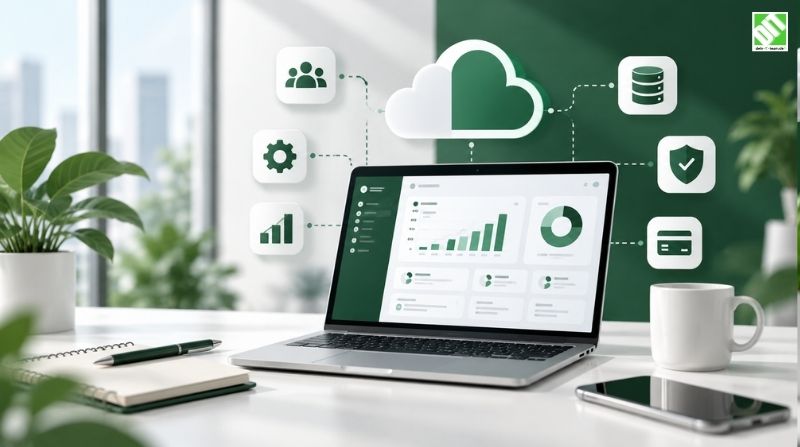
How much does it cost to build a SaaS product? Explore SaaS development costs, key pricing factors, MVP budgets and ongoing expenses.
How much does it cost to build a SaaS product? For most businesses, there is no useful single-number answer. A focused SaaS MVP may require a relatively modest five-figure budget, while a mature B2B or enterprise platform can move well into six figures.
Current 2026 market estimates illustrate just how wide that range can be. Published estimates for SaaS MVPs commonly begin around $15,000 to $50,000, while more sophisticated SaaS products can reach $100,000 or considerably more. European estimates show a similarly wide spread.
That variation is not arbitrary. Two products that both call themselves "SaaS platforms" can have completely different engineering requirements. A straightforward application with authentication, one primary workflow and subscription billing is very different from a multi-tenant B2B platform with granular permissions, real-time data, external integrations, AI functionality and enterprise security requirements.
The best way to budget a SaaS product is therefore to understand what actually consumes development time, which decisions increase complexity, and which features can wait until the product has proved its value.
This guide breaks down SaaS development cost from that perspective.
What Does It Really Cost to Build a SaaS Product?
As a broad planning benchmark, a focused custom SaaS MVP can often start in the tens of thousands, while a production-ready growth platform may require a substantially larger investment. Complex enterprise SaaS products can exceed $150,000 and continue upward as architecture, security, integrations and operational requirements grow. Published 2026 estimates vary significantly because providers define "MVP" and "enterprise SaaS" differently.
Rather than treating those numbers as quotations, think of SaaS cost in three broad levels.
A focused MVP is designed to validate a specific product assumption. It normally concentrates on the essential workflow, authentication, basic account management and only the integrations needed to make that workflow usable.
A growth-ready SaaS product has moved beyond basic validation. It may introduce more sophisticated permissions, analytics, subscription logic, integrations, automation, stronger infrastructure and operational tools.
An enterprise SaaS platform typically adds another layer of complexity through advanced access control, integrations with existing business systems, auditability, high availability, security requirements, larger data volumes and customer-specific configurations.
The boundary between these levels is not fixed. Scope determines cost more accurately than labels do.
This is also why businesses building SaaS around proprietary workflows often need custom software development rather than trying to force their requirements into an off-the-shelf architecture.
Why SaaS Development Costs Vary So Much
A SaaS application is more than a web application placed behind a login screen.
The product may have to serve hundreds or thousands of users across different customer organizations while ensuring that each organization sees only the data and functionality it is permitted to access.
At the same time, the platform needs to handle subscriptions, authentication, permissions, data storage, integrations, notifications, monitoring, updates and changing workloads.
That creates several layers of cost.
There is the visible product that customers interact with. Behind it sits business logic, data architecture, APIs, security controls and cloud infrastructure. Behind those systems are testing, deployment, monitoring, maintenance and operational processes.
A realistic SaaS estimate has to consider all of them.
The Biggest Factors That Affect SaaS Development Cost
1. Feature Scope and Business Logic
Feature count matters, but feature complexity matters more.
Imagine two SaaS products with a "reporting" feature.
The first generates a simple report from data already stored in the application. The second combines data from several systems, applies customer-specific rules, updates information in near real time and allows users to configure reports based on permissions.
Both have reporting. Their development effort is completely different.
The same applies to apparently ordinary features such as search, notifications, dashboards, file uploads and user management.
Before estimating a SaaS product, each feature needs to be understood as a workflow rather than just a line in a feature list.
2. Number of User Roles
A product used by one type of user is easier to design and develop than one with administrators, managers, employees, customers, partners and external users.
More roles create more questions.
What can each role view?
What can it edit?
Who can create or delete users?
Can permissions be customized by an organization administrator?
Does access depend on a subscription plan?
Can one person belong to multiple organizations?
Those decisions affect the frontend, backend, database and security model. A sophisticated permission system can become a major piece of the product rather than a minor settings feature.
3. Multi-Tenant Architecture
Multi-tenancy is central to many B2B SaaS products.
In simple terms, a multi-tenant SaaS platform serves multiple customers through a shared application while ensuring that their data and access remain appropriately separated.
There is more than one way to implement this.
Customers may share infrastructure with logical separation at the application and database level. Other products may require stronger levels of isolation because of security, regulatory or enterprise requirements.
The decision influences database design, authorization, backups, monitoring, scaling and future infrastructure costs.
It is an architectural decision worth making early because retrofitting proper tenant isolation into a product after it has already grown can be far more difficult.
How Much Does a SaaS MVP Cost?
A SaaS MVP should be the smallest product capable of testing an important business assumption with real users. It should not simply be the cheapest version developers can produce.
Current 2026 estimates vary widely. Some sources place focused SaaS MVPs around $15,000 to $50,000, while broader MVP studies extend well beyond $100,000 for products with greater technical complexity.
That range makes more sense when you consider what "MVP" can mean.
Suppose a business is developing SaaS software for automated invoice processing. The first release might need account creation, document uploads, data extraction, a review workflow, basic reporting, subscription billing and administration.
It probably does not need ten accounting integrations, a native mobile application, advanced predictive analytics and extensive customization for every customer at launch.
Removing those secondary requirements can substantially reduce the initial development effort without removing the product's reason to exist.
The difficult part is deciding what is genuinely secondary.
An MVP that removes essential security, usability, data architecture or core workflow functionality may be cheaper to launch, but it may not provide a meaningful test of the product.
For a deeper look at how SaaS moves from requirements and architecture through development and deployment, see this guide to planning and developing a SaaS product.
How Product Design Affects Your SaaS Budget
Design costs are easy to underestimate because design is sometimes treated as a visual task that happens immediately before development.
For SaaS products, much of the important design work happens before colors and visual styling.
The team needs to determine how users navigate the product, how complicated workflows are divided into steps, what information belongs on dashboards, how errors are handled and how the interface changes for different roles.
A complex B2B SaaS application might contain relatively few visual screens but still require considerable UX work because each screen supports dense workflows.
Typical design activities can include user-flow mapping, information architecture, wireframing, interactive prototypes, interface design, reusable components and usability testing.
A thoughtful UX process can also expose expensive product mistakes before they reach development.
Changing a workflow in a prototype is usually easier than rebuilding the same workflow after the backend, frontend and integrations have already been implemented.
Subscription Billing Can Be More Complex Than It Looks
Recurring billing is one of the defining elements of many SaaS businesses, but subscription logic quickly becomes more complicated than accepting a payment.
A simple product might offer one monthly plan and one annual plan.
A mature SaaS product may need several pricing tiers, free trials, seat-based pricing, usage-based charges, discounts, upgrades, downgrades, proration, tax handling, failed-payment recovery, refunds and invoice history.
The application also needs to react correctly when billing events occur.
If a subscription expires, what happens to the account?
If a customer downgrades, when do premium features disappear?
If payment fails, does access stop immediately or after a grace period?
If seats are added halfway through the billing cycle, how are they charged?
These rules are business decisions, but they become software logic. The more flexible the commercial model, the more billing scenarios developers need to implement and test.
How Integrations Change SaaS Development Cost
Integrations are among the most common reasons a seemingly straightforward SaaS project becomes more complex.
A B2B product might need to exchange data with CRM platforms, accounting systems, payment providers, identity providers, communication platforms, cloud storage or customers' existing software.
The work does not end when an API connection succeeds.
Production integrations need to account for authentication, rate limits, missing data, failed requests, retries, duplicate records, data mapping, synchronization and changes made by the third-party provider.
Some integrations are relatively predictable. Others become substantial engineering projects of their own.
This is why the estimate should identify integrations individually rather than using a generic requirement such as "integrates with existing systems."
Does AI Increase the Cost of Building SaaS?
It can, but the impact depends on what the AI actually does.
Adding a third-party AI API for a narrowly defined task is very different from building a product in which AI is central to the workflow.
AI-enabled SaaS may require work around model selection, prompt or workflow design, retrieval, data preparation, evaluation, permissions, monitoring and output validation.
There may also be ongoing usage costs based on the chosen AI provider and how frequently customers use the feature.
The important budgeting question is not "Does the product use AI?" It is "What responsibility does AI have inside the product?"
A feature that summarizes a document has a different technical and risk profile from a system that uses AI to make recommendations based on proprietary enterprise data.
Security Is Part of the Product Cost
Security should be considered during architecture and development, not added shortly before launch.
A SaaS platform may hold customer information, internal business data, documents, financial information or other sensitive records.
The required controls depend on what the application stores and who uses it, but considerations can include authentication, authorization, encryption, secure API communication, audit logging, session management, data isolation, backups and vulnerability management.
Regulated industries can introduce additional requirements.
A SaaS product serving healthcare organizations, for example, may have very different compliance requirements from a simple productivity application.
Enterprise customers can also expect functionality that smaller customers may not initially request, such as single sign-on, audit logs, detailed permissions and stronger administrative controls.
These requirements affect development cost because they influence architecture and testing, not just documentation.
How Cloud Infrastructure Affects SaaS Cost
SaaS has two different cloud costs: the engineering cost of building the infrastructure correctly and the recurring cost of operating it.
At the beginning, a product may have relatively modest infrastructure needs. As usage grows, the application may need additional computing capacity, storage, database resources, monitoring, backups and data transfer.
The architecture should therefore reflect realistic growth expectations.
Overengineering infrastructure for hypothetical millions of users can waste the MVP budget. Building a system with no practical scaling path can create the opposite problem.
The aim is not maximum infrastructure from day one. It is an architecture that can evolve without requiring the product to be rebuilt every time usage reaches a new stage.
What Technology Stack Should a SaaS Product Use?
There is no universal "best SaaS technology stack."
A typical SaaS system needs decisions around the frontend, backend, database, APIs, authentication, cloud infrastructure, monitoring and deployment pipeline.
The appropriate choices depend on factors such as:
Product complexity
Expected traffic
Real-time requirements
Data structure
Security
Existing integrations
Development speed
Available engineering expertise
Long-term maintenance
Scalability requirements
The cheapest technology decision during development is not necessarily the cheapest decision over the product's lifetime.
A less familiar technology might initially appear attractive for a specific capability but make hiring, maintenance or integration more difficult later.
Technology selection should therefore be based on product requirements and long-term operating considerations rather than trends alone.
How Long Does It Take to Build a SaaS Product?
A focused SaaS MVP can take a few months, while complex SaaS platforms can require six months, a year or longer.
Published 2026 estimates for MVP development frequently fall in a roughly two-to-six-month window, but the actual schedule depends on scope, team structure and technical complexity.
A practical development lifecycle normally includes:
Discovery and requirements
Product and technical analysis
UX/UI design
Architecture planning
Development
API and third-party integrations
Testing and quality assurance
Security testing
Deployment
Monitoring and post-launch improvement
These stages do not always happen sequentially. Design, development and testing often overlap as the product moves through iterations.
A deadline can also affect cost. Compressing the schedule may require a larger team or more parallel development, which increases coordination and can increase the overall budget.
What Are the Ongoing Costs After SaaS Launch?
The development budget is not the lifetime cost of a SaaS product.
Once customers begin using the application, the business has ongoing technical expenses.
These can include cloud hosting, databases, storage, monitoring, email delivery, payment processing, third-party APIs, AI usage, security tools, backups and support.
There is also software maintenance.
Operating systems, frameworks, APIs and external services change. Bugs appear in scenarios that were difficult to reproduce before launch. Customers request improvements. Security updates need to be applied. Infrastructure may need to change as usage grows.
A SaaS budget should therefore include a post-launch allocation rather than assuming development spending ends on release day.
What Hidden Costs Should SaaS Founders Plan For?
The most expensive surprises are often not major features. They are requirements that were assumed rather than specified.
Data Migration
If customers are moving from another system, existing data may need to be imported, cleaned, mapped and validated.
Migration becomes particularly complicated when customers use inconsistent formats or older systems.
Administrative Tools
The customer-facing product receives most of the attention during planning, but the business operating the SaaS also needs tools.
Internal teams may need to manage users, subscriptions, support issues, configurations, feature access and system activity.
Without appropriate admin functionality, simple operational tasks can turn into developer requests.
Analytics and Observability
Product analytics tells the business how customers use the SaaS. Technical monitoring tells the engineering team how the system is behaving.
Both become increasingly important after launch.
Email and Notifications
Password resets, account invitations, billing notifications, alerts and workflow updates all require logic, templates, delivery infrastructure and testing.
Edge Cases
Software is easy to estimate when every user follows the ideal workflow.
Real users do not.
They abandon forms, upload unexpected files, lose internet connections, retry actions, change plans halfway through billing periods and interact with the product in ways the original requirements may not have anticipated.
Handling these cases properly is part of building production software.
How Can You Reduce SaaS Development Cost Without Sacrificing Quality?
The most reliable way to reduce SaaS development cost is to reduce unnecessary scope, not engineering quality.
Define One Core Outcome
The first version should have a clear purpose.
Ask what successful users must be able to accomplish. Features that do not materially support that outcome can often move to a later release.
Validate Complicated Workflows Before Coding
Wireframes and prototypes can uncover product problems before expensive implementation begins.
If a workflow is difficult to understand in a prototype, development will not automatically make it clearer.
Limit Initial Integrations
Every integration creates development work and a future maintenance dependency.
Start with the systems customers genuinely need to receive value from the product.
Avoid Premature Enterprise Features
A startup validating a new SaaS idea may not immediately need extensive organization hierarchies, dozens of roles, custom reporting or every possible authentication method.
Build those features when the target customer or sales process requires them.
Design for Growth Without Building for Imaginary Scale
There is a difference between scalable architecture and overengineering.
The first gives the product a reasonable path to growth. The second spends the current budget solving problems that may never occur.
Keep Requirements Specific
"Advanced analytics" is difficult to estimate.
"An administrator can view monthly active users and export the report as CSV" is much clearer.
Precise requirements improve estimates and reduce the risk of scope disputes during development.
Should You Build an MVP or the Full SaaS Product?
For a new product with untested assumptions, an MVP is usually the more sensible starting point.
It allows the business to test whether customers understand the value proposition, use the core workflow and are willing to pay before a larger amount of capital is committed.
However, MVP does not always mean appropriate.
A SaaS product replacing a critical enterprise system may need more functionality at launch because the customer's existing processes cannot simply stop. Products in regulated industries may also require security and compliance work before meaningful market testing is possible.
The right first release depends on what must be true for customers to use the product successfully.
How Should You Estimate Your Own SaaS Product?
Before requesting a development estimate, answer a few questions as precisely as possible:
Who will use the product?
What is the main problem it solves?
What is the core workflow?
How many user roles are required?
Is the platform multi-tenant?
Which integrations are essential?
How will customers be billed?
What data will the application store?
Are there industry-specific security or compliance requirements?
What needs to be included in the first release?
What can realistically wait until a later version?
What level of usage should the architecture initially support?
You do not need complete technical specifications before speaking to a development team.
You do need enough product clarity to distinguish essential requirements from ideas that can be validated later.
That distinction has a major effect on budget.
Why the Cheapest SaaS Quote Can Become Expensive
Comparing development proposals only by their final number can be misleading.
One estimate may include discovery, design, architecture, QA, deployment and project management. Another may cover little more than development hours based on an initial feature list.
The cheaper proposal may also make assumptions about what is excluded.
Before comparing quotes, check what each estimate includes:
Requirements analysis
UX/UI design
Frontend and backend development
Architecture
Integrations
Testing
Security
Deployment
Project management
Documentation
Post-launch support
Source-code ownership
A lower initial price can become expensive if major requirements emerge halfway through development or the product needs significant rework before it can scale.
The goal should be a realistic estimate with clearly defined assumptions, not simply the smallest number.
Building SaaS for the First Customer vs Building for a Market
This distinction is easy to miss and has a significant impact on cost.
Software developed for one organization can contain workflows, terminology and permissions specific to that business.
A SaaS product sold to a market needs to accommodate variation.
Different customers may have different team structures, workflows, data requirements, integrations and configurations. The product needs enough flexibility to serve those customers without becoming a separate custom development project every time a new organization signs up.
That affects architecture and product design from the beginning.
It is one reason a successful internal tool cannot always be converted into commercial SaaS simply by adding subscriptions.
When Does SaaS Development Become Enterprise-Level?
The number of features alone does not determine whether a SaaS product is enterprise-grade.
Enterprise complexity often comes from requirements surrounding the core product.
These may include:
Granular role-based access
Organization hierarchies
Single sign-on
Audit trails
Advanced security
Data retention policies
Customer-specific configurations
Large-scale integrations
Higher availability requirements
Detailed monitoring
Data migration
Regulatory requirements
Enterprise customers may also have procurement, security review and integration requirements that affect implementation before they ever use the product.
If enterprise customers are part of the target market, those requirements should be identified early rather than discovered after the architecture has already been established.
How Much Should You Budget Beyond Initial Development?
There is no percentage that works for every SaaS business.
Instead, separate the budget into at least three categories.
The first is product development, covering the work required to reach launch.
The second is operating cost, including infrastructure and third-party services.
The third is continuous product development, covering bug fixes, customer feedback, security updates, performance improvements and new functionality.
That third category matters because SaaS is not a one-time software delivery model.
A successful product changes continuously.
Customers reveal workflow problems. Competitors introduce new expectations. Integrations evolve. Security requirements change. The business itself learns which features drive adoption and retention.
Treating launch as the end of the development budget usually creates an unrealistic financial plan.
Final Thoughts: What Should a SaaS Product Actually Cost?
So, how much does it cost to build a SaaS product?
A focused SaaS MVP may begin in the tens of thousands, while a more sophisticated production platform can move well into six figures. Published market estimates are broad because SaaS products differ enormously in architecture, user roles, integrations, billing, security, data requirements and scale.
The more useful approach is to stop asking for a price based only on an idea and start defining the product that needs to be priced.
Identify the core workflow. Separate launch requirements from future features. Define the user roles. Understand the integrations. Decide how subscriptions will work. Identify security requirements. Then design an architecture appropriate for the product's realistic growth path.
DEIN IT TEAM supports businesses across product discovery, architecture, development, testing, deployment and ongoing software evolution. For SaaS products that need reliable infrastructure and room to scale, its cloud integration capabilities can also support the infrastructure and integration side of the product lifecycle.
A well-defined scope will not make SaaS development cheap, but it makes the budget far more predictable and helps ensure that development spending is directed toward functionality customers actually need.
If you are planning a new SaaS platform or replacing an existing product, you can discuss the requirements, technical constraints and appropriate first-release scope with the DEIN IT TEAM before committing to a full build.
Frequently Asked Questions
How much does it cost to build a SaaS product?
A focused custom SaaS MVP can cost tens of thousands, while sophisticated SaaS and enterprise platforms can reach six figures or more. The final cost depends on features, architecture, user roles, integrations, security, design and infrastructure requirements.
How much does it cost to build a SaaS MVP?
Published 2026 estimates commonly place custom SaaS MVPs somewhere between roughly $15,000 and $50,000 at the focused end, although complex MVPs can cost considerably more. The definition of "MVP" matters, so the scope should be evaluated before using any benchmark as a budget.
How long does it take to build a SaaS product?
A focused SaaS MVP may take approximately two to six months. More complex products can require six months to a year or longer, especially when they involve extensive integrations, enterprise requirements, complex data architecture or regulatory considerations.
What makes SaaS development expensive?
The biggest cost drivers typically include feature complexity, multi-tenancy, user roles and permissions, subscription billing, integrations, security, UI/UX requirements, data architecture, cloud infrastructure, testing and the development team's scope.
Can I build a SaaS product with a small budget?
Yes, if the first version has a tightly controlled scope. Concentrating on one valuable customer problem and delaying secondary features can reduce initial cost. Cutting essential testing, security or architecture is generally a poor way to reduce the budget.
Is an MVP enough to launch a SaaS business?
It can be. A well-designed MVP should provide enough functionality for real customers to complete the core workflow and for the business to test important assumptions. Products with regulatory, security or enterprise requirements may need a more substantial first release.
What are the ongoing costs of running a SaaS product?
Ongoing expenses can include cloud infrastructure, databases, storage, third-party APIs, payment processing, email delivery, monitoring, security, maintenance, support and continued feature development. These costs normally increase as the product and customer base grow.
Does adding AI increase SaaS development cost?
Usually, but the amount varies considerably. A simple AI API integration may add limited complexity, while a product built around AI workflows may require additional work for data preparation, retrieval, evaluation, monitoring, security and usage-cost management.
Should SaaS architecture be designed for millions of users from day one?
Usually not. The architecture should support realistic growth and provide a path to scale without paying for unnecessary complexity before the product has validated demand. The right balance depends on expected usage and the consequences of future architectural changes.
Recent Posts
October 15, 2026
October 23, 2026
October 12, 2026