

How SaaS Integration Transforms Business Efficiency Through Scalable Automation

Learn how SaaS integration transforms business efficiency through automation, scalability, and real-time data.
Businesses today rely on multiple SaaS tools for operations, from CRM and marketing platforms to finance and customer support systems. While these tools improve productivity individually, disconnected systems often create inefficiencies, data silos, and manual work.
This is where SaaS integration becomes a game-changer. By connecting different applications into a unified ecosystem, businesses can streamline workflows and automate processes. Leveraging the right cloud integration services ensures seamless communication between systems and real-time data flow.
In this article, well explore how SaaS integration enhances business efficiency through scalable automation.
Key Takeaways
SaaS integration eliminates data silos and improves workflow efficiency
Automation reduces manual work and human errors
Real-time data improves decision-making
Integrated systems enhance team collaboration
Scalable solutions support business growth
Businesses gain better control over operations
What is SaaS Integration?
SaaS integration is the process of connecting multiple cloud-based applications so they can share data and work together efficiently. Instead of operating in isolation, tools like CRM, ERP, and analytics platforms become part of a connected system.
This integration ensures that data flows automatically between systems, reducing the need for manual updates and improving overall operational efficiency.
The Problem with Disconnected SaaS Tools
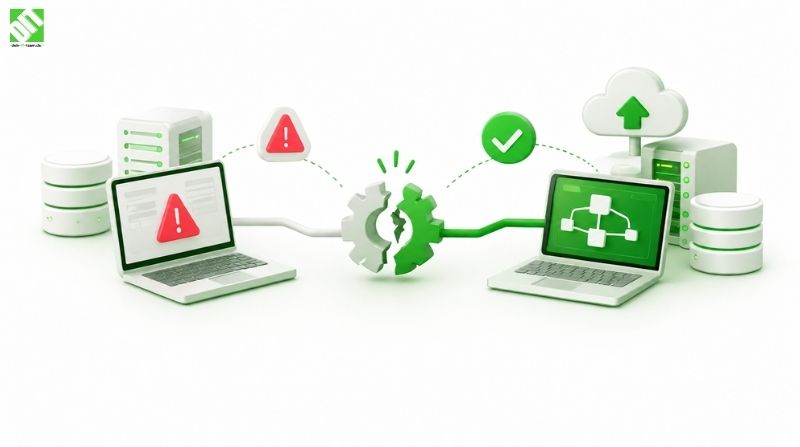
Many businesses adopt SaaS tools quickly but fail to integrate them properly. As a result, teams often deal with duplicate data, inconsistent information, and time-consuming manual processes.
Disconnected systems also limit visibility, making it difficult to track performance or make informed decisions. Over time, this can slow down growth and reduce productivity.
How SaaS Integration Improves Business Efficiency
When SaaS applications are integrated, businesses can automate repetitive tasks and streamline workflows. For example, customer data entered in a CRM can automatically update in marketing and support tools.
This reduces manual work, minimizes errors, and ensures that all teams have access to the same information. The result is faster operations and improved efficiency across the organization.
Scalable Automation for Growing Businesses
As businesses grow, their processes become more complex. Manual operations that once worked efficiently may no longer be sustainable.
SaaS integration enables scalable automation, allowing businesses to handle increasing workloads without adding unnecessary complexity. With the help of custom software development services, organizations can build tailored integrations that evolve with their needs and support long-term scalability.
Enhancing Collaboration Across Teams
One of the biggest advantages of SaaS integration is improved collaboration. When all teams work with synchronized data, communication becomes more effective.
Sales, marketing, and support teams can access the same customer information, leading to better coordination and a more consistent customer experience.
Real-Time Insights for Better Decision-Making
Integrated systems provide real-time access to data, allowing businesses to make faster and more accurate decisions. Leaders can monitor performance, identify trends, and respond quickly to changes.
This level of visibility is essential for staying competitive in a fast-paced digital environment.
Reducing Operational Costs
Manual processes not only slow down operations but also increase costs. By automating workflows through SaaS integration, businesses can reduce labor costs and improve efficiency.
Automation also minimizes errors, which can otherwise lead to costly corrections and delays.
Solution / Recommendation
To fully benefit from SaaS integration, businesses need a strategic approach. This includes selecting the right tools, defining workflows, and ensuring seamless connectivity between systems.
Working with experts in IT consulting services helps businesses design and implement integration strategies that align with their goals. A well-planned approach ensures smooth execution and long-term success.
Insight / Clarification
A common misconception is that SaaS integration is only about connecting tools. In reality, it is about creating a unified system that supports business processes and improves efficiency.
Effective integration goes beyond technologyit requires understanding workflows, identifying bottlenecks, and designing solutions that deliver real value.
Conclusion
SaaS integration has become essential for businesses looking to improve efficiency and scale their operations. While individual tools provide value, their true potential is unlocked when they work together as part of a connected ecosystem.
By eliminating data silos and automating workflows, SaaS integration allows businesses to operate more efficiently and respond faster to changing demands. It reduces manual effort, improves data accuracy, and enhances collaboration across teams.
As businesses grow, the need for scalable solutions becomes even more important. SaaS integration provides the flexibility to adapt, ensuring that systems can handle increasing complexity without slowing down operations. This makes it a key component of long-term digital transformation strategies.
Investing in the right integration approach not only improves current performance but also prepares businesses for future growth. With the right combination of automation, customization, and strategic planning, organizations can build a strong foundation for sustained success.
In a competitive market, businesses that embrace SaaS integration are better equipped to innovate, optimize processes, and deliver superior customer experiences. It is not just a technical upgradeit is a strategic move toward smarter and more efficient operations.
Talk to Our Business Manager or Get a Free Estimate Now!
FAQs
What is SaaS integration?
SaaS integration is the process of connecting cloud-based applications so they can share data and work together efficiently.
Why is SaaS integration important for businesses?
It improves efficiency, reduces manual work, and ensures real-time data access across systems.
How can businesses implement SaaS integration?
By using integration platforms, automation tools, and customized solutions tailored to their workflows.Type or paste your content here!
Recent Posts
September 25, 2026
September 29, 2026