

AI Agent Architecture: How to Design Reliable AI Agents for Business
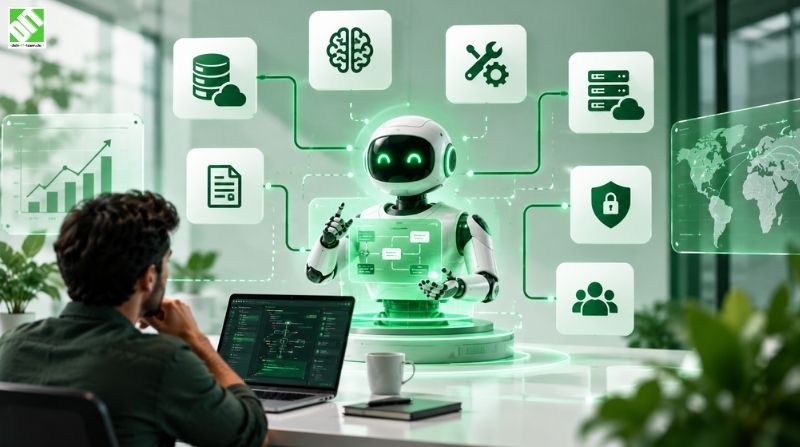
AI agent architecture guide: Design, build, and deploy reliable autonomous agents. Learn components, patterns, best practices, and business benefits.
Artificial Intelligence agents are transforming how businesses operate. Yet most organizations still struggle to understand what AI agent architecture actually means, how to design agents effectively, what makes agents reliable, or how to implement AI agents successfully in production environments. Some teams confuse AI agents with chatbots. Others think agents are just large language models. Still others underestimate the complexity of building agents that work reliably at scale.
This confusion costs organizations significantly. Companies that don't understand AI agent architecture either don't adopt AI agents at all and miss competitive advantages, or they build poorly designed agents that fail in production, waste resources, and damage trust in AI initiatives. A recent industry survey found that over 60% of AI agent projects fail to meet production readiness standards due to architectural flaws, poor design decisions, and inadequate planning.
AI agent architecture represents a fundamental shift in how organizations approach automation and decision-making. Rather than building rigid systems with predefined responses, AI agents are autonomous systems that perceive their environment, reason about situations, make decisions, and take actions. AI agents can adapt to new situations, learn from experiences, and handle complexity that traditional systems cannot.
When designed correctly, AI agents deliver remarkable business value. Organizations using well-architected AI agents automate tasks that were previously impossible to automate. They reduce operational costs by 40-60%. They improve decision quality through AI-powered reasoning. They accelerate business processes. They free human employees to focus on higher-value work.
This comprehensive guide explains what AI agent architecture is, why it matters for business, core components of AI agent systems, how to design reliable agents, what architectural patterns work best, what challenges you'll face, how to overcome them, what technologies enable AI agents, how to measure success, and what the future holds for AI agents in enterprise environments.
Understanding AI Agent Architecture: Core Concepts and Definitions
AI agent architecture is the comprehensive framework that defines how an autonomous AI system is structured, how it operates, how it makes decisions, how it interacts with its environment, and how it achieves its objectives. An AI agent is a software entity that can perceive its environment through sensors or data inputs, reason about that environment, make decisions based on its reasoning, and take actions to achieve specific goals.
Think about what an agent needs to do. It needs to understand the current situation. It needs to understand what it's supposed to accomplish. It needs to figure out what actions to take. It needs to execute those actions. It needs to observe the results. It needs to adapt if things don't work as expected. AI agent architecture defines how all these capabilities work together.
The key distinction between AI agents and other AI systems is autonomy. A machine learning model makes predictions given input. A chatbot responds to user queries. An AI agent operates independently, pursues objectives, makes decisions with limited human intervention, and adapts to changing circumstances. This autonomy is what makes agents powerful but also what makes them complex to design and deploy.
AI agent architecture sits at the intersection of several disciplines. It draws from artificial intelligence and machine learning for decision-making and learning capabilities. It borrows from distributed systems and software architecture for scalability and reliability. It incorporates operations and DevOps thinking for production readiness. It applies systems thinking to handle complexity and emergence.
Modern AI agents typically include several components working together. A perception layer that understands the environment. A reasoning layer that analyzes situations and determines appropriate actions. A planning layer that sequences actions toward goals. An execution layer that takes actions in the world. A learning layer that improves over time based on experience. A safety layer that prevents harmful actions.
Why AI Agent Architecture Matters Now
Several factors have made AI agent architecture increasingly critical for enterprises.
Complexity of Modern Business Problems
Business problems have become increasingly complex. Organizations need to optimize multiple objectives simultaneously: cost, quality, speed, compliance, customer satisfaction, and others. Traditional rule-based systems struggle with this complexity. AI agents can navigate complexity by learning from experience and adapting strategies based on feedback.
Explosion of Data and Systems
Modern organizations have numerous interconnected systems, APIs, databases, and data sources. Humans cannot manually coordinate across all these systems efficiently. AI agents can integrate across systems, coordinate actions, and manage complexity that overwhelms human-based approaches.
Demand for Real-Time Decision Making
Business moves faster. Decisions that used to be made daily now need to be made hourly or in real-time. Human decision-making can't scale to this velocity. AI agents can make consistent, reliable decisions instantly.
Cost Pressure and Automation Opportunities
Organizations face constant pressure to reduce costs while improving quality. Manual processes waste resources and introduce errors. AI agents can automate processes that were previously not economically viable to automate.
AI Model Improvements
Large language models and other AI advances have dramatically improved AI capabilities. These advances make it feasible to build agents that can handle complex reasoning, natural language understanding, and multi-step reasoning. Agents built on modern AI models are dramatically more capable than earlier approaches.
Competitive Necessity
Organizations using AI agents effectively gain significant competitive advantages. Competitors that delay fall behind. In increasingly crowded markets, the ability to operate more efficiently and make better decisions faster is often the difference between success and failure.
Core Components of AI Agent Architecture
Effective AI agent architecture typically includes several key components that work together.
Perception and Sensing
The perception layer enables agents to understand their environment. This might include reading from databases, calling APIs, querying documents, understanding user input, monitoring system metrics, or other data sources. The quality of perception directly impacts decision quality. Agents need accurate, timely, relevant information to reason effectively.
Knowledge and Context
Agents need background knowledge and context to reason effectively. This might include business rules, historical data, domain expertise, regulatory requirements, organizational policies, or other knowledge. Knowledge is often encoded in prompts, in retrieved documents, in databases, or in training data.
Reasoning and Decision-Making
The reasoning layer is often powered by large language models or other AI systems. The agent takes information from perception, combines it with knowledge, and reasons about what actions to take. Modern agents often use chain-of-thought reasoning where the agent works through a problem step-by-step.
Planning and Action Selection
Based on reasoning, agents need to decide what actions to take. This might be simple for straightforward situations, but complex for situations involving multiple objectives, constraints, or uncertain outcomes. Planning layers help agents sequence actions effectively toward goals.
Execution and Tool Use
Agents need to execute actions in the world. This might include calling APIs, modifying databases, sending communications, triggering workflows, or taking other actions. Most agents use tools or plugins that enable them to interact with systems.
Memory and Learning
Agents should learn from experience. This might involve short-term memory (context during a conversation), medium-term memory (learning from recent interactions), or long-term memory (fundamentally changing behavior based on experience). Memory enables agents to improve over time.
Safety and Governance
Agents need safeguards to prevent harmful actions. This includes monitoring agent behavior, setting boundaries on what actions agents can take, requiring human approval for significant actions, and other safety measures. Safety becomes more important as agents operate with greater autonomy.
Architectural Patterns for AI Agents
Several proven architectural patterns have emerged for building AI agents.
Reactive Agents
Reactive agents respond to stimuli without maintaining state. They perceive the environment, reason about the current situation, and take appropriate actions. Reactive agents are simple and fast but can't handle situations requiring memory or planning.
Deliberative Agents
Deliberative agents maintain internal models of their environment and goals. They reason about multiple steps ahead, plan sequences of actions, and adapt plans based on feedback. Deliberative agents can handle complex situations but are more complex to build.
Hybrid Agents
Hybrid agents combine reactive and deliberative components. Routine situations trigger reactive responses. Complex situations trigger deliberative planning. This approach balances simplicity with capability.
Multi-Agent Systems
Some problems are better solved by multiple agents working together. Agents might specialize in different domains, coordinate on shared objectives, negotiate over resources, or otherwise collaborate. Multi-agent systems can handle very complex problems but introduce coordination challenges.
Hierarchical Agents
Hierarchical agents have different levels of decision-making. High-level strategic agents set objectives. Mid-level tactical agents plan how to achieve objectives. Low-level operational agents execute specific actions. Hierarchy enables scaling reasoning.
Learning-Based Agents
Learning agents improve their behavior over time based on experience. This might involve reinforcement learning where agents learn through trial and error, supervised learning where agents learn from labeled examples, or other learning approaches. Learning agents improve over time but require careful design to avoid learning incorrect behaviors.
Designing Reliable AI Agents for Production
Building AI agents that work reliably in production requires deliberate design and careful planning.
Define Clear Objectives and Constraints
Before building an agent, define exactly what you want it to accomplish. Vague objectives lead to agents that behave unpredictably. Objectives should be specific, measurable, and aligned with business goals. Equally important, define constraints. What actions are agents not allowed to take? What outcomes are unacceptable? Clear constraints prevent agents from pursuing objectives in harmful ways.
Design for Explainability and Transparency
Business users need to understand why agents make decisions. Unexplainable AI decisions create trust problems. Design agents to explain their reasoning. Log decision processes. Make agent behavior transparent to stakeholders. This enables trust and enables detection of problems.
Build in Safety Guardrails
Don't rely on agents to self-limit. Build hard guardrails that prevent harmful actions. This might include rate limits on actions, approval requirements for significant actions, categorical restrictions on certain actions, or other safeguards. The stronger the safeguards, the more autonomous agents can operate.
Implement Comprehensive Monitoring
You can't manage what you can't see. Implement comprehensive monitoring of agent behavior. Track what decisions agents make. Track action outcomes. Track when agents behave unexpectedly. Use monitoring data to detect problems early.
Design for Graceful Degradation
Agents should degrade gracefully when they encounter problems. Rather than failing catastrophically, agents should acknowledge uncertainty, ask for human help, or fall back to simpler approaches. Graceful degradation prevents small problems from becoming large problems.
Start Small and Scale Gradually
Don't deploy complex agents immediately. Start with simple agents in low-risk domains. Build confidence in agent behavior. Learn from early experience. Scale gradually to more complex situations and higher-risk domains.
Plan for Human Oversight
Most production agents benefit from human oversight. Humans might approve significant decisions, handle exceptions, provide feedback when agents make mistakes, or step in when agents encounter novel situations. Effective human-agent teaming is often better than fully autonomous agents.
Design for Continuous Improvement
Agents should improve over time. Collect feedback on agent decisions. Identify situations where agents struggle. Use feedback to improve prompts, knowledge, decision logic, or safety measures. Continuous improvement keeps agents effective as business conditions change.
Technologies and Platforms Enabling AI Agents
Modern AI agent development is enabled by several categories of technologies.
Large Language Models
Large language models like GPT-4, Claude, Gemini, and others provide the reasoning capability at the heart of most modern agents. LLMs can understand complex situations, reason through problems, generate plans, and explain their reasoning. LLMs are the foundation of agent intelligence.
Agent Frameworks
Frameworks like LangChain, AutoGPT, CrewAI, and others provide abstractions for building agents. These frameworks handle common agent patterns like tool use, memory management, planning, and others. Using frameworks accelerates development significantly.
Vector Databases
Vector databases like Pinecone, Weaviate, and others enable efficient similarity search and retrieval. Agents often need to retrieve relevant knowledge or context from large documents or databases. Vector databases make this retrieval fast and accurate.
Tool Integration Platforms
Agents interact with the world through tools or plugins. Platforms that enable easy tool integration accelerate agent development. This might include API integration platforms, workflow automation platforms, or other tools.
Monitoring and Observability
Production agents need comprehensive monitoring. Tools like Datadog, New Relic, and others provide observability into agent behavior. Logging frameworks enable detailed tracking of agent decisions and actions.
Knowledge Management Systems
Agents need access to knowledge and context. Knowledge management systems, enterprise search, document stores, and others provide this knowledge. Well-organized, high-quality knowledge is critical for agent effectiveness.
Cloud Platforms
Cloud platforms provide the infrastructure for deploying agents at scale. Compute resources, storage, networking, and other services enable agents to operate reliably and scale to meet demand.
Benefits of Well-Designed AI Agents
Organizations implementing well-architected AI agents see substantial benefits.
Significant Cost Reduction
Automation of manual processes reduces labor costs. Better decision-making reduces waste and errors. Improved efficiency reduces resource consumption. Well-designed agents typically reduce operational costs by 40-60%.
Accelerated Business Processes
Humans can't process information and make decisions as quickly as agents. Agents can make consistent decisions instantly. This acceleration improves business agility and responsiveness.
Improved Decision Quality
AI agents can analyze more information than humans and identify patterns humans miss. AI-powered decisions are often higher quality than human decisions, especially in complex situations.
Increased Throughput and Scale
Humans have limited capacity. Agents can handle unlimited throughput. This enables scaling operations without proportional increases in staff.
24/7 Operation
Agents don't need breaks, sleep, or time off. They operate 24/7, handling tasks around the clock. This constant operation improves responsiveness and efficiency.
Reduced Human Errors
Agents make consistent decisions based on logic and data. They don't have off days or make careless mistakes. Automation of tasks where humans commonly make errors significantly improves quality.
Better Compliance
Agents follow rules consistently. They don't bend rules or make exceptions based on personal judgment. This consistency improves regulatory compliance.
Faster Time to Market
Agents can accelerate development, testing, and deployment processes. This speeds time to market for new products and services.
Improved Customer Experience
Agents responding instantly to customer inquiries improve satisfaction. Agents making better decisions improve outcomes for customers. This translates to improved customer experience and loyalty.
Common AI Agent Architecture Challenges and Solutions
Organizations implementing AI agents inevitably face challenges.
Hallucination and Accuracy
AI models sometimes generate plausible-sounding but incorrect information. This hallucination is a serious problem for agents making decisions based on AI reasoning. Solution: Implement fact-checking, require agents to source information from trusted knowledge bases, use monitoring to detect hallucinations, and combine AI reasoning with data-driven decisions.
Alignment and Goal Specification
Agents sometimes pursue objectives in unexpected ways. An agent tasked with maximizing sales might aggressively push low-quality products. An agent tasked with reducing costs might cut corners on quality. Solution: Define objectives very carefully, specify constraints explicitly, monitor agent behavior closely, and maintain human oversight of significant decisions.
Generalization to New Situations
Agents trained in one domain often struggle when deployed in new domains or when situations change significantly. Solution: Design agents to handle uncertainty explicitly, implement mechanisms for asking for help when unsure, build in mechanisms for learning from new situations, and regularly update agent knowledge and behavior.
Integration with Existing Systems
Agents often need to interact with existing systems, databases, and APIs. These systems may have different data formats, authentication requirements, and interfaces. Solution: Build well-designed integrations, use API gateways and adapters, invest in data standardization, and plan integration carefully.
Scalability and Performance
As agent usage scales, performance can degrade. Latency increases as more agents compete for resources. Solution: Use efficient routing and caching, optimize knowledge retrieval, use load balancing, and monitor performance metrics continuously.
Safety and Preventing Harmful Actions
Autonomous agents can take actions in the world. If agents malfunction or are given bad objectives, they can cause harm. Solution: Implement multiple layers of safeguards, require human approval for significant actions, set hard limits on what agents can do, and maintain emergency stop capabilities.
Explainability and Trust
Business users need to understand why agents make decisions. Unexplained decisions create trust problems. Solution: Design agents to explain their reasoning, log decision processes, make behavior transparent, and involve users in agent design.
Cost of AI Operations
Running large language models at scale is expensive. Each agent interaction incurs inference costs. Solution: Use smaller models where appropriate, implement caching and batching, monitor and optimize usage, and carefully track costs.
Outdated Knowledge and Context Drift
Agent knowledge becomes outdated. Business rules change. Process change. If agent knowledge doesn't update, decision quality degrades. Solution: Implement regular knowledge updates, use monitoring to detect context drift, provide feedback loops for agents to learn about changes, and plan for periodic retraining.
Implementing AI Agents: Step-by-Step Approach
Successfully implementing AI agents requires careful planning and execution.
Step 1: Identify Suitable Use Cases
Not all business problems are equally suitable for AI agents. Agents work best for problems involving complex reasoning, multiple decision points, changing conditions, or situations requiring 24/7 operation. Start by identifying problems where agents would deliver clear value.
Step 2: Define Agent Objectives and Constraints
For each use case, define exactly what you want the agent to accomplish. Define constraints on what the agent can do. Define success metrics. Get stakeholder agreement on objectives and constraints before building.
Step 3: Design the Agent Architecture
Decide what type of agent is appropriate. Will it be reactive or deliberative? Single agent or multi-agent? Decide on knowledge sources and how agents will access knowledge. Decide on tools agents will use. Plan for monitoring and safety measures.
Step 4: Prototype and Validate
Build a prototype agent. Test with real data and scenarios. Validate that the agent can accomplish intended objectives. Identify problems and design issues. Validate with stakeholders that the agent behaves as intended.
Step 5: Implement Safety and Governance
Before deploying to production, implement comprehensive safety measures. Implement guardrails that prevent harmful actions. Implement monitoring that detects problems. Implement approval workflows for significant decisions. Design emergency stop mechanisms.
Step 6: Build Integration with Existing Systems
Implement integrations between agents and existing systems they need to interact with. Test integrations thoroughly. Plan for handling integration failures. Document integration requirements.
Step 7: Deploy to Production
Deploy the agent to production in a limited scope initially. Monitor behavior closely. Gather feedback from users. Make adjustments based on experience. Scale gradually to broader scope as confidence increases.
Step 8: Establish Monitoring and Feedback Loops
Implement comprehensive monitoring of agent behavior. Track decisions, actions, outcomes, and errors. Establish feedback loops so users can report when agents behave unexpectedly. Use monitoring data to improve agents.
Step 9: Plan for Continuous Improvement
Agents should improve over time. Regularly review agent performance. Identify situations where agents struggle. Update prompts, knowledge, decision logic, or safety measures based on learning. Plan for periodic retraining as business conditions change.
Process Automation and AI Agents
AI agents are increasingly used to automate business processes. Processes involve sequences of steps, decision points, and interactions with systems. AI agents excel at automating these processes. The related concept of process automation explores how organizations eliminate manual tasks and reduce costs. AI agent architecture provides the foundation that makes intelligent process automation possible. AI agents can understand complex processes, make decisions at each step, interact with multiple systems, and adapt to exceptions and changing conditions. This makes AI agents powerful for automating processes that were previously too complex or variable to automate.
Cloud Integration and AI Agent Architecture
Modern AI agents often need to integrate with cloud services, APIs, and other systems. This integration is critical for agent effectiveness. Agents need to retrieve information from cloud data stores, call cloud services, trigger cloud workflows, and coordinate with other cloud-based systems.
This is where cloud integration services become valuable. Cloud integration services help organizations design agent architectures that work seamlessly with cloud services. They help manage data flows between agents and cloud systems. They handle authentication, error handling, and other integration concerns. Well-designed cloud integration is critical for scalable, reliable agent deployments.
Custom AI Solutions and Agent Architecture
While many agent capabilities can be built using frameworks and models, many organizations find that production agents require significant customization. Building agents that work reliably for specific business processes often requires custom software development.
Custom development might include building specialized integrations between agents and business systems, implementing industry-specific decision logic, designing safety measures tailored to business needs, building monitoring and observability specific to the organization, or optimizing agent performance for specific workloads. The investment in custom agent development often provides substantial returns through improved reliability, better business alignment, and superior performance compared to generic solutions.
Measuring AI Agent Success
How do you know if your AI agent implementation is working?
Operational Metrics
Task completion rate: What percentage of tasks does the agent complete successfully? Higher rates indicate better agent design.
Decision accuracy: When agents make decisions, how often are decisions correct? This indicates decision-making quality.
Latency: How quickly does the agent respond? Fast response times are important for real-time decision-making.
Throughput: How many tasks can the agent handle per unit time? Throughput indicates scalability.
Business Metrics
Cost reduction: How much did agent automation reduce operational costs? This is often the primary driver of agent ROI.
Revenue impact: Do agents enable new revenue opportunities or improve revenue quality? Some agents directly impact revenue.
Customer satisfaction: Do agents improve customer experience metrics? Faster responses often improve satisfaction.
Time to market: Do agents accelerate development or deployment? Faster time to market is a competitive advantage.
Quality Metrics
Error rate: How many errors does the agent make? Lower error rates indicate better agent design.
Compliance rate: How often does the agent comply with rules and policies? Perfect compliance indicates good governance.
Safety incidents: How many harmful actions does the agent take? Should be zero with proper safeguards.
Reliability Metrics
Uptime: How reliably does the agent operate? Production agents should have high uptime.
Failure recovery: When agents encounter problems, do they recover gracefully? Good recovery prevents cascading failures.
System health: What percentage of agent interactions are successful? Indicates overall system health.
Best Practices in AI Agent Design
Successful AI agent implementations follow several best practices.
Start with Clear Use Cases
Don't build agents because it's trendy. Build agents for specific, high-value use cases where agents clearly deliver value. Clear use cases drive focus and increase success probability.
Invest in Quality Knowledge and Context
Agent quality depends directly on quality of knowledge and context. Invest substantially in knowledge management, documentation, data quality, and context provision. Better knowledge enables better decisions.
Design for Transparency and Explainability
Build agents that can explain their reasoning. Log decision processes. Make behavior transparent. This builds trust and enables detection of problems.
Implement Comprehensive Safety Measures
Don't rely on agents to be safe. Implement guardrails, monitoring, approval workflows, and other safety measures. Safety enables autonomy.
Use Monitoring and Feedback Loops
Implement comprehensive monitoring from day one. Track agent behavior continuously. Establish feedback loops so users can report problems. Use monitoring to drive improvements.
Test Thoroughly Before Deployment
Test agents extensively with real data and scenarios. Test edge cases and failure modes. Test integrations thoroughly. Testing prevents disasters in production.
Plan for Human Oversight
Most agents benefit from human oversight. Design agents for effective human-agent teaming. Humans handle exceptions. Agents handle routine tasks. This combination is often better than fully autonomous agents.
Invest in Continuous Improvement
Agents should improve over time. Regularly review performance. Identify improvement opportunities. Update agents regularly. Continuous improvement maintains effectiveness as conditions change.
Document Everything
Document agent objectives, design decisions, integrations, safety measures, and operational procedures. Good documentation enables effective management and enables others to understand and maintain agents.
Advanced AI Agent Architectures
As AI agent technology matures, more sophisticated architectures are emerging.
Multi-Agent Coordination
Multiple agents working together can solve more complex problems than single agents. Agents might specialize in different domains, coordinate on shared objectives, negotiate over resources, or otherwise collaborate. Multi-agent systems introduce coordination challenges but enable tackling very complex problems.
Hierarchical Agent Systems
Hierarchical architectures with agents at different levels enable scaling reasoning. High-level agents set strategy. Mid-level agents plan tactics. Low-level agents execute operations. Hierarchy enables coordination across large systems.
Learning and Adaptation
Agents that learn from experience improve over time. This might involve reinforcement learning where agents learn through trial and error, supervised learning where agents learn from feedback, or other approaches. Learning agents adapt to new situations and improve performance.
Federated Agent Systems
In federated systems, agents operate semi-autonomously while coordinating at a higher level. This architecture works well for large, distributed organizations where different agents serve different business units but need to coordinate globally.
Adaptive Agents
Adaptive agents modify their behavior based on changing conditions. This might involve changing decision criteria, learning new skills, or adjusting strategies based on feedback. Adaptive agents maintain effectiveness across changing business conditions.
Future Trends in AI Agent Architecture
AI agent technology continues evolving rapidly.
Increased Autonomy and Agency
Agents are becoming increasingly autonomous. As safety improves and trust builds, agents are given greater autonomy. Future agents will operate with minimal human oversight in many domains.
Better Reasoning and Planning
AI models continue improving in reasoning capability. Better reasoning enables agents to handle more complex situations. Multi-step reasoning and advanced planning will become standard.
Improved Safety and Alignment
Solving alignment and safety challenges remains critical. Future agent architectures will include more sophisticated safety measures, better alignment of agent objectives with organizational goals, and better mechanisms for human oversight.
Integration with Robotics
AI agents increasingly control physical robots and automation systems. Agent architectures are evolving to handle physical world interactions, uncertainty, and feedback.
Swarm Intelligence
Swarm intelligence involves many simple agents coordinating to solve complex problems. Swarm approaches are emerging for certain problem domains and will likely expand.
Real-Time Reasoning
As edge computing and efficient models improve, agents can reason and act in real-time. This enables new applications and use cases.
Conclusion: AI Agents as Strategic Capability
AI agent architecture is no longer experimental. It's becoming a critical capability for competitive organizations. AI agents transform how organizations operate by automating complex tasks, improving decision-making, and enabling scale impossible with human workers alone.
Building effective AI agents requires understanding agent architecture, designing carefully, implementing comprehensive safety measures, maintaining human oversight, and continuously improving based on experience. Organizations that master AI agent design will have significant competitive advantages.
The journey to effective AI agents takes time and requires sustained investment. Start with clear use cases. Build agents methodically. Learn from experience. Scale gradually. Maintain safety focus. Invest in continuous improvement.
Organizations starting this journey now will have significant advantages over those that delay. As AI agents become more capable and more organizations adopt them, those without AI agent capabilities will fall behind. The time to start building AI agent capabilities is now.
AI agents represent the future of business automation and decision-making. Getting agent architecture right is critical for competitive success.
Frequently Asked Questions About AI Agent Architecture
What's the difference between an AI agent and a chatbot?
Chatbots respond to user queries. Agents operate autonomously to accomplish objectives. Chatbots require user initiation. Agents take initiative. Chatbots follow predefined response patterns. Agents reason about situations. They're fundamentally different in autonomy and capability.
Do AI agents require machine learning?
Not necessarily. Simple agents can work with rules and logic. However, machine learning enables agents to learn from experience and improve over time. Most production agents use machine learning or AI models for reasoning.
How much human oversight do AI agents need?
It depends on risk level and agent capability. Low-risk agents can operate autonomously. Higher-risk agents need human oversight of significant decisions. Most agents benefit from some level of human oversight, at least in production environments.
Can AI agents make ethical decisions?
Agents make decisions based on objectives and training. Without explicit ethical constraints, agents might make decisions humans consider unethical. Design must include explicit ethical guardrails and values.
How do you prevent AI agents from making harmful decisions?
Implement multiple safety layers: guardrails that prevent certain actions, monitoring that detects problems, approval workflows for significant decisions, feedback mechanisms that enable course correction, and emergency stops that allow immediate shutdown if needed.
What's the cost of running AI agents?
Costs include infrastructure, model inference costs, integration costs, monitoring costs, and operational costs. Costs vary by agent complexity and usage volume. ROI from automation typically justifies costs, but cost management is important.
How do you handle agent failures?
Design agents to fail gracefully. When agents encounter uncertainty or problems, they should ask for help rather than proceeding blindly. Implement monitoring to detect failures. Establish procedures for manual intervention when agents fail.
Can AI agents learn and improve over time?
Yes. Agents can learn from feedback, outcomes, and experience. This might involve fine-tuning models, updating prompts, adding new knowledge, or modifying decision logic. Continuous learning keeps agents effective.
How do you ensure agent security?
Implement comprehensive security measures: secure access to systems and data, authenticate integrations, encrypt communications, audit actions, monitor for unauthorized access, and maintain emergency access controls.
What industries are using AI agents?
AI agents are being deployed across industries: finance for trading and fraud detection, healthcare for diagnosis and treatment recommendations, customer service for support and sales, supply chain for logistics and inventory, manufacturing for process optimization, and many others.
How do you test AI agents?
Test with real and synthetic data. Test normal scenarios and edge cases. Test failure modes and recovery. Test integrations thoroughly. Test with stakeholders. Continuous testing during operation is important.
What's the timeline for implementing AI agents?
Simple agents might take weeks to prototype. Production-ready agents typically take months to build and test. Complex multi-agent systems might take longer. Start with MVPs and expand gradually.
Can small organizations use AI agents?
Yes. Cloud-based tools and frameworks make AI agents accessible to organizations of all sizes. Small organizations can start with simple agents for high-value use cases.
How do you handle regulatory compliance with AI agents?
Design agents to comply with regulations by default. Implement audit trails, maintain explainability, implement approval workflows, monitor for compliance violations, and involve compliance teams in agent design.
What's the ROI of AI agents?
ROI varies by use case but is often substantial. Cost savings from automation, revenue impact from improved decisions, and value from improved efficiency often deliver ROI of 300-500% or more within first year.
What's the difference between AI agents and robotic process automation (RPA)?
RPA automates predefined processes by automating user interactions. AI agents reason and make decisions. RPA follows fixed rules. AI agents adapt to new situations. Agents are more flexible but more complex.
Recent Posts

September 14, 2026