

Essential Features of Modern Business Applications
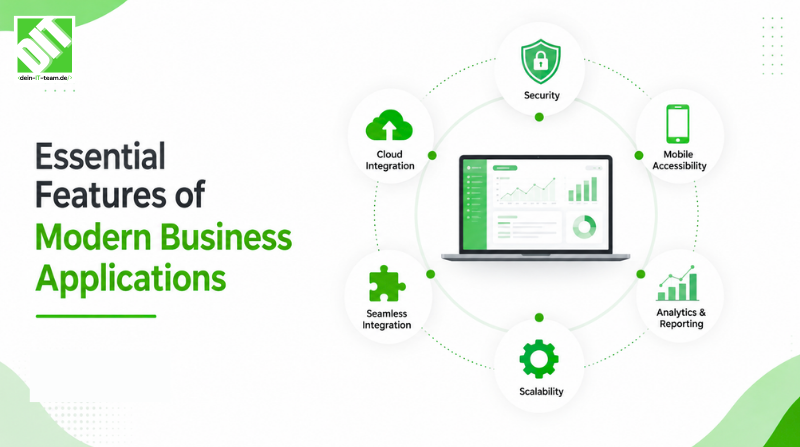
Discover how modern business applications leverage custom software engineering solutions to remove data silos and accelerate growth.
In a rapidly changing corporate environment, modernizing software infrastructure is no longer a luxury reserved for massive technology conglomerates. As companies scale, they frequently find themselves collecting massive amounts of customer records, financial transactions, and operational metrics across siloed legacy systems. Relying on fragmented networks leads to severe analytical bottlenecks, manual data entry errors, and slow project deployment timelines. Implementing a cohesive layout of custom software engineering solutions enables your organization to break down these data barriers, transforming isolated databases into a unified, high-performing digital ecosystem that maximizes operational velocity and protects your market share against agile competitors.
Key Takeaways
Modular Ecosystem Design: Shifting to decoupled microservices patterns ensures independent feature updates without disrupting core live databases.
Unified API Frameworks: Standardized communication ports securely link remote office tools, sales suites, and logistical nodes automatically.
Intelligent Data Automation: Removing repetitive administrative data management loops increases everyday office velocity and cuts manual entry errors.
Cross-Device Native Access: Providing field agents with cross-platform optimization balances system performance with excellent user experiences.
Shifting from Brittle Legacy Software to Responsive Solutions
When establishing an initial market footprint, expanding firms naturally adopt separate pre-packaged software subscriptions to handle urgent localized requirements. These individual applications fulfill immediate administrative goals but fail to provide a unified data flow when transactional loops accelerate. Because these standalone tools are engineered to satisfy a generalized global audience, they introduce massive feature clutter while missing the critical synchronization points your scaling workforce requires.
Without centralized connection layers, modern back-office teams spend thousands of hours acting as human data pipelines. Workers find themselves manually copying operational numbers, matching physical inventory records with sales portals, and moving data between isolated windows. This constant administrative handling lowers daily employee productivity, increases system vulnerabilities, and directly introduces errors into your financial reporting ledgers.
Modern applications address this systemic drag by incorporating responsive cloud architecture from day one. Instead of relying on manual file transfers, data modifications flow instantly throughout your network nodes. This immediate synchronization removes back-office bottlenecks and provides management teams with completely clean, real-time analytics reports to support strategic business decisions.
4 Pillars of Next-Generation Business Architecture
True digital transformation requires underlying business tools to align perfectly with automated operational standards. High-performance software platforms achieve this by building around four fundamental components.
1. Advanced Integration and Secure System Bridges
A high-performing software platform must communicate seamlessly with external services and internal legacy databases. Utilizing custom API nodes transforms standalone software architectures into scalable networks, enabling cross-system workflows to pass security verification tokens and data values smoothly.
2. Multi-Platform Engineering and Responsive Interfaces
To maximize enterprise-wide adoption, corporate software must offer uniform functionality across desktops, tablets, and field devices. Utilizing high-performance mobile app development solutions ensures applications handle intense processing workloads while maintaining short loading times on both iOS and Android frameworks. For organizations mapping out their strategic product roadmaps, understanding the foundational shifts in mobile design is critical. Navigating future feature choices requires aligning software upgrades with emerging standard requirements by consulting our research on the Top Mobile App Features in 2026 to preserve a massive competitive advantage.
3. Granular Security Architecture and Compliant Auditing
Protecting proprietary corporate files requires a deeply integrated security plan. Next-generation systems apply strict role-based access tokens alongside continuous activity tracking loops. This design protects your private customer data from leaks while maintaining total compliance with global data privacy regulations.
4. Machine Learning Integration and Predictive Analysis
Advanced tools utilize private algorithmic modules to automate predictive tasks, such as tracking supply chain variations or sorting inbound lead channels. Integrating these analytical scripts allows management divisions to make decisions based on existing numbers rather than relying on raw gut feeling.
Enhancing Long-Term Technical Moat and Asset Value
Constructing specialized software frameworks does more than optimize your current quarterly productivity; it fundamentally elevates the balance sheet valuation of your corporate entity. Relying strictly on rigid off-the-shelf software tools means your business remains completely vulnerable to third-party feature changes, unexpected subscription hikes, and unalterable system boundaries.
Developing private, dedicated connection architectures eliminates this external vulnerability. Building standardized software links transforms your ongoing IT spending into a modular, proprietary technology framework. Deploying modern cross-platform app development solutions keeps your client portals incredibly responsive and your internal workflows entirely secure, positioning your brand as an independent industry leader fully prepared for rapid expansion.
Conclusion
Enforcing a clear, intentional software modernization roadmap is a critical business strategy required to protect profit margins and accelerate corporate data processing speeds. Moving past standard, fragmented web applications toward customized integration systems allows growing mid-market enterprises to capture deep operational insights without risking proprietary data security. This automated connectivity approach removes administrative delivery delays, improves reporting accuracy across multiple locations, and builds independent technology equity. Allocating resources to precise, engineering-driven software connections allows modern organizations to anchor their position in global spaces with total confidence, ensuring an agile system architecture that consistently drives profitable expansion.
Frequently Asked Questions
What defines a modern business application compared to legacy systems?
Modern business applications are defined by modular cloud architecture, real-time automated data sharing, and cross-platform native access. Unlike rigid legacy platforms, they scale seamlessly with changing workloads without requiring complete infrastructure overhauls.
How do custom software components improve back-office efficiency?
Custom software components map directly to your unique business logic, completely eliminating manual data movement between systems. This systematic automation cuts down administrative processing delays and removes expensive manual handling errors.
Why is cross-platform flexibility essential for modern enterprise tools?
Cross-platform flexibility ensures that employees can securely access real-time company databases from any device, whether in the office or working remotely. Maintaining uniform system responsiveness protects cross-functional productivity and speeds up customer turnaround times.
Recent Posts
September 30, 2026

September 18, 2026
September 22, 2026

September 29, 2026