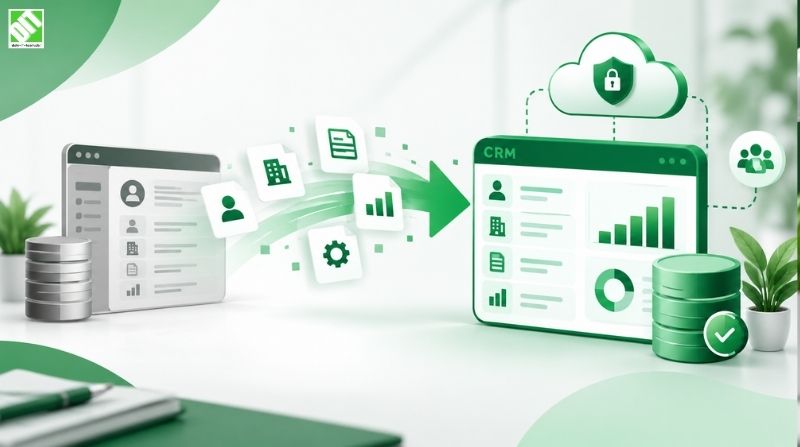
Top 10 Benefits of Cloud Integration for Small Businesses

Learn top 10 benefits of cloud integration and the ways cloud integration improves efficiency, reduces costs, and drives growth.
Small businesses today operate in a fast-moving digital world where flexibility, speed, and informed decision-making matter more than ever. Traditional systems are often disconnected and hard to maintain, slow down productivity and limit growth. This is where integrated cloud solutions become a game-changer. They allow small businesses to connect software, data, tools, and workflows into a unified digital ecosystem.
Whether a team is working remotely, scaling operations, or managing tight budgets, the benefits of cloud integration for small businesses open up pathways to operate smarter, reduce operational friction, and compete confidently with larger enterprises.
Before diving deeper, here are the key takeaways.
Key Takeaways
-Cloud integration brings together multiple systems, tools, and data sources into a seamless operational environment.
-Small businesses gain improved collaboration, stronger operational control, reduced IT overhead, and better decision-making.
-With the right cloud integration software, companies can automate repetitive tasks, strengthen security, and become more scalable.
-Integrated solutions provide the technical flexibility needed for future innovation and digital transformation.
-These benefits are accessible without large technology budgetsmaking integration a strategic advantage for small companies.
10 Benefits of Cloud Integration
1. Centralized Data Access That Improves Productivity
One of the biggest challenges small businesses face is scattered informationcustomer data in one platform, inventory somewhere else, financial records in another. Cloud integration breaks down these data silos and unifies everything into a single, accessible hub. This level of centralized data access dramatically improves how teams work. Employees no longer waste time searching for information, switching between platforms, or dealing with contradictory records. Everything is connected and updated in real time.
With unified access, leaders gain clear visibility into operationssales trends, customer journeys, expenses, project progress, and more. Teams become more efficient because they operate with the same consistent dataset, reducing miscommunication and speeding up daily tasks.
2. Automation of Repetitive Tasks to Save Time and Reduce Errors
For small businesses that rely on tight manpower, manual processes drain valuable time. Cloud integration allows systems to talk to each other, creating automated workflows that eliminate repetitive data entry and administrative work.
For example, when a customer places an order, integrated systems can automatically update inventory, notify the sales team, create an invoice, and send a confirmation emailno human involvement needed. Automation doesnt just save time; it reduces errors that often happen when employees need to transfer data between systems. This leads to more accurate reporting, faster service delivery, and improved business reliability overall.
3. Enhanced Collaboration and Remote Work Efficiency
Modern organizations especially small businesses thrive on agile collaboration. Cloud integration ensures that every team member, whether in-office or remote, can work together effortlessly. Documents, workflows, and communication tools sync across devices and applications. Rather than emailing files back and forth or wondering who made the latest change, employees collaborate in real time with synchronized systems.
Integrated communication tools, project management apps, and shared data sources improve coordination and help teams move faster. This is especially valuable for businesses that work across locations, rely on freelancers, or operate hybrid work models.
4. Improved Customer Experience Through Connected Systems
Customer expectations have evolved. They expect personalized service, fast responses, and consistent experiences across channels. Cloud integration supports this by connecting CRM systems, support tools, marketing applications, and sales platforms.
When a customer interacts with your business, integrated systems ensure all teams know their history, preferences, and needs. This leads to smoother communication, quicker resolutions, and more informed service delivery.
Marketing also becomes more effective, as customer behavior data flows automatically into email automation systems, analytics, and advertising tools creating personalized campaigns that drive higher engagement.
5. Lower Operational Costs and Reduced IT Complexity
Traditional IT systems require expensive hardware, maintenance, and complex integrations handled manually by IT specialists. Cloud integration removes much of this burden.
With cloud-based systems connected together, small businesses avoid physical servers, reduce software licensing overlaps, and cut down on maintenance schedules.
Integrated systems also simplify IT management. Instead of maintaining multiple separate platforms, everything runs cohesively, reducing the need for large IT teams or costly infrastructure investments.
Over time, this significantly lowers operational costs and redirects resources toward innovation, marketing, or business expansion.
6. Enhanced Security and Data Protection Across Platforms
Security is a top priority, but many small businesses struggle with fragmented systems that make it harder to enforce consistent protection. Cloud integration improves security by centralizing data governance and ensuring that every connected tool adheres to standardized security protocols.
Integrated systems allow automatic updates, multi-factor authentication, encrypted data transfers, and unified access controls. Moreover, cloud platforms offer disaster recovery and automatic backups, reducing the risk of data loss from hardware failures or human error. This gives small businesses enterprise-level security without enterprise-level costs.
7. Real-Time Analytics for Better Decision-Making
Access to accurate, real-time data can transform how a business operates. Cloud integration ensures data flows continuously across all systems, enabling dynamic dashboards and analytics tools to reflect the latest business activities.
Instead of relying on monthly reports or outdated spreadsheets, managers get instant visibility into customer behavior, sales performance, inventory levels, and operational bottlenecks.
This supports faster decision-making and long-term planning. Whether adjusting marketing budgets, forecasting demand, or identifying inefficiencies, integrated analytics empower leaders to act with confidence.
8. Greater Scalability for Growing Businesses
Small businesses often hesitate to invest in new tools out of fear of outgrowing them. Cloud integration eliminates this limitation by offering scalability on demand. As the business expands adding new employees, applications, workflows, or customer data the integrated system adapts without major upgrades.
Cloud-based platforms can scale storage, computing power, and software capabilities instantly. This means businesses can grow organically without worrying about system limitations or disruptive migrations. Scalability becomes a natural part of business strategy rather than a technical hurdle.
9. Faster Deployment and Improved Time-to-Market
Whether launching a new product, adopting new software, or implementing a digital strategy, integrated systems reduce delays significantly.
Cloud integration cuts down on configuration time because tools are designed to connect through APIs and standardized connectors. This speeds up onboarding, project delivery, and product launches.
For small businesses competing in fast-moving markets, reduced development cycles and quicker adaptation to trends provide a strong competitive edge. It becomes easier to innovate and stay ahead of competitors.
10. Competitive Advantage Through Modern Technology Adoption
Adopting integrated systems isnt just a technological upgradeits a strategic move. Small businesses that use cloud integration operate with speed, efficiency, and insight that many competitors may still lack.
They deliver better customer experiences, make faster decisions, reduce operational stress, and pivot quickly when the market changes.
This modern, unified operational foundation allows them to compete even with larger businesses that traditionally had more resources. Cloud integration becomes the backbone of innovation, allowing small teams to achieve big results with minimal friction.
Talk to Our Business Manager or Get a Free Estimate Now!
Conclusion
Cloud integration is no longer a luxury, it's a foundation for modern business success. With cloud integration software, small businesses can simplify operations, automate processes, strengthen security, enhance collaboration, and build a scalable ecosystem that grows with them.
The shift toward connected systems creates an environment where teams work smarter, decisions are clearer, and customers receive exceptional experiences. For businesses aiming to become more efficient and competitive, embracing cloud integration is one of the most impactful steps they can take.
Recent Posts

September 16, 2026


September 18, 2026