

Benefits of Building Business Applications with .NET
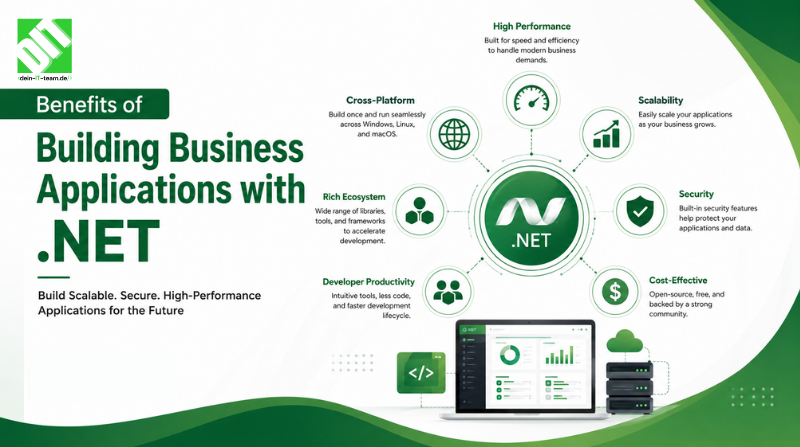
Learn how microsoft development and the .NET framework optimize business data processing, eliminate tech debt, and drive enterprise scaling.
In a digital landscape where enterprise processing requirements demand unmatched velocity, selecting a development framework is one of the most critical decisions a technical stakeholder can make. For corporate decision-makers, software infrastructure must act as a driver of commercial scaling rather than a source of continuous technical debt. While legacy setups and brittle platforms frequently buckle under intense multi-channel data streams, modern software alignment demands an ecosystem optimized for security, deployment velocity, and cross-platform flexibility. Partnering with a dedicated engineering provider to implement robust Microsoft development ecosystems allows your organization to build exceptionally stable corporate platforms engineered to process heavy transactional workloads with absolute confidence.
Key Takeaways
Cross-Platform Architecture: Compiling code natively across Windows, Linux, and macOS environments eliminates separate engineering silos and reduces operational infrastructure costs.
Optimized Processing Speed: The high-velocity runtime execution engine minimizes server resource consumption, preventing database processing lag during sudden traffic spikes.
Enterprise Security Baselines: Root-level protection parameters, including cryptographically sound authentication and threat-profiling libraries, isolate sensitive corporate records from data leaks.
Modular Ecosystem Longevity: A highly sustainable framework architecture simplifies ongoing application update cycles, permanently reducing corporate technical maintenance budgets.
Frictionless Cloud Integration: Modern .NET environments interface perfectly with complex cloud environments, ensuring high availability, continuous performance optimization, and reliable multi-channel enterprise database communications.
Direct Architectural and Performance Gains
Many non-technical founders and executives view framework choices as minor engineering decisions rather than core pillars of multi-year operational profitability. When a corporate portal faces heavy user traffic or syncs massive transactional datasets in parallel, backend response metrics dictate customer conversion and retention outcomes. The modern .NET Framework resolves this operational anxiety through its highly optimized unified architecture. By utilizing a common language runtime that executes directly on machine hardware without complex bridge scripts, business logic processes execute within milliseconds. This performance advantage ensures that multi-tenant database systems, inventory engines, and internal enterprise reporting tools scale concurrently without experiencing software timeout crashes.
Maximizing this technical agility is vital when coordinating multi-channel data movements. If your internal workflow demands continuous cross-department communication between an ERP system, customer databases, and customer-facing interfaces, an unoptimized application layout will cause critical business processes to lag. Building your application tiers with a premier software partner on an enterprise-grade framework provides the baseline speed needed to process these requests securely. To see how foundational structural choices directly translate into raw corporate efficiency, reviewing our detailed analysis on how scaling your company requires custom software development gives your leadership team a transparent look at optimizing software product lifecycles.
Streamlining the Development and Sourcing Lifecycle
For growing mid-market enterprises, speed to market and engineering predictability are everything. Traditional product development lifecycles are frequently derailed by logic fragmentation when distinct software teams use separate programming languages to build web tools, desktop platforms, and cloud microservices. The .NET ecosystem completely unifies this workflow by offering a single, consolidated programming methodology. Automated quality assurance testing suites validate core business rules across all deployed endpoints through a single configuration track, enabling your internal division to discover and patch bugs at twice the velocity of traditional multi-language pipelines.
When your business is ready to transition from legacy spreadsheets to automated enterprise systems, choosing a delivery partner capable of managing complex data integrations is critical. Connecting front-end user spaces to proprietary internal databases requires deep technical depth across secure cloud data structures and web service routing gates. Aligning with an expert provider of tailored software solutions ensures your engineering capital is translated directly into high-value intellectual property that directly increases your company's balance sheet valuation during strategic market evaluations.
Long-Term Sustainability and Technical Debt Mitigation
Beyond the immediate performance improvements noticed during initial launch tracks, the true financial advantage of choosing this framework becomes transparent over a multi-year operational lifecycle. Brittle platforms frequently suffer from severe regression bugs whenever a new operating system patch or browser version is released, forcing companies to waste substantial technical capital on emergency maintenance sweeps rather than innovative features. The modular, backward-compatible design of .NET insulates your technical assets from this compounding technical debt. Future feature updates, software upgrades, or third-party API integrations deploy seamlessly without breaking active dependencies. This optimized sustainability keeps your ongoing technical overhead low, ensuring maximum return on your long-term technology investments.
Conclusion
Opting for a professional framework layout is a deliberate, strategic initiative to protect corporate revenue, secure proprietary data assets, and ensure sustainable technical scaling. Moving past generic templates or rigid monoliths in favor of modern, compilation-driven architectures enables growing enterprises to achieve Native-level responsiveness without inflating multi-year infrastructure budgets. Consolidating your corporate workflows into an API-driven ecosystem eliminates data communication bottlenecks, simplifies ongoing codebase maintenance, and establishes a secure technical baseline. Investing in this precise structural modernization enables organizations to confidently deploy resilient digital tools across global spaces, maximizing conversion potential and driving long-term commercial impact.
Frequently Asked Questions
How does a unified framework lower corporate software engineering costs?
Maintaining separate development silos for different operating platforms drives up your technical budget. A unified framework allows a single engineering team to deploy identical business logic modules across web, desktop, and cloud environments out of a consolidated codebase, lowering initial development timelines and ongoing support budgets significantly.
Why is root-level architecture security crucial for enterprise web applications?
Brittle web applications with loosely configured access endpoints are highly vulnerable to unauthorized data exposure and malicious exploitation. Root-level architecture security embeds cryptographic validation protocols, encrypted database communication paths, and strict identity management directly into the compilation layer, protecting sensitive corporate assets from data leaks.
Can custom software tools built on this ecosystem adapt to sudden user traffic surges?
Yes. The modular architecture is engineered from the ground up to support rapid cloud infrastructure scaling. This design focus allows technical teams to adjust server resource capacity dynamically or connect new departmental microservices tiers in parallel without ever causing system lag or disrupting active business operations.
Recent Posts



September 22, 2026

September 25, 2026