

How to Build a Payment Gateway: Architecture, Features, and Costs
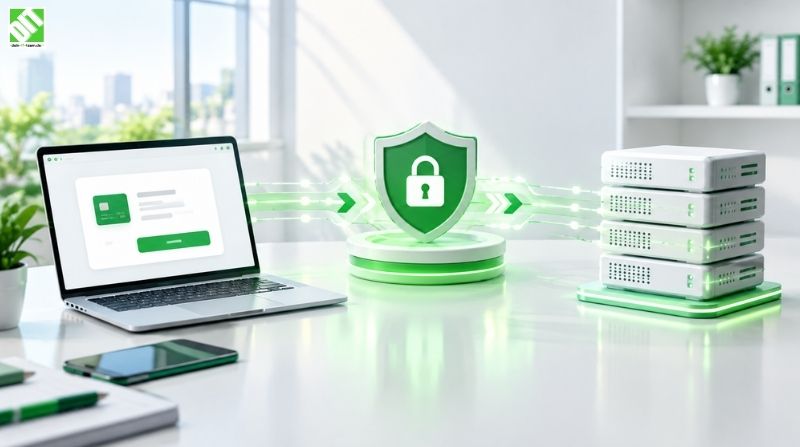
Learn how to build a payment gateway from architecture to launch. Discover core components, security, compliance, costs, and development timeline.
Building a payment gateway might seem straightforward until you start digging into the details. Most people think it's just about processing credit cards, but a robust payment gateway involves dozens of moving parts: encryption protocols, compliance frameworks, fraud detection systems, banking integrations, and real-time transaction handling. Get these wrong and you either lose customers to failed transactions or invite regulatory penalties.
The payment processing market is massive. Over $9 trillion in card transactions happen annually worldwide, and every major marketplace, SaaS platform, and e-commerce business needs reliable payment processing. But building your own payment gateway isn't a decision to make lightly. The barrier to entry is high, the regulatory landscape is complex, and the security requirements are unforgiving.
Yet some businesses have legitimate reasons to build instead of integrate. Maybe existing gateways don't support your business model. Maybe you need ultra-low processing fees that only internal systems can achieve. Maybe you're building infrastructure that other businesses will rely on. Whatever the reason, understanding what's involved in building a payment gateway is essential before committing resources.
This comprehensive guide walks through everything required to build a payment gateway, from foundational architecture decisions through regulatory compliance, security implementation, integration requirements, cost estimation, and timeline planning. Whether you're building a gateway for your own business or creating infrastructure others will use, this guide covers the technical and business considerations that determine success.
What Is a Payment Gateway?
A payment gateway is the technology that authorizes and processes payment transactions between customers, merchants, and financial institutions. It's the invisible infrastructure that makes online payments possible.
When you enter credit card details on an e-commerce site, that data travels through a payment gateway. The gateway encrypts the information, routes it to the appropriate card network (Visa, Mastercard, American Express), communicates with the cardholder's bank, and returns a response indicating whether the transaction was approved or declined. All this happens in seconds.
But a payment gateway does more than transmit data. It validates transactions, checks for fraud, stores sensitive payment data securely, handles refunds and chargebacks, maintains compliance with regulations like PCI DSS (Payment Card Industry Data Security Standard), and provides merchants with reporting and reconciliation tools.
The key distinction: a payment gateway is not the same as a payment processor. A payment processor is the company that actually handles money flow between accounts. Many payment gateways use third-party processors behind the scenes. But when you build a payment gateway, you're building the interface layer that merchants interact with, even if payment processing happens elsewhere.
How Payment Gateways Work: The Transaction Flow
Understanding the transaction flow is essential for architecting a payment gateway.
When a customer initiates a payment, here's what happens:
Step 1: Data Collection
The payment gateway collects card details (or alternative payment methods) from the customer. This might be a checkout form on an e-commerce site, a mobile app interface, or an API endpoint called from a merchant's system. The customer enters their card number, expiration date, CVV, and billing address.
Step 2: Encryption and Tokenization
The payment gateway immediately encrypts sensitive data using TLS (Transport Layer Security). It might also tokenize the card data, replacing sensitive information with a unique token that represents the card without exposing the actual card number. Tokenization is crucial for reducing PCI compliance burden.
Step 3: Validation
Before sending anything to payment processors, the gateway validates the data. Is the card number valid according to the Luhn algorithm? Is the expiration date in the future? Does the billing address match what's on file? These checks happen locally and fast.
Step 4: Fraud Screening
The gateway runs the transaction through fraud detection systems. Does this transaction match the customer's normal behavior? Is the amount unusually large? Is the IP address consistent with the customer's location? Sophisticated gateways use machine learning to detect suspicious patterns.
Step 5: Authorization Request
If validation and fraud checks pass, the gateway sends an authorization request to the card network (Visa, Mastercard, American Express). This request includes the card details, transaction amount, merchant information, and other relevant data.
Step 6: Issuer Response
The cardholder's bank (the issuer) receives the authorization request and decides whether to approve or decline. They check card validity, available funds, and their own fraud rules. The response comes back to the gateway within seconds.
Step 7: Response to Merchant
The gateway returns the authorization response to the merchant's system. If approved, the transaction receives an authorization code. If declined, the response includes a decline reason.
Step 8: Settlement
Authorized transactions eventually settle. The funds move from the cardholder's account through the card network and processor to the merchant's account. Settlement typically happens 1-3 business days later, depending on the processor and financial institutions involved.
Step 9: Reporting and Reconciliation
Throughout this process, the gateway records transaction details for reporting. Merchants see transactions in their dashboard. The gateway tracks settlement status, refunds, chargebacks, and other post-transaction events.
This entire flow needs to be reliable, fast, and secure. Delays frustrate customers. Security failures invite fraud and regulatory penalties.
Core Components of a Payment Gateway Architecture
Building a payment gateway requires understanding its fundamental architecture.
The Frontend Layer
This is what merchants and customers interact with. It includes checkout interfaces (payment forms on websites), mobile SDKs (code libraries that mobile apps integrate to handle payments), payment links (URLs merchants can share for payment collection), and admin dashboards (where merchants view transactions and settings).
The frontend needs to be secure (never exposing sensitive card data to merchant servers), user-friendly (customers should complete payments quickly), and responsive (working smoothly on all devices). This is where UI/UX quality directly impacts conversion rates.
The API Layer
This is the bridge between merchant systems and your payment processing infrastructure. Merchants call your APIs to create payment intents (initiate transactions), process payments, retrieve transaction status, issue refunds, create recurring charges for subscriptions, and retrieve transaction history.
Your API needs to be well-documented, consistent, reliable, and fast. Merchants depend on your API for their core business, so downtime costs them money. Your API should support multiple authentication methods, rate limiting to prevent abuse, and comprehensive error handling.
The Payment Processing Engine
This is the core logic that handles transactions. It validates transaction data, runs fraud detection, manages payment method tokenization, routes transactions to appropriate processors or card networks, handles different payment types (credit cards, digital wallets, bank transfers, etc.), manages authorization and settlement, and handles reversals and chargebacks.
The processing engine needs to be incredibly reliable. Even brief outages mean customers can't pay and merchants lose revenue. Redundancy and failover systems are essential.
Fraud Detection System
This analyzes transactions to identify suspicious activity. It uses rule-based detection (flagging transactions that violate specific rules), machine learning models (detecting subtle fraud patterns), velocity checks (detecting rapid multiple transactions), location analysis (comparing transaction location to customer history), and device fingerprinting (tracking devices used for transactions).
Fraud detection is a constant arms race. Fraudsters adapt, so your detection systems need to evolve. This requires ongoing monitoring, model updates, and threat analysis.
Payment Method Tokenization
Instead of storing sensitive card data, tokenization replaces it with unique tokens. When a customer makes a payment, the gateway stores their token, not their card number. If the token database is compromised, it reveals no sensitive information because tokens are worthless without access to the tokenization server.
Tokenization requires secure vaults for storing encryption keys and sophisticated key management to ensure keys never leave secure hardware.
Settlement and Reconciliation Engine
This tracks which transactions have settled, which are pending, and handles exceptions. It monitors settlement status with acquiring banks, tracks batch files with transaction details, reconciles merchant accounts, handles chargebacks and disputes, and processes refunds and reversals.
Settlement is the bridge between transaction authorization and money actually moving. Errors here mean merchants don't get paid or get paid incorrectly.
Compliance and Reporting Systems
Payment processing is heavily regulated. Your gateway needs to track PCI DSS compliance, generate compliance reports, maintain audit trails, store transaction records according to legal requirements (typically 7 years), handle data retention and deletion policies, and generate tax reporting documents (1099s in the US).
Compliance isn't just a checkbox exercise. Regulatory bodies audit payment systems, and violations result in fines, operating restrictions, or license revocation.
Core Features Your Payment Gateway Must Support
Beyond basic processing, modern payment gateways need specific features.
Multiple Payment Methods
Customers expect options. Support credit and debit cards (Visa, Mastercard, American Express, Discover), digital wallets (Apple Pay, Google Pay, PayPal), bank transfers (ACH in the US, SEPA in Europe), alternative payment methods (popular in specific regions), and cryptocurrency (increasingly requested).
Supporting multiple methods increases conversion because customers can use their preferred payment option.
Recurring Billing and Subscriptions
Many businesses charge recurring fees. Your gateway needs automatic recurring charges, billing schedule management, dunning management (retrying failed charges), subscription pause and resume, plan customization, and proration calculations (charging for partial billing periods).
Subscription management is surprisingly complex. Billing cycles, failed charge retries, plan changes, and cancellations create edge cases that require careful handling.
Tokenization and Vaults
Merchants need to charge stored payment methods without collecting the card details again. Your gateway needs secure storage of payment method tokens, ability to charge stored methods, token expiration and rotation, and customer ability to manage stored methods.
This enables one-click checkout and subscription charging but requires sophisticated security.
Refunds and Reversals
Transactions don't always complete successfully or customers request refunds. Your gateway needs full refunds (returning entire transaction amount), partial refunds (returning part of a transaction), automatic reversals (undoing unauthorized or duplicate transactions), refund status tracking, and refund failure handling.
Refunds seem simple but have timing requirements. Some refunds must happen within specific timeframes or customers can dispute them.
Dispute and Chargeback Handling
When customers dispute charges, your gateway needs to track dispute and chargeback information, collect evidence for dispute resolution, manage the dispute timeline, track dispute outcomes, and calculate chargeback fees and assess merchants.
Chargebacks are expensive (typically $25-100 per chargeback) and damage your reputation if chargeback rates get too high.
3D Secure (Strong Customer Authentication)
Regulations in many regions require additional authentication for certain transactions. Your gateway needs to integrate 3D Secure 2.0 protocols, request additional authentication when needed, handle customer authentication flow, and process transactions with authentication data.
3D Secure protects merchants from fraud but can add friction to checkout. The challenge is balancing security and conversion.
Reporting and Analytics
Merchants need visibility into their payment activity. Provide transaction history and search, settlement reports, revenue dashboards, dispute and chargeback reports, customer analytics, payment method performance analysis, and geographic transaction analysis.
Good reporting helps merchants understand their business and spot problems early.
API Webhooks
Real-time notifications when events happen. Support webhooks for payment authorization, payment failure, refund completion, dispute filed, chargeback received, and settlement completed.
Webhooks let merchants react to payment events immediately rather than polling your API.
Technology Stack for Building a Payment Gateway
The technology choices determine your gateway's capabilities, reliability, and scalability.
Backend Technology
Your processing engine needs to handle high transaction volume with minimal latency. Consider languages like Go (high performance, concurrency), Java (mature ecosystem), Python (rapid development but lower performance), or Node.js (JavaScript familiarity for some teams).
Frameworks like Express, Django, Spring Boot, or custom systems built for the specific requirements all have merit. Payment processing is one area where framework choice matters significantly. Some teams build custom systems optimized for payment processing rather than using general frameworks.
Databases
Payment data is diverse and high-volume. Most robust gateways use SQL databases (PostgreSQL, MySQL) for transaction records, customer data, and structured payment information. PostgreSQL is particularly popular for payment systems due to advanced features like JSONB and strong ACID compliance.
Some gateways use MongoDB or similar for separate analytics systems that don't require strong transactional guarantees. In-memory caches like Redis help with rate limiting, session management, and temporary transaction state. Message queues (RabbitMQ, Kafka) handle asynchronous processing of non-urgent tasks like reporting and settlements.
Most robust payment gateways use a combination. PostgreSQL handles critical transactions, Redis caches frequently accessed data, and Kafka handles asynchronous events.
Payment Processing Integration
You'll integrate with existing payment processors or card networks. Most gateways use direct connections to acquiring banks or payment processors for authorization and settlement, direct connections to Visa, Mastercard, or other card networks (requires significant technical and business agreements), or third-party vaults like AWS Payment Cryptography or HSM (Hardware Security Modules) for encryption.
Integration complexity varies. Some processors have well-documented APIs. Others require proprietary implementations.
Security Infrastructure
Payment systems require specialized security. Hardware Security Modules (HSMs) are physical devices that generate, store, and manage encryption keys. Keys never leave the HSM, making theft nearly impossible.
Use TLS for data in transit and AES-256 for data at rest. Implement sophisticated systems for rotating keys, controlling access, and auditing key usage. Deploy DDoS protection, firewalls, and intrusion detection systems for network security.
Compliance Infrastructure
Build or integrate PCI DSS compliance systems, audit logging that records all access and transactions, data retention systems that automatically delete sensitive data according to legal requirements, and API layer with well-documented, consistent, reliable, and fast APIs.
Monitoring and Analytics
Production payment systems need real-time visibility. Use Prometheus or similar for metrics collection, Elasticsearch for centralized logging, distributed tracing to understand transaction flow, and automatic alerts when metrics exceed thresholds.
Security Considerations in Payment Gateway Development
Security isn't an afterthought in payment systems. It's foundational.
Data Protection
Sensitive payment data needs multiple layers of protection. Never log card numbers or sensitive data. Use tokenization to replace sensitive data with non-sensitive tokens. Encrypt sensitive data at rest using AES-256. Use TLS 1.2 or higher for all data in transit. Implement perfect forward secrecy so compromised keys don't expose past traffic.
The goal is that even if someone gains access to your systems, they can't extract useful payment data.
Authentication and Authorization
Every API call needs authentication, and every user/merchant needs appropriate authorization. Use strong authentication (API keys, OAuth 2.0), implement role-based access control (RBAC), limit API access to only necessary permissions, and monitor authentication failures and alert on suspicious patterns.
Fraud Detection
Implement multiple fraud detection layers. Machine learning models trained on historical fraud data, rule-based detection for obvious fraud patterns, velocity checks (multiple transactions in short timeframes), geographic analysis (transactions from unexpected locations), and device fingerprinting (tracking which devices make transactions).
Fraud detection requires continuous updating as fraudsters adapt.
Compliance
PCI DSS compliance is mandatory for payment systems. Implement network segmentation (payment processing in isolated networks), vulnerability scanning and penetration testing, intrusion detection systems, strong access controls and audit trails, data encryption and key management, and incident response procedures.
PCI DSS compliance is complex and ongoing. Budget resources for annual audits and continuous compliance work.
Incident Response
Have plans for security incidents. Develop immediate incident detection and response procedures, communication protocols for notifying affected parties, forensic investigation capabilities, recovery procedures, and post-incident analysis and lessons learned.
Payment breaches are catastrophic for reputation and business, so incident response planning is critical.
API Development and Integration Considerations
Building a payment gateway requires developing robust, secure APIs that merchants depend on. Your APIs need to handle high concurrency, support various payment methods, and integrate with card networks and processors. This is complex integration work that demands careful architecture and implementation. When developing these core systems, many teams benefit from expertise in developing APIs specifically designed for payment processing, ensuring that your gateway can reliably handle merchant integrations at scale.
Strong API design determines whether merchants find your gateway easy to use or frustrating. Poor API design drives merchants to competitors, so this deserves significant attention during development.
Development Phases for a Payment Gateway
Building a payment gateway follows a structured development process.
Phase 1: Discovery and Requirements
Understand the scope of what you're building. Define your target merchants (e-commerce stores, subscription services, marketplaces, or specific verticals). Document your business model (will merchants pay per transaction, fixed monthly fees, or tiered pricing?). Identify payment methods you'll support initially (credit cards are essential, but digital wallets and alternative methods increase addressability). Define your MVP, focusing on credit card processing first, then expanding.
Phase 2: Architecture and Design
Plan how your system will be built. Design your payment processing architecture (where will merchant data live, where will sensitive card data be stored, how will you achieve PCI compliance?). Choose your technology stack based on scalability, security, and team expertise. Design your database schema (payment data has complex relationships between customers, transactions, refunds, and disputes). Plan your infrastructure (payment systems need redundancy, failover systems, and geographic distribution). Design your API contracts (what will your APIs look like, how will merchants interact with your system?).
Phase 3: Security Framework
Implement security before building payment functionality. Design your encryption architecture (where will you encrypt, how will you manage keys?). Plan your PCI DSS compliance approach (will you be PCI compliant yourself or use a qualified assessor?). Design your fraud detection system (what rules will you implement, what machine learning models will you use?). Plan your audit logging (how will you track all access and transactions?).
Phase 4: Core Development
Build the foundational payment processing. Develop the authorization engine that processes transactions, integrate with your chosen payment processor or card network, build the tokenization system for secure card storage, implement fraud detection, and build settlement and reconciliation systems.
This is complex, and mistakes are expensive. Code review and testing are critical.
Phase 5: Merchant Integration
Build how merchants access your system. Develop REST APIs for payment processing, build webhooks for event notifications, create checkout UI components, build merchant dashboards, and create SDKs for popular languages.
Your APIs will make or break merchant adoption. Poor APIs drive merchants to competitors.
Phase 6: Testing and Security Audit
Comprehensive testing before launch. Functional testing of all payment flows, load testing to verify performance under transaction volume, security testing including penetration testing, PCI DSS audit by qualified assessor, and compliance verification for your target regions.
Don't skimp on security testing. Payment systems attract sophisticated attackers.
Phase 7: Regulatory Compliance
Obtain necessary approvals and licenses. Apply for payment processor licenses if required in your jurisdiction, obtain PCI DSS certification, and ensure compliance with regional regulations (EMD in Europe, state money transmitter licenses in the US).
Regulatory timelines can be long. Start early.
Phase 8: Launch
Deploy carefully. Do a beta launch with trusted merchants, monitor intensively for issues, gradually increase transaction volume, and have rollback plans if problems occur.
Payment system launches are high-stakes. One major outage damages reputation severely.
Phase 9: Monitoring and Optimization
Post-launch work is ongoing. Monitor transaction success rates and latency, track fraud metrics and adjust detection, monitor compliance metrics, gather merchant feedback, and plan feature enhancements.
Integration Requirements: Connecting Your Gateway
Your payment gateway rarely exists in isolation. It needs to integrate with card networks (Visa, Mastercard, American Express, and Discover all have different requirements). Direct integration requires significant technical and business agreements. Most gateways use processor intermediaries who handle card network integration.
Acquiring banks (the banks that actually settle funds) need to receive transaction information and process settlements. This requires secure, reliable integration and adherence to banking standards.
Most payment gateways integrate with one or more payment processors who handle the complex relationships with banks and card networks. Processor choice impacts your capabilities, fees, and supported countries.
Many gateways integrate with third-party fraud detection providers (Kount, Forter, Ravelin) to enhance fraud detection with external data and intelligence. Identity verification services (IDV) for KYC (Know Your Customer) requirements and sanctions screening services for compliance with regulations provide additional compliance capabilities.
Merchants often integrate your gateway with their accounting software. You need to support integration with QuickBooks, Xero, SAP, and other accounting platforms. If targeting e-commerce merchants, integrate with Shopify, WooCommerce, Magento, and custom e-commerce platforms through plugins or APIs.
Each integration adds complexity. Your architecture needs to support flexible integrations without core system changes.
Cost Factors in Payment Gateway Development
Building a payment gateway is expensive. Understanding cost drivers helps with budgeting.
Development Team Costs
You need specialized expertise: backend engineers (4-6) specialized in payment systems, security engineers (2-3) with cryptography expertise, DevOps/infrastructure engineers (2-3), frontend engineers (2-3) for merchant dashboards and checkout UI, and QA engineers (2-3) for rigorous testing.
A team of 12-18 engineers, based in Europe, costs roughly 1.5 to 2 million euros annually. Building a basic payment gateway takes 6-12 months with such a team.
Infrastructure Costs
Payment systems require robust infrastructure: servers and cloud infrastructure (AWS, Google Cloud, Azure) cost $10,000-50,000/month depending on volume. Database infrastructure and backups cost $5,000-20,000/month. Security infrastructure (HSMs, DDoS protection) costs $5,000-30,000/month. Monitoring and logging infrastructure costs $3,000-10,000/month. Compliance and security tools cost $2,000-10,000/month.
Total infrastructure costs: $25,000-120,000/month
Licensing and Compliance
Compliance is expensive. PCI DSS certification costs $10,000-50,000 for initial assessment and audit. Payment processor licensing (varies by jurisdiction) costs $5,000-100,000. Regulatory compliance varies significantly by jurisdiction. Security tools and software cost $3,000-15,000/month.
Ongoing Costs
After launch, you have continuous expenses: security updates and patches (continuous), fraud monitoring and model updates (continuous), compliance audits (annual), incident response and support (continuous), merchant support team (ongoing), and card network fees and processor fees (variable based on volume).
Total Cost Estimation
A basic payment gateway: $500,000-1,500,000 total development cost, plus $30,000-100,000/month ongoing costs.
A feature-rich payment gateway supporting multiple methods and regions: $2,000,000-5,000,000+ total development cost.
These are rough estimates. Actual costs vary based on team location, complexity, and geographic scope.
Timeline for Payment Gateway Development
Payment gateways take time to build properly.
MVP Phase (6-8 months):
Credit card processing, basic fraud detection, merchant dashboard, single payment processor integration, basic compliance (working toward full PCI DSS).
Feature-Rich Phase (additional 6-12 months):
Multiple payment methods, subscription/recurring billing, advanced fraud detection, advanced reporting, full PCI DSS compliance, regulatory licensing.
Mature Phase (ongoing):
Additional payment methods, regional expansions, machine learning enhancements, new compliance requirements.
Timeline varies based on team size and expertise. Smaller teams take longer. Experienced payment teams move faster.
Don't underestimate timelines. Payment systems have more edge cases and security requirements than typical software. Testing takes longer. Regulatory approval takes longer.
Challenges When Building Payment Gateways
Expect these challenges:
Regulatory Complexity
Different jurisdictions have different requirements. Operating in Europe requires GDPR and PSD2 compliance. Operating in the US requires state money transmitter licenses. China has different requirements. Building global becomes exponentially more complex.
Processor Relationship Challenges
Payment processors control your access to payment networks. They can change terms, rates, or requirements with little notice. Processor relationships require careful management.
Fraud Evolution
Fraudsters adapt as your fraud detection improves. You're in a constant arms race, requiring ongoing monitoring and model updates.
Scaling Challenges
Payment systems need to handle millions of transactions. Scaling database systems, payment processor connections, and infrastructure requires careful planning and engineering.
Integration Complexity
Each integration (with processors, banks, compliance services) adds complexity and failure points. Your system needs to handle failures gracefully without losing transaction data.
Support Complexity
Merchants depend on your gateway for their business. Support must be excellent and always available. Building 24/7 support infrastructure is expensive.
Many businesses underestimate these challenges. Payment systems look straightforward on paper but reveal immense complexity during development. Working with experienced teams who understand these challenges helps avoid costly mistakes. Consider building your payment gateway with custom software development expertise that specializes in payment systems. Architects who have built payment infrastructure understand the edge cases, security requirements, and integration patterns that are easy to overlook.
Post-Launch: Optimization and Evolution
After launching your payment gateway, work continues.
Performance Optimization
Monitor transaction latency and throughput. Identify bottlenecks and optimize database queries, API response times, and processor communication.
Fraud Detection Refinement
Monitor fraud metrics. What types of fraud are slipping through? Update rules and machine learning models.
Feature Expansion
Based on merchant feedback, add features like alternative payment methods, advanced reporting, better dispute handling, or additional compliance options.
Merchant Acquisition
Launch is just the beginning. Building merchant adoption requires marketing, partnerships, sales efforts, and great merchant support.
Compliance Evolution
Regulations change. Stay updated on new requirements and ensure your system adapts.
Technology Stack Decisions for Different Scales
Your technology choices should match your anticipated scale.
Small Scale (under 100,000 transactions/month):
PostgreSQL for all data, single-region deployment, basic fraud detection with rules, direct integration with one processor, basic monitoring.
Medium Scale (100,000 to 10 million transactions/month):
PostgreSQL for transactions, separate analytics database, multi-region deployment, machine learning fraud detection, multiple processor integrations, comprehensive monitoring.
Large Scale (10+ million transactions/month):
Distributed databases (sharding), dedicated fraud detection platform, global deployment with local processing, multiple processor redundancy, custom infrastructure optimizations, extensive monitoring and alerting.
Scale affects every architectural decision. Build for your initial scale but design for future scaling.
Cloud Infrastructure and Deployment
Most modern payment gateways run on cloud infrastructure. AWS offers EC2 for compute, RDS or DynamoDB for databases, Lambda for serverless functions, CloudFront for CDN, and KMS for key management. Google Cloud provides Compute Engine for servers, Cloud SQL for databases, Firestore for some data, and Cloud CDN. Azure offers Virtual Machines, SQL Database, and Azure HSM for key management.
Cloud platforms provide scalability, reliability, and geographic distribution. They also integrate with compliance tools and security services. Setting up payment gateway infrastructure requires careful consideration of security, compliance, and performance. Work with teams experienced in cloud integration services for payment systems, ensuring your infrastructure can handle payment volumes securely while maintaining compliance across regions.
Conclusion
Building a payment gateway is one of the most complex software projects a business can undertake. It requires deep expertise in payments, security, compliance, and large-scale systems. The barrier to entry is high: technical complexity, regulatory requirements, security demands, and processor relationships all create significant challenges.
Yet for businesses with specific needs that existing gateways don't meet, building a custom solution makes sense. Fintech startups building new business models, global marketplaces needing specialized features, and payment service providers all justify the investment.
If you're considering building a payment gateway, start with thorough analysis. Understand your business requirements precisely. Analyze whether existing solutions truly don't fit. Calculate realistic costs and timelines. Assemble a team with payment system experience.
Success requires more than engineering. You need security expertise, regulatory knowledge, payment processing experience, and merchant support capabilities. You're building infrastructure others depend on, so reliability and security are non-negotiable.
Understanding how to properly implement payment gateway integration alongside your core payment processing is essential for success. This integration extends beyond just the technical aspects and includes how merchants use your gateway, how they integrate it into their systems, and how support flows.
Discuss your payment gateway requirements with DEIN IT TEAM. We work with businesses building payment infrastructure, handling architecture design, security implementation, compliance work, and integration with payment processors. Let's explore whether building a custom gateway makes sense for your business and what's involved.
Frequently Asked Questions
Should I build a payment gateway or integrate with an existing one?
Building is only justified if existing gateways don't meet your needs, your transaction volume justifies the investment, or you're building a marketplace with specific requirements. For most businesses, integrating with an established gateway (Stripe, Square, PayPal) makes more business sense. Building is expensive, time-consuming, and requires ongoing maintenance.
What payment methods must I support?
At minimum, credit and debit cards (Visa, Mastercard). Digital wallets (Apple Pay, Google Pay) significantly increase conversion. Alternative methods depend on your target markets. E-commerce in Asia benefits from local methods like Alipay. European merchants want SEPA transfers.
How long does PCI DSS compliance take?
Initial compliance work takes several months. You need to implement security measures, document procedures, and undergo assessment by a Qualified Security Assessor. Maintaining compliance is ongoing. Budget 3-6 months for initial compliance, then continuous maintenance.
What if a merchant's transaction fails?
Your gateway needs graceful failure handling. When processor connections fail, buffer transactions locally and retry when connection restores. Never lose transaction data. Merchants need to know payment status.
Can I use third-party fraud detection?
Yes. Many payment gateways integrate with specialized fraud detection services (Kount, Forter, Ravelin) to complement internal detection. This is often more effective than building everything internally.
What about chargebacks?
Chargebacks are inevitable. Your gateway needs to track dispute information, help merchants respond with evidence, and handle the resolution process. Budget for chargeback fees (typically $25-100 per dispute) and staff to manage chargebacks.
How do I reduce PCI DSS scope?
Tokenization is the key. By not storing card data yourself (storing tokens instead), you dramatically reduce PCI compliance scope. Using third-party tokenization services further reduces your compliance burden.
What happens if my gateway is down?
Downtime is catastrophic for merchants. Redundancy and failover systems are essential. Most gateways have 99.99% uptime targets, which means at most 52 minutes of downtime per year. Achieving this requires geographic redundancy, automated failover, and rigorous monitoring.
How much should I charge merchants?
Most gateways charge per-transaction fees (1-3%) or percentage-based fees, or fixed fees per month. Pricing depends on merchant size, transaction volume, and payment methods. Competitive analysis of existing gateways helps determine appropriate pricing.
Can I build in one region and expand later?
Yes, but design for global expansion from the start. Single-region systems are harder to expand. Design for geographic distribution, multi-currency support, and regional compliance from the beginning.
Recent Posts


September 15, 2026

September 18, 2026