

BEST LOW-CODE PLATFORMS FOR FASTER BUSINESS APPLICATION DEVELOPMENT
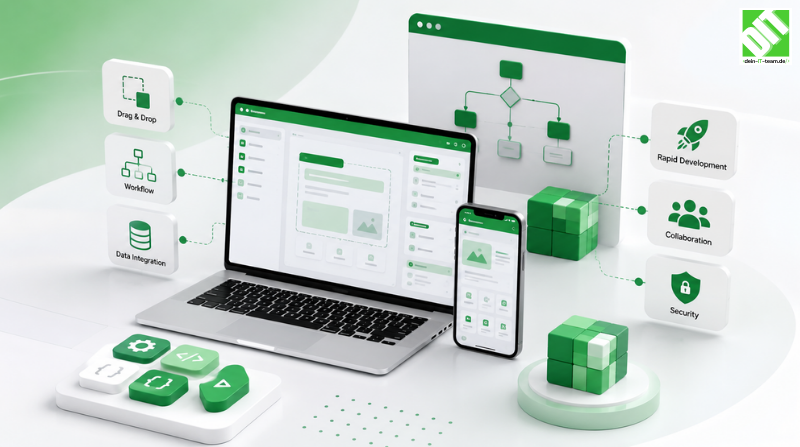
Discover best low-code platforms. Compare Mendix, OutSystems, Power Apps, Salesforce Lightning and Zoho Creator to accelerate application development.
Best low-code platforms have revolutionized how organizations develop business applications by dramatically reducing development time and complexity. Traditional application development requires extensive coding expertise, lengthy timelines and substantial budgets. Low-code platforms abstract away technical complexity enabling business users, citizen developers and professional developers building sophisticated applications with minimal custom code. Organizations adopting best low-code platforms accelerate time-to-market, reduce development costs and empower teams lacking traditional programming expertise.
The low-code platform market has exploded as enterprises recognize competitive advantages from rapid application development. Gartner predicts low-code platforms will account for 65% of application development activity by 2027. Organizations across industries—healthcare, finance, retail, manufacturing—deploy low-code applications solving business problems previously requiring expensive custom development. The ability to build applications rapidly without deep technical expertise creates organizational agility impossible with traditional development approaches.
Best low-code platforms share common characteristics enabling rapid development. Visual development environments eliminate much manual coding. Drag-and-drop interfaces enable non-technical users building applications. Pre-built components and templates accelerate development. Integration capabilities connecting legacy systems to modern applications. Scalability handling enterprise-grade workloads. However, best low-code platforms differ significantly in capabilities, pricing, learning curves and suitable use cases. Choosing right platforms matching organizational needs enables maximizing benefits.
This comprehensive guide evaluates best low-code platforms systematically. What defines low-code platforms and their advantages. Leading platforms dominating the market. Detailed platform comparisons evaluating key characteristics. Selection criteria determining optimal platforms for specific scenarios. Implementation best practices maximizing platform benefits. Common pitfalls and how to avoid them. Real-world success stories. By the end, you'll understand how to evaluate best low-code platforms and select optimal solutions for your organization.
Key Takeaways
Best low-code platforms reduce development time by 50-80% enabling organizations building applications faster than traditional development approaches.
Low-code platforms democratize application development enabling business users and citizen developers building applications without extensive coding expertise.
Leading platforms like Mendix, OutSystems, Microsoft Power Apps, Salesforce Lightning and Zoho Creator dominate the market with distinct strengths and suitable use cases.
Pre-built components, visual development environments and integration capabilities enable rapid application delivery for common business scenarios.
Custom software development expertise remains valuable for complex applications requiring customization beyond platform capabilities.
Scalability, security and integration challenges require careful platform selection ensuring platforms meet enterprise requirements.
Total cost of ownership including platform licensing, infrastructure, training and maintenance impacts long-term platform economics.
Successful low-code adoption requires organizational change management, staff training and governance frameworks preventing shadow IT problems.
Best low-code platforms excel for specific use cases—enterprise applications benefit from OutSystems, business logic from Mendix, Microsoft ecosystems from Power Apps.
Platform lock-in risk requires evaluation ensuring applications can migrate or integrate with other systems if needed.
What Are Low-Code Platforms?
Understanding Low-Code Development
Low-code platforms enable application development with minimal custom coding through visual development environments, pre-built components and automation. Rather than writing thousands of lines of code, developers configure applications through graphical interfaces, drag-and-drop components and declarative logic. Platforms abstract complexity managing databases, security, scalability and integrations automatically. This abstraction enables faster development and reduces technical barriers enabling broader development teams.
Low-code differs from no-code platforms. No-code platforms eliminate coding entirely appealing to business users with zero technical expertise. Low-code platforms require some technical knowledge but dramatically reduce coding requirements. Professional developers extend low-code applications with custom code when needed. This hybrid approach enables leveraging both citizen developers and professional expertise.
Low-code platforms typically provide integrated development environments including visual builders, database management, API development, workflow automation, testing and deployment tools. Platforms host applications in cloud infrastructure handling scaling, security updates and infrastructure management. Developers focus on business logic rather than infrastructure concerns. This integration enables rapid development from concept to production.
Why Best Low-Code Platforms Matter
Best low-code platforms address critical business challenges. Application backlogs plague many organizations—thousands of feature requests exceed development team capacity. Low-code platforms accelerate delivery reducing backlogs and increasing responsiveness to business needs. Time-to-market advantages in competitive markets translate to revenue advantages. Organizations deploying features faster capture market share before competitors.
Cost reduction drives low-code adoption. Traditional enterprise application development costs millions and takes years. Low-code applications costing hundreds of thousands and requiring weeks enable rapid value delivery. Reduced development costs free budgets for other initiatives. Smaller teams build more applications with low-code platforms than traditional development requires.
Talent availability constraints improve with low-code platforms. Enterprise development talent is scarce and expensive. Low-code platforms enable citizen developers with business domain expertise building applications without years of programming experience. Citizen developers have deep understanding of business problems unlike external developers requiring extensive training. Empowering business users as developers solves talent shortage problems.
Agility advantages matter in rapidly changing markets. Applications built with low-code platforms change quickly responding to market shifts. Business logic changes require minimal code modification. Users interface changing requires configuration changes. Adaptability enabling competitive advantage in dynamic environments.
Leading Best Low-Code Platforms
Mendix
Mendix stands among best low-code platforms for enterprise application development. Platform emphasizes visual development, cloud deployment and enterprise governance. Mendix applications build rapidly with visual models replacing code. Platform handles scaling automatically managing databases, servers and infrastructure. Enterprise-grade security and compliance features satisfy regulatory requirements.
Mendix strengths include exceptional visual development enabling rapid prototyping and development. Models are self-documenting enabling team collaboration and knowledge transfer. Governance features including version control, deployment automation and audit trails satisfy enterprise requirements. Marketplace provides pre-built components accelerating development. Integration capabilities connect to legacy systems and APIs.
Mendix limitations include higher pricing than some competitors and steeper learning curve for citizen developers. Platform handles enterprise scenarios well but overkill for simple applications. Customization beyond platform capabilities requires Java development adding complexity.
Best for: Large enterprises requiring enterprise-grade governance, security and scalability. Complex business logic requiring sophisticated data models. Organizations requiring rapid delivery of mission-critical applications.
OutSystems
OutSystems positions as enterprise platform for critical application development. Platform emphasizes rapid development, enterprise scalability and sophisticated UI development. OutSystems enables building complex applications faster than traditional development or competing platforms. Extensive integration capabilities connect enterprise systems. Enterprise-grade infrastructure handles millions of users and transactions.
OutSystems strengths include rapid development capabilities building applications in weeks rather than months. Sophisticated visual development enabling complex UI and workflows. Strong enterprise support and professional services. Scalability and performance handling demanding applications. Extensive integration options connecting disparate systems.
OutSystems limitations include high pricing suitable primarily for enterprises. Complexity requiring professional developers rather than citizen developers. Customization sometimes requires deeper technical expertise than competing platforms.
Best for: Enterprises requiring rapid development of complex, mission-critical applications. Organizations with existing OutSystems investments benefiting from ecosystem. Applications requiring sophisticated user interfaces and workflows.
Microsoft Power Apps
Microsoft Power Apps represents best low-code platform for organizations with Microsoft ecosystem investments. Power Apps integrates tightly with Office 365, Dynamics 365, SharePoint and Azure. Low barrier to entry for organizations already using Microsoft productivity tools. Competitive pricing within Microsoft licensing. Rapid development enabling building business applications quickly.
Power Apps strengths include tight Microsoft integration enabling leveraging existing investments. Citizen developer focus enabling business users building applications. Competitive pricing within Microsoft subscriptions. Rapid development suitable for business applications. Strong community and extensive resources.
Power Apps limitations include less sophisticated UI development compared to specialized platforms. Less suitable for complex applications requiring advanced logic. Data limits on cloud connectors requiring custom code for large-scale data operations. Less mature ecosystem compared to established platforms.
Best for: Organizations with Microsoft ecosystem investments. Business applications requiring Office 365 and SharePoint integration. Citizen developer initiatives empowering business users. Rapid business application development.
Salesforce Lightning
Salesforce Lightning represents best low-code platform for CRM-centric applications. Lightning platform builds applications on Salesforce cloud. Salesforce Lightning enables rapid CRM customization and related application development. Strong integration with Salesforce ecosystem. Extensive AppExchange marketplace providing pre-built solutions.
Salesforce Lightning strengths include tight CRM integration enabling sophisticated customer-centric applications. Extensive AppExchange marketplace accelerating development. Strong Salesforce ecosystem and community. Excellent CRM-related functionality. Professional services and training.
Salesforce Lightning limitations include focused on Salesforce ecosystem limiting flexibility for non-CRM applications. Customization beyond CRM scenarios sometimes requires custom code. Higher pricing for complex implementations.
Best for: Organizations using Salesforce CRM. Applications deeply integrated with Salesforce. CRM-centric business applications. Organizations leveraging Salesforce ecosystem.
Zoho Creator
Zoho Creator represents best low-code platform for cost-conscious organizations and small-to-medium businesses. Zoho Creator emphasizes ease of use, competitive pricing and rapid development. Platform suitable for business applications, internal tools and citizen development. Strong integration with Zoho ecosystem and external services.
Zoho Creator strengths include very competitive pricing making low-code accessible to SMBs. Ease of use enabling rapid learning. Rapid development suitable for business applications. Good integration options. Zoho ecosystem providing complementary services.
Zoho Creator limitations include smaller community compared to larger platforms. Less sophisticated UI development. Less enterprise-grade governance and security than larger platforms. Integration with non-Zoho systems sometimes challenging.
Best for: Small-to-medium businesses seeking cost-effective low-code solutions. Organizations using Zoho ecosystem. Internal business applications. Cost-conscious development teams.
OutSystems vs. Mendix vs. Power Apps Comparison
Best low-code platform selection depends on organizational context. OutSystems excels for complex enterprise applications requiring sophisticated development. Mendix emphasizes visual development and governance. Microsoft Power Apps emphasizes accessibility and Microsoft integration. Each represents best low-code platform for different scenarios.
OutSystems suits enterprises developing business-critical applications requiring rapid delivery and complex functionality. Mendix suits organizations emphasizing governance and visual development. Power Apps suits Microsoft-centric organizations building business applications. Zoho Creator suits cost-conscious organizations. Choosing depends on organizational priorities and existing technology investments.
Evaluating Best Low-Code Platforms
Performance and Scalability Considerations
Best low-code platforms must handle enterprise workloads. Performance characteristics determine suitability for demanding applications. Platforms should scale horizontally handling millions of users and transactions. Database performance impacts application performance. Query optimization and caching strategies matter for data-intensive applications. Real-time capabilities required for certain applications. Deployment flexibility enabling on-premise or cloud deployment.
Test platform performance with production-volume data. Benchmark against requirements ensuring platform meets performance targets. Evaluate scalability capabilities handling growth. Consider infrastructure costs increasing with usage.
Security and Compliance Requirements
Enterprise applications require security and compliance. Platforms must support encryption, access control and audit logging. GDPR, HIPAA, PCI-DSS compliance capabilities matter for regulated industries. Penetration testing and security certifications provide assurance. Regular security updates and vulnerability patching. Incident response capabilities.
Evaluate security features against organizational requirements. Verify platform certifications matching regulatory requirements. Review security documentation and testing.
Integration Capabilities
Business applications rarely operate in isolation requiring integration with legacy systems, databases, APIs and services. Best low-code platforms provide extensive integration options. Pre-built connectors for common systems accelerate integration. REST and SOAP API support. Custom integration development for unique requirements. Middleware capabilities enabling complex integrations.
Evaluate integration requirements before platform selection. Ensure platforms support required integrations. Review integration capabilities and ease of implementation.
User Experience and Development Usability
Best low-code platforms enable rapid development requiring minimal learning curves. Visual development interfaces should be intuitive for non-technical users. Component libraries should provide common functionality. Templates accelerating common application patterns. Documentation and training resources. Community support for problem-solving.
Evaluate user experience through proof-of-concept development. Assess ease of learning for intended user base. Review documentation quality. Engage with community assessing support availability.
Selection Criteria for Best Low-Code Platforms
Business Requirements Analysis
Start evaluation by defining requirements comprehensively. Application complexity and functionality needed. Performance and scalability requirements. Integration requirements with existing systems. Compliance and security requirements. Timeline and budget constraints. Organizational technology preferences.
Document requirements in evaluation matrix comparing platforms systematically. Weight requirements by importance. Score platforms against criteria calculating total scores enabling objective comparison.
API Development Services
Complex integrations with legacy systems and specialized APIs often require professional expertise. API development services ensure proper integration architecture and implementation. Specialized expertise ensures integration performance and reliability. Custom adapters bridge incompatible systems. Data transformation handling different formats and schemas. Error handling and retry logic ensuring reliability.
Professional expertise supplements low-code platform capabilities for complex requirements.
Total Cost of Ownership Analysis
Platform pricing varies substantially affecting long-term economics. Upfront licensing costs, per-user costs, transaction fees. Infrastructure costs hosting applications. Training and implementation costs. Ongoing support and maintenance. Hidden costs like customization, integrations, infrastructure scaling.
Calculate total cost of ownership over typical application lifespan. Compare not just platform pricing but overall costs. Consider cost evolution as usage grows. Evaluate ROI ensuring benefits justify costs.
Vendor Lock-In Risk Assessment
Low-code platforms create vendor dependencies. Applications built on platforms become dependent on platform continuing. Migration to competing platforms requires significant effort. Integration with other systems can become challenging. Proprietary data formats limiting portability.
Evaluate vendor stability and market position. Ensure exit strategies exist if platform relationship ends. Review data portability and export capabilities. Assess market viability ensuring platform remains viable long-term. Consider hybrid approaches using multiple platforms reducing dependence.
Implementation Best Practices for Low-Code Success
Organizational Change Management
Low-code adoption succeeds only with organizational alignment. Leadership commitment communicating vision and strategy. Training programs enabling teams learning platforms. Organizational restructuring empowering citizen developers. Governance frameworks preventing shadow IT problems. Clear policies and standards ensuring quality.
Invest in change management equivalent to technology investment. Communication, training and organizational support determine success.
Governance and Quality Assurance
Enterprise applications require governance ensuring quality. Development standards defining acceptable approaches. Code review processes ensuring quality. Testing requirements validating functionality. Deployment processes ensuring safe production delivery. Performance monitoring ensuring applications perform acceptably. Security reviews ensuring compliance.
Establish governance preventing low-code freedom creating problems. Balance agility with enterprise requirements.
Hybrid Development Approaches
Best low-code platforms enable hybrid development combining visual development with custom code. Professional developers extend citizen-built applications. Custom components integrate specialized functionality. Complex logic implemented in custom code. Database customization handling unique requirements.
Leverage hybrid approaches maximizing platform benefits while handling complex requirements.
Scaling Low-Code Initiatives
Successful low-code pilots scale through organizations. Center of excellence establishing standards and best practices. Shared components and templates accelerating development. Communities of practice sharing knowledge and experience. Continuous training updating skills as platforms evolve. Investment in infrastructure supporting growth.
Scale gradually preventing overwhelming organizations. Build expertise and governance supporting growth.
Low-Code Platform Implementation Success Factors
Proper Platform Selection
Most implementations fail from suboptimal platform selection. Thorough evaluation prevents costly mistakes. Proof-of-concept projects validate platform suitability. Engaging stakeholders ensuring platform meets needs. Considering long-term strategy ensuring selection aligns with direction.
Invest time in selection. Wrong choice costs far more than selection time.
Executive Sponsorship
Successful implementations require executive support. Budget approvals enabling investment. Organizational support addressing resistance. Strategic alignment with business objectives. Performance accountability ensuring value delivery.
Executive sponsorship determines implementation success.
Team Enablement
Development teams require skills developing with platforms. Training programs building expertise. Hands-on practice accelerating learning. Communities of practice sharing knowledge. Continuous learning keeping pace with platform evolution.
Investment in team development enables success.
Conclusion
Best low-code platforms represent transformational technology enabling organizations building applications faster than traditional development. Platforms democratize development enabling broader teams developing applications. Dramatically reduced timelines enable rapid value delivery. Cost reduction frees budgets for other initiatives. Organizational agility advantages drive competitive benefits.
However, best low-code platform success requires more than tool selection. Organizational change management, governance, team enablement and strategic alignment determine outcomes. Platforms are tools enabling capability, not silver bullets solving all problems. Sophisticated applications still require professional expertise. Platform selection matching organizational needs and context enables maximizing benefits.
For comprehensive guidance on integrating low-code platforms with existing enterprise systems and maximizing development efficiency, explore How to Choose the Right Software Development Partner for Your Business, providing frameworks for selecting development expertise complementing low-code platform adoption. This deeper analysis explains how partnerships enable successful low-code transformation and accelerated application delivery.
Start your low-code platform journey today. Evaluate organizational needs. Select appropriate platform. Invest in team enablement. Establish governance. Scale gradually. Best low-code platforms enable development velocity impossible with traditional approaches. In competitive markets, rapid application development determines competitive advantage. Master low-code platform adoption and you'll transform organizational capability building applications faster than ever before.
Frequently Asked Questions
What exactly is a low-code platform and how does it differ from traditional development?
Low-code platforms enable application development with minimal custom coding through visual interfaces and pre-built components. Traditional development requires writing thousands of lines of code, understanding databases, managing infrastructure and handling complex logic manually. Low-code platforms abstract these complexities enabling faster development with smaller teams. Development time reduces from months to weeks. Cost reduction from 50-80% compared to traditional development. Accessibility enabling business users developing applications.
Are low-code platforms suitable for complex enterprise applications?
Yes, best low-code platforms handle complex enterprise applications. OutSystems and Mendix specifically designed for complex scenarios. Visual development enables sophisticated logic without excessive coding. Integration capabilities connect enterprise systems. Scalability supports millions of users. Enterprise governance features satisfy compliance requirements. However, extremely complex requirements sometimes require supplemental custom development. Hybrid approaches combining low-code with custom code handle most scenarios.
What's the learning curve for best low-code platforms?
Learning curves vary. Microsoft Power Apps emphasizes citizen developer accessibility enabling learning in days. Mendix visual development enables learning in weeks. OutSystems and Salesforce Lightning require more expertise learning in weeks-to-months. Professional developers typically learn platforms faster than business users. Hands-on practice accelerates learning. Community resources and training programs assist learning.
How do low-code platforms handle integration with existing legacy systems?
Best low-code platforms provide integration capabilities. Pre-built connectors for common systems. REST and SOAP API support. Custom adapters for unique integration needs. Data transformation handling format differences. Middleware capabilities enabling complex integrations. Some platforms limited in legacy system integration requiring additional development. Evaluate integration requirements during platform selection.
What's the typical cost of low-code platforms?
Costs vary substantially. Zoho Creator emphasizes affordability starting under $50/month. Microsoft Power Apps integrates with Microsoft subscriptions reducing incremental cost. Mendix and OutSystems command premium pricing for enterprise capabilities. Pricing models vary—per-user, per-application, per-transaction or subscription. Calculate total cost including infrastructure, training, support and maintenance over application lifetime.
Can applications built on low-code platforms be exported or migrated to other platforms?
Migration difficulty varies by platform. Some platforms enable exporting applications in standard formats. Others use proprietary formats making migration difficult. Evaluate data portability and export capabilities during selection. Plan migration strategies if platform relationships end. Consider hybrid approaches reducing platform dependence. Vendor lock-in risk requires careful consideration.
What are the main risks of low-code platform adoption?
Vendor lock-in creating dependency on specific vendors. Performance limitations compared to custom development for specialized requirements. Security and compliance gaps in regulated industries. Over-reliance on citizen developers creating quality issues. Shadow IT problems when governance absent. Skills concentration if few experts understand platforms. Mitigation requires thoughtful governance, training and vendor selection.
How do best low-code platforms handle security and compliance?
Enterprise platforms provide encryption, access control and audit logging. Compliance certifications for GDPR, HIPAA, PCI-DSS. Regular security updates and vulnerability patching. Penetration testing and security assessments. Infrastructure security responsibilities shared between vendor and customer. Evaluate security features against organizational requirements.
What's the ROI of low-code platform investment?
ROI typically strong from development cost reduction and time-to-market improvement. Rapid application delivery enabling faster revenue generation. Reduced development costs improving profitability. Improved employee productivity enabling larger workloads. Better business agility enabling competitive advantages. Typical ROI achieved within 6-12 months. Calculate ROI considering specific organizational benefits and costs.
How do citizen developers impact low-code adoption?
Citizen developers dramatically improve adoption. Business users develop applications understanding business domain. Reduced load on professional developers freeing them for complex work. Faster development from empowered business users. Better applications from business expertise. Requires governance preventing quality issues. Training and support enabling success. Hybrid model combining citizen developers and professional experts optimal.
Recent Posts

September 25, 2026

September 30, 2026


September 29, 2026