

What is Cloud Integration in 2026? Examples to Know?
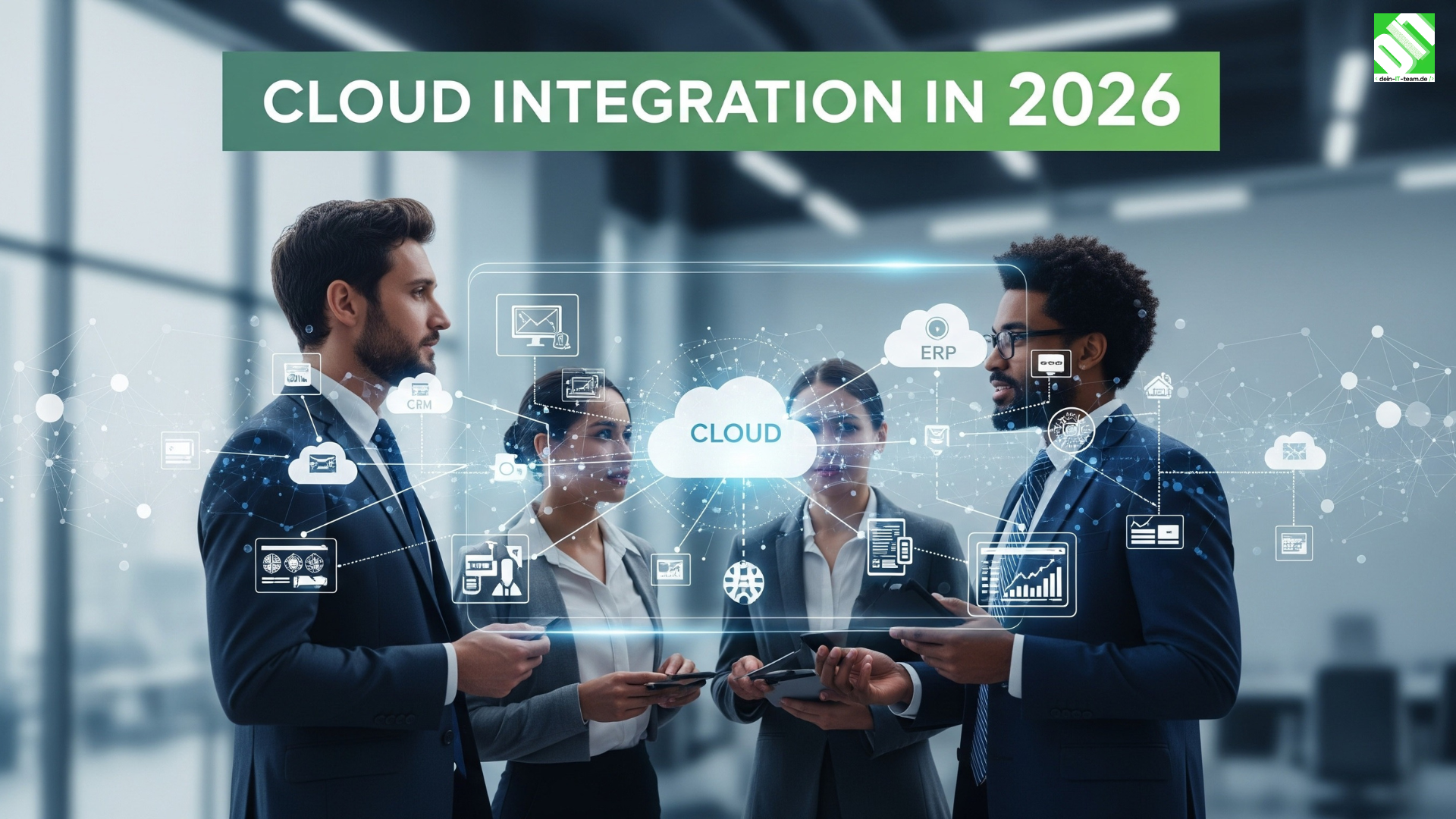
Find how cloud integration connects apps and data, improves workflows, and supports digital transformation. See real-world examples for 2026.
By 2026, enterprises will have moved from simple cloud adoption to fully orchestrated cloud integration solutions that connect apps, data, workflows, and AI systems into one unified digital ecosystem. Instead of treating each cloud tool as an isolated product, organizations now rely on connected platforms where information flows freely across CRMs, ERPs, data warehouses, analytics tools, and edge devices. This shift has transformed how companies operate, reducing workflow silos, improving automation, enabling real-time decision-making, and establishing a technology backbone that supports continuous innovation.
Cloud integration has become more strategic than ever. Organizations are no longer integrating tools just to sync data; theyre integrating to modernize their digital core, strengthen governance, and build a foundation where AI and automation can operate reliably. Whether a business runs on SaaS, multi-cloud, hybrid cloud, or on-premise systems, integration is now the engine that keeps everything connected.
Key Takeaways
-Cloud integration in 2026 is more intelligent, automated, and AI-powered than earlier approaches.
-It connects apps, data, and systems across hybrid, multi-cloud, edge, and on-prem environments.
-Modern integration platforms support real-time syncing, event-driven workflows, API-first architectures, and autonomous error handling.
-Businesses use it to streamline operations, reduce manual work, and strengthen analytics capabilities.
-There are multiple real-world examples, from CRM-ERP syncing to warehouse robotics integration, IoT pipelines, fintech connectivity, AI platform orchestration, and more.
What is Cloud Integration in 2026?
In 2026, what is cloud integration refers to a unified approach that brings together different digital systems, whether cloud, hybrid, or on-prem, so they can work as a single operational environment. Instead of fragmented platforms and isolated software, companies rely on centralized integration layers that coordinate data movement, govern security, automate workflows, and provide a consistent structure for managing applications across environments.
Modern integration emphasizes:
-AI-driven automation for mapping, cleansing, and routing data
-API-first ecosystems where internal and external services communicate seamlessly
-Real-time data pipelines instead of slow, scheduled sync jobs
-Autonomous error detection that fixes issues without human involvement
-Event-based communication allows systems to respond instantly to operational triggers
The focus in 2026 is not just on connecting platforms but on creating a digital operating model that improves speed, consistency, and intelligence across all business functions.
Why Cloud Integration Matters in 2026?
Digital systems have grown fast. Most mid-size companies now use over 120 SaaS tools along with public clouds, automation bots, IoT devices, and AI platforms. These tools generate large volumes of data that must stay aligned. When systems do not connect well, teams face delays, errors, and broken workflows. Businesses also struggle with cloud integration challenges when they try to move data across different platforms. A strong integration setup fixes these issues by linking everything into one smooth environment. This gives companies fast operations, clean data, and stable performance across all digital tools.
1. Multi-Cloud Dominance
Many companies use more than one cloud provider. They may keep databases on AWS, run analytics on Google Cloud, and host internal tools on Azure. Some businesses also keep private cloud systems for sensitive data. These different environments must talk to each other without conflict. Cloud integration helps them share data, sync workloads, and avoid duplicate work. When clouds connect well, teams can move applications easily, balance costs, and prevent downtime. It also lets companies choose the best cloud service for each task instead of depending on a single vendor.
2. AI-driven Operations
AI models need clean and complete data to work well. If the data comes in late or from disconnected systems, the model gives weak results. Integration solves this by sending data from apps, sensors, and platforms into AI engines in real time. It also applies rules to clean and format the information before the AI uses it. With proper integration, companies can automate decisions, speed up analysis, and detect issues faster. This creates smoother operations because AI tools always have the correct and latest information to work with.
3. Automation-first Workflows
Modern businesses rely on automation bots and event triggers to handle daily tasks. These bots only work when the systems behind them are connected. If apps do not sync, automation fails, tasks stop, and teams must fix problems manually. Good integration supports these workflows by giving bots constant access to updated data. It also allows events, like new orders or customer requests, to trigger actions instantly. This reduces manual work and speeds up processes. With stable connections between tools, companies can grow their automation setup without worrying about errors or system breakdowns.
4. Regulatory and Security Compliance
Companies must protect customer data and follow strict regulations. When systems are separate, it is hard to track where data goes or who accesses it. Integration helps by creating a controlled path for all information moving between platforms. It supports encryption, identity checks, monitoring logs, and permission rules. This makes it easier to meet compliance standards without extra manual work. Integrated systems also reduce the risk of leaks because data does not travel through unsafe channels. Companies gain better visibility and can prove compliance during audits with clear records and consistent rules.
5. Scaling Digital Transformation
When a business grows, it adds new tools, regions, teams, and workflows. Without integration, every new system increases complexity and slows progress. Connected systems help companies scale smoothly because data and apps remain aligned as they expand. Integration also prevents process breaks when new software is added. Teams can switch tools or launch new services without rebuilding their entire stack. This supports long-term digital transformation because the company can grow step by step while keeping stable operations. It creates a flexible base that supports future changes without causing disruptions.
Core Areas of Modern Cloud Integration
This pillar blog requires coverage of deep detail, so each area below is expanded thoroughly.
Application Integration
Application integration connects two or more software systems so they can share information in a reliable way. Companies in 2026 often use 20 to 50 apps for HR, sales, support, finance, logistics, and procurement. Each tool holds important data, and teams need these systems to work together. Modern integration platforms use API gateways, event triggers, and AI-based workflow mapping to reduce manual setup. They also support asynchronous communication, which means data still moves even if one system is offline. This stability is important for multi-cloud data integration because apps often run across different cloud environments. With strong integration, operations run smoother, errors drop, and every department sees the same accurate information.
Data Integration
Data integration provides a single, accurate source of truth across all enterprise systems. In 2026, companies rely heavily on real-time ingestion from SaaS platforms, connected devices, robotics equipment, POS systems, and financial platforms. With high data velocity, older ETL pipelines are no longer enough. Businesses use streaming ETL, data lakes, reverse ETL, and AI-based quality monitoring to ensure data remains synchronized. A strong integration structure improves analytics, forecasting, automation, and compliance reporting.
API Integration
APIs have become the backbone of digital enterprises. Modern integration uses API gateways that manage authentication, rate limiting, versioning, governance, and traffic flow. API integration allows internal systems, vendor platforms, and third-party services to interact seamlessly. For example, banks integrate fraud detection AI platforms, payment processors, and regulatory APIs into one unified ecosystem. In 2026, auto-generated APIs, AI-assisted API design, and decentralized integration flows have become standard.
Hybrid Cloud Integration
Most enterprises still run core workloads on-premise due to compliance, security, or legacy dependencies. Hybrid cloud integration connects legacy infrastructure with cloud-native systems so that organizations can modernize gradually instead of replacing systems overnight. Advanced middleware, container orchestration, API wrappers, and virtualization layers enable old and new systems to operate together. This ensures modernization without operational risks.
IoT and Edge Integration
IoT devices generate high-frequency data, temperature readings, inventory counts, machine performance metrics, energy consumption, etc. Edge systems process this data locally before sending it to cloud platforms. Integration ensures devices, sensors, edge processors, and central cloud systems form a unified ecosystem. It supports real-time monitoring, predictive maintenance, security alerts, and automation triggers.
Cloud Integration Examples
These examples also highlight the reasons small businesses should use cloud integration because it helps them automate workflows, reduce manual errors, and operate with the speed and accuracy of larger companies.
1. CRMERP Synchronization
Sales, finance, and operations often operate on separate systems. Integrating CRM and ERP platforms ensures customer orders, invoices, inventory levels, payments, and forecasting data remain synchronized. Instead of manual data entry, systems exchange information through APIs and event-driven triggers. This improves order accuracy, prevents inventory mismatches, and accelerates quote-to-cash cycles.
2. E-commerce Platform + Inventory & Warehouse Systems
Modern e-commerce brands must connect online storefronts, warehouse robots, shipping carriers, and customer support platforms. Integration automates inventory updates, order routing, shipment tracking, and refund handling. When a customer places an order, the event triggers warehouse picking and packing automatically, updates inventory instantly, and sends tracking details to the customer, all without manual intervention.
3. Finance Apps and Banking Systems
Accounting tools, payment gateways, tax platforms, and banking APIs must stay aligned. Integration ensures transaction data moves securely and instantly between platforms. AI-based reconciliation also operates through unified integration pipelines, reducing financial discrepancies and improving audit readiness.
4. Marketing Automation + Customer Data Platforms
Marketing campaigns rely heavily on accurate customer segmentation. Integration between CDPs, analytics, CRMs, and advertising platforms ensures personalization, correct attribution, and real-time campaign optimization. If a customer abandons a cart, the integrated system can trigger automated emails, ads, or push notifications based on unified behavioral data.
5. Manufacturing IoT + Cloud Analytics
Sensors on factory machines send performance data to the cloud. Integrated systems then analyze the data and trigger maintenance workflows when anomalies appear. This saves delay while increasing predictive maintenance performance.
6. Healthcare EMR + Telemedicine Platforms
Healthcare providers integrate electronic medical record systems with telehealth apps, diagnostics platforms, wearable devices, and billing systems. Integration improves patient experience, accelerates diagnosis, and ensures accurate medical history synchronization across multiple providers.
7. Gaming + Real-time Analytics Pipelines
Modern games rely on real-time cloud analytics to track player activity, detect fraud, optimize gameplay, and manage in-game economies. Integration ensures high-volume event data moves instantly from game servers to analytics and AI engines.
Role of Services & Consultants
Modern ecosystems are complex, and companies rely heavily on cloud integration services to handle architecture planning, tool selection, compliance, API strategy, automation workflows, data mapping, and long-term governance.
Consultants help companies:
-Design an integration architecture that fits business goals
-Modernize legacy systems gradually without disruption
-Implement scalable APIs and event-driven workflows
-Ensure data privacy and compliance during all integration flows
-Optimize performance, cost, and security
-Align automation strategies with organizational workflows
Their role in 2026 is both technical and strategic, helping businesses build stable, future-ready digital ecosystems.
Conclusion
Cloud connectivity is no longer optional, but its the foundation that supports every modern enterprise. Whether integrating SaaS platforms, legacy systems, IoT infrastructure, or AI engines, organizations rely on advanced cloud integration consultants to operate faster, smarter, and more securely. As digital ecosystems grow more complex, integration becomes the defining element that determines whether a company can scale with stability or gets blocked by fragmented systems. With the right strategy, tools, and expert partners, businesses can build a unified architecture that accelerates operations, improves decision-making, and prepares for the next decade of digital transformation.
FAQs
How is cloud integration different in 2026 compared to earlier years?
Integration is now AI-driven, automated, event-based, and designed for multi-cloud environments. Systems can detect failed workflows, self-correct data issues, and optimize performance without human intervention.
Do small businesses need cloud integration?
Yes. Even small companies use multiple SaaS tools, CRM, accounting, HR, analytics, marketing, and e-commerce platforms. Integration reduces manual work, improves accuracy, and creates smoother customer experiences.
How long does cloud integration typically take?
It depends on complexity. Simple SaaS-to-SaaS integration may take hours, while enterprise-wide integration involving ERP, IoT, and AI systems may take weeks or months. Using established integration services and platforms speeds up the process significantly.
Recent Posts
September 14, 2026

September 7, 2026