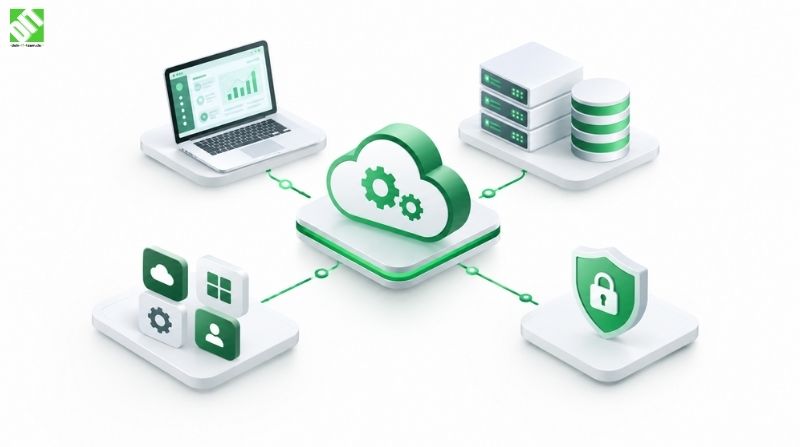
How Technology Gaps Quietly Slow Down Business Growth

Discover how technology gaps reduce efficiency, slow scalability, and impact business growth in modern organizations.
How Technology Gaps Quietly Slow Down Business Growth
Introduction
Many businesses invest heavily in digital tools, software platforms, and automation technologies to improve efficiency and accelerate growth. However, despite these investments, companies often continue facing operational delays, communication problems, and productivity challenges without fully understanding why.
One of the biggest hidden problems is the presence of technology gaps. These gaps occur when systems, processes, or tools fail to work together effectively, creating inefficiencies that slowly impact business performance over time.
Technology gaps are not always obvious in the beginning. They often appear through disconnected workflows, outdated software, poor scalability, or manual operations that reduce efficiency across departments. Businesses investing in scalable custom software development services are often better equipped to close these gaps and create more connected digital environments.
In this article, we’ll explore how technology gaps quietly slow down business growth and what companies can do to overcome them.
Key Takeaways
Technology gaps create hidden operational inefficiencies
Disconnected systems reduce productivity and scalability
Manual workflows increase costs and delays
Poor integration affects customer experience
Modern digital infrastructure supports long-term growth
1. Disconnected Systems Reduce Operational Efficiency
Many businesses use multiple software tools for communication, customer management, finance, and operations. However, when these systems are not properly connected, teams spend valuable time transferring data manually or switching between platforms.
This fragmentation slows down workflows and creates inconsistencies across departments. Businesses using reliable cloud integration services can improve connectivity between systems and streamline daily operations more effectively.
Disconnected systems not only reduce efficiency but also limit visibility into real-time business performance.
2. Manual Processes Quietly Increase Costs
Technology gaps often force employees to rely on repetitive manual tasks such as data entry, reporting, approvals, or spreadsheet management.
While these processes may seem manageable initially, they gradually consume significant time and resources as businesses grow. Manual operations also increase the likelihood of human error, which can lead to delays and operational disruptions.
Automation and optimized workflows help businesses reduce unnecessary operational overhead and improve productivity.
3. Outdated Software Slows Business Agility
Businesses operating with outdated systems often struggle to adapt to changing customer expectations and market demands.
Legacy software can limit flexibility, create compatibility issues, and reduce overall system performance. As digital competition increases, businesses need scalable solutions that can evolve alongside operational growth.
Companies investing in modern web application development solutions often gain better scalability, faster performance, and improved customer experiences.
4. Poor Technology Alignment Affects Customer Experience
Technology gaps do not only impact internal operations—they also affect customers directly.
Slow response times, inconsistent communication, delayed support, and disconnected customer experiences often result from inefficient systems and poor data synchronization.
Modern customers expect fast, seamless, and personalized interactions across digital platforms. Businesses that fail to modernize their systems risk losing customer trust and engagement.
5. Lack of Real-Time Data Limits Decision-Making
Businesses rely on accurate and timely information to make strategic decisions. However, disconnected systems and outdated infrastructure often make it difficult to access reliable real-time data.
Without centralized visibility, businesses struggle to identify inefficiencies, predict trends, or respond quickly to operational challenges.
A connected digital ecosystem improves visibility, reporting accuracy, and business intelligence capabilities.
6. Technology Gaps Limit Scalability
As businesses expand, operational complexity increases. Systems that once supported the organization may no longer handle larger workloads, growing customer demands, or advanced business processes efficiently.
Technology gaps become more visible during periods of rapid growth when businesses need flexible infrastructure and scalable operations.
Organizations that proactively modernize their digital environment are better prepared to adapt, innovate, and scale sustainably.
Solution / Recommendation
Businesses should regularly evaluate whether their current technology infrastructure supports operational efficiency, scalability, and future growth objectives.
Closing technology gaps does not always require replacing every system at once. In many cases, businesses can improve performance by modernizing outdated applications, integrating disconnected platforms, and automating repetitive workflows strategically.
The goal should be creating a connected digital environment where systems, teams, and processes work together efficiently.
Insight / Clarification
A common misconception is that technology gaps only affect large enterprises with complex infrastructure. In reality, growing businesses often experience these challenges more severely because their systems evolve rapidly without long-term planning.
Another misconception is that adding more software tools automatically improves efficiency. In many situations, too many disconnected platforms actually create more operational complexity.
The focus should always remain on building streamlined and scalable technology ecosystems that support both current operations and future business growth.
Conclusion
Technology should support business growth, improve efficiency, and enable better decision-making. However, when businesses operate with disconnected systems, outdated software, or inefficient workflows, technology can quietly become a barrier instead of an advantage.
Technology gaps often develop gradually, making them difficult to identify early. Over time, these inefficiencies impact productivity, increase operational costs, reduce scalability, and weaken customer experience. Many businesses continue facing performance issues without realizing that the root problem lies within their digital infrastructure.
The modern business environment requires connected, scalable, and flexible technology ecosystems that can adapt quickly to changing demands. Businesses that proactively address technology gaps are better positioned to improve collaboration, streamline operations, and respond faster to market changes.
Closing these gaps is not simply about adopting more technology—it is about implementing the right technology strategy. Companies that focus on integration, scalability, automation, and long-term digital alignment create stronger foundations for sustainable growth.
Ultimately, businesses that modernize their systems and eliminate operational inefficiencies gain a significant competitive advantage in today’s increasingly digital economy.
FAQs
What are technology gaps in business?
Technology gaps refer to inefficiencies created by disconnected systems, outdated software, manual workflows, or poor digital infrastructure.
How do technology gaps affect business growth?
They reduce productivity, increase operational costs, slow decision-making, and limit scalability.
Can small businesses face technology gaps?
Yes. Growing businesses often experience technology gaps when systems fail to scale with operational needs.
Recent Posts

September 18, 2026

September 24, 2026