
6 Mistakes Businesses Make When Hiring an IT Outsourcing Company
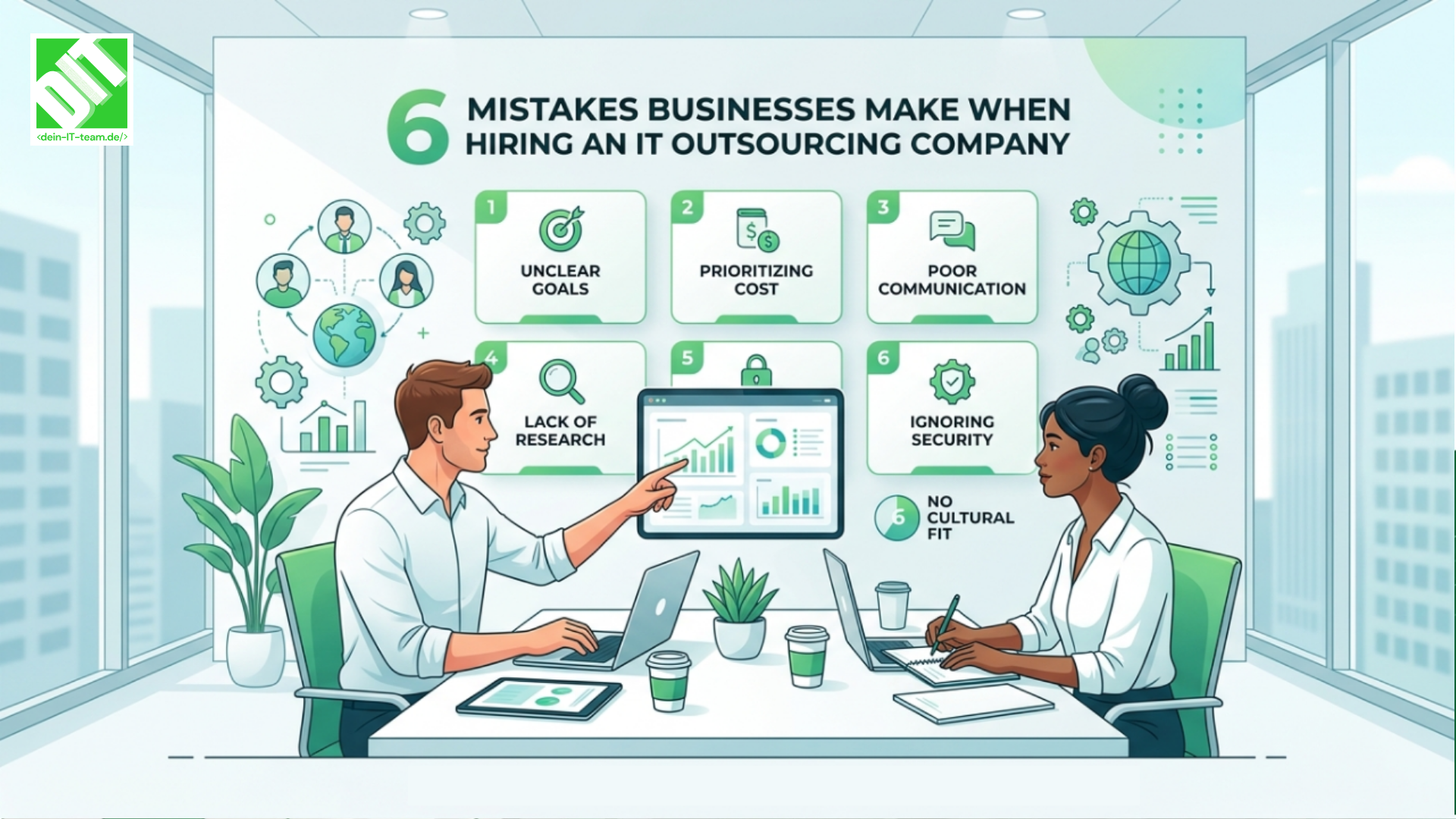
Avoid common IT outsourcing mistakes and learn how to choose the right outsourcing partner for your business.
IT outsourcing has become a strategic solution for businesses looking to reduce costs, access specialized expertise, and accelerate digital growth. From software development to cloud management and application support, outsourcing allows companies to scale operations more efficiently without expanding internal teams.
However, hiring the wrong outsourcing partner can create delays, communication gaps, security concerns, and unexpected costs. Many businesses focus only on pricing while overlooking 6 Mistakes Businesses Make When Hiring an IT Outsourcing Company factors that directly impact project success.
Choosing the right it outsourcing company can help businesses improve efficiency, scalability, and long-term operational performance.In this article, we’ll explore six common mistakes businesses make when hiring an IT outsourcing company and how to avoid them.
Key Takeaways
Choosing based only on cost can create long-term problems
Communication and transparency are critical
Technical expertise should match business goals
Scalability and flexibility matter for future growth
Security and support should never be overlooked
1. Choosing the Cheapest Option Instead of the Best Fit
One of the most common outsourcing mistakes is selecting a provider based solely on low pricing. While cost savings are important, choosing the cheapest provider often results in lower quality, missed deadlines, and poor communication. Businesses may eventually spend more fixing issues than they initially saved.
The right outsourcing partner should provide a balance between technical expertise, reliability, scalability, and long-term value.
2. Ignoring Industry Experience
Not all outsourcing companies understand every industry. Businesses often hire vendors without evaluating whether they have experience handling similar projects or operational requirements. Industry-specific expertise helps outsourcing teams understand workflows, compliance requirements, customer expectations, and technical challenges more effectively.
Experienced providers offering custom software development company solutions often deliver better alignment with business goals and project requirements.
3. Poor Communication and Collaboration
Communication issues are one of the biggest reasons outsourcing projects fail. Lack of transparency, delayed responses, and unclear expectations can quickly create misunderstandings between businesses and outsourcing teams.
Successful outsourcing relationships require regular communication, clear reporting structures, and collaborative workflows to ensure alignment throughout the project lifecycle.
4. Overlooking Scalability and Long-Term Support
Some businesses focus only on immediate project delivery without considering future growth and support requirements.As businesses scale, technology needs evolve. Outsourcing partners should be capable of supporting system upgrades, feature expansions, and ongoing maintenance.
Working with scalable application development services companies helps businesses build solutions that continue to support operational growth over time.
5. Failing to Evaluate Security Standards
Outsourcing often involves sharing sensitive business information, customer data, and internal systems access.
Businesses that fail to evaluate a provider’s security practices expose themselves to cybersecurity risks and compliance issues. Secure infrastructure, access control, and data protection policies should always be carefully reviewed before starting any engagement. Security should never be treated as an afterthought.
6. Not Defining Clear Project Expectations
Many outsourcing challenges occur because businesses fail to define project scope, timelines, and deliverables clearly from the beginning. Without proper planning, projects may experience delays, budget overruns, and misaligned expectations.
Businesses should establish clear communication channels, documentation, performance expectations, and measurable objectives before development begins.
Solution / Recommendation
Hiring the right outsourcing company requires more than comparing pricing or technical skills alone. Businesses should evaluate outsourcing partners based on communication, scalability, security, technical expertise, and long-term collaboration potential. A strategic outsourcing relationship should function as an extension of the internal team rather than just a third-party vendor.
The best outsourcing partnerships focus on transparency, shared goals, and long-term business value.
Insight / Clarification
A common misconception is that outsourcing automatically reduces quality or control. In reality, the success of outsourcing depends largely on choosing the right partner and establishing strong collaboration processes.
Another misconception is that outsourcing only benefits large enterprises. Many growing businesses use outsourcing to access specialized expertise, accelerate development, and scale operations more efficiently. When managed correctly, outsourcing can improve flexibility, reduce operational pressure, and support faster innovation.
Conclusion
IT outsourcing can help businesses improve efficiency, reduce operational pressure, and accelerate digital growth. However, choosing the wrong outsourcing partner can lead to communication gaps, scalability issues, security concerns, and delayed project delivery.
Businesses should look beyond pricing and focus on factors such as technical expertise, industry experience, collaboration processes, and long-term support capabilities. A reliable outsourcing partner should not only deliver technical solutions but also understand business objectives and future growth requirements.
By avoiding common outsourcing mistakes and building strong collaboration from the beginning, companies can create more scalable, efficient, and successful technology operations. The right outsourcing strategy can ultimately become a valuable competitive advantage in today’s fast-changing digital landscape.
FAQs
How do businesses know when it’s the right time to outsource IT operations?
Businesses usually consider outsourcing when internal teams struggle with scaling, project delivery slows down, technology costs increase, or specialized expertise is required for digital transformation initiatives.
Can IT outsourcing improve software development speed?
Yes. An experienced outsourcing partner can accelerate development timelines by providing access to skilled teams, modern technologies, and streamlined delivery processes without the delays of internal hiring.
How can businesses avoid communication problems with outsourcing teams?
Clear project documentation, regular progress updates, defined workflows, and transparent collaboration processes help businesses maintain alignment and reduce misunderstandings throughout the project lifecycle.
Recent Posts

September 23, 2026
September 23, 2026