How Legacy Software Slows Business Growth
Learn how legacy software affects business growth, productivity, scalability, and security—and discover effective modernization strategies.
Technology should help businesses grow, not hold them back. However, many organizations still rely on legacy software that was built years ago and no longer meets modern business requirements. While these systems may continue to function, they often create hidden challenges that affect productivity, scalability, and innovation.
As markets become more competitive, businesses need flexible and efficient technology to support growth. Many organizations invest in custom software development to replace outdated systems and build solutions that align with their current and future needs.
In this article, we'll explore how legacy software slows business growth, the warning signs to watch for, and what businesses can do to modernize successfully.
What is Legacy Software?
Legacy software refers to older applications or systems that are still being used despite being built on outdated technologies. These systems may continue to perform basic functions, but they often struggle to meet modern business demands.
In many cases, legacy software lacks integration capabilities, receives limited support, and becomes increasingly difficult to maintain. While replacing such systems may seem expensive initially, continuing to rely on them often costs more in the long run.
How Legacy Software Slows Business Growth
Reduced Productivity
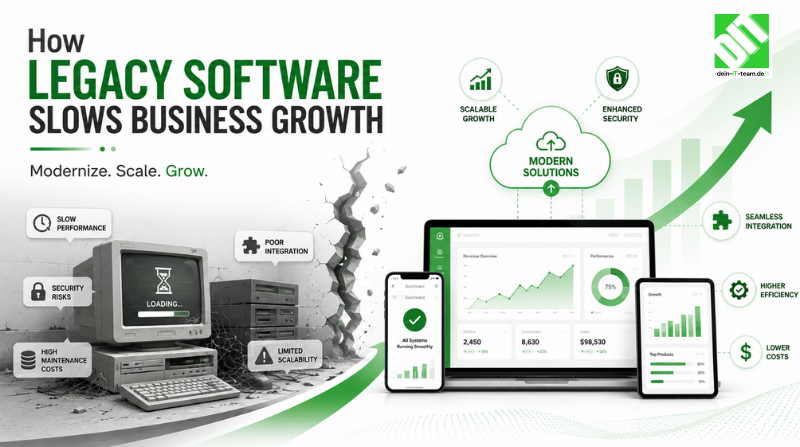
One of the biggest issues with legacy software is inefficiency. Employees often spend extra time working around limitations, manually transferring data, or dealing with slow system performance. Tasks that should take minutes can take significantly longer, reducing overall productivity and preventing teams from focusing on higher-value activities.
Limited Scalability
As businesses grow, their software must grow with them. Legacy systems are often built for smaller workloads and struggle to handle increased users, data volumes, or new business requirements. This creates bottlenecks that slow down expansion and make it harder to respond to changing market demands.
Higher Maintenance Costs
Older systems typically require ongoing maintenance, patches, and specialized expertise. In many cases, businesses continue paying significant amounts just to keep outdated systems operational. These costs can quickly add up without providing meaningful improvements or business value.
Security Vulnerabilities
Cybersecurity threats continue to evolve, but many legacy systems lack modern security features and updates. Unsupported software can become an easy target for cyberattacks, data breaches, and compliance issues. Protecting sensitive business and customer data becomes much more difficult when relying on outdated technology.
Poor Integration Capabilities
Modern businesses use multiple platforms, applications, and services. Legacy software often struggles to integrate with newer tools, creating disconnected systems and inefficient workflows. Many organizations work with a custom software engineering services provider to modernize their infrastructure and ensure seamless connectivity between systems.
Slower Innovation
Businesses that depend on outdated software often find it difficult to introduce new features, automate processes, or adopt emerging technologies. This lack of flexibility can place companies behind competitors that are using modern systems to innovate and improve customer experiences.
Warning Signs Your Software Is Holding You Back
Frequent System Downtime
If your software regularly crashes or experiences performance issues, it may be struggling to support your current operations. Frequent downtime not only affects productivity but can also damage customer trust and satisfaction.
Difficulty Adding New Features
Modern businesses evolve constantly. If adding new functionality requires excessive time, resources, or workarounds, your software may no longer be suitable for your needs.
Dependence on Manual Processes
When employees repeatedly rely on spreadsheets, emails, or manual data entry because the software cannot automate tasks effectively, it is often a sign that modernization is needed.
Lack of Vendor Support
Older software products may no longer receive updates, bug fixes, or security patches from vendors. This increases both operational and security risks.
What to Do About Legacy Software
Assess Current Limitations
The first step is understanding how your existing software affects operations. Identify pain points, inefficiencies, security concerns, and growth limitations. A thorough assessment helps determine whether modernization, replacement, or complete redevelopment is the best approach.
Prioritize Business Goals
Software modernization should support business objectives. Whether your goal is improving efficiency, enhancing customer experiences, or scaling operations, the technology strategy should align with those priorities.
Consider Modernization Options
Not every legacy system needs to be completely replaced. Some applications can be upgraded, integrated, or migrated to modern platforms while preserving valuable functionality. The right approach depends on your business requirements, budget, and long-term goals.
Partner with Experienced Experts
Modernization projects can be complex. Working with specialists who offer custom application development can help ensure a smoother transition while minimizing disruption to daily operations. Experienced development teams can identify the most effective modernization strategy and implement scalable solutions designed for future growth.
Common Misconceptions About Legacy Software
If It Still Works, It Doesn't Need Replacing
Many businesses assume functioning software does not require attention. However, outdated systems often create hidden costs, security risks, and operational inefficiencies that become more expensive over time.
Modernization Is Always Expensive
While modernization requires investment, the long-term benefits often outweigh the costs. Improved efficiency, lower maintenance expenses, and better scalability can generate significant returns.
Legacy Systems Cannot Be Improved
Not every outdated system requires complete replacement. Many organizations successfully modernize existing applications through upgrades, integrations, or phased redevelopment.
Insight for Better Decision-Making
Modernization is not simply a technology project it is a business growth initiative. The goal should be to remove barriers that limit productivity, innovation, and scalability. Before deciding whether to upgrade or replace existing systems, it's also worth understanding Custom Software vs Off-the-Shelf Solutions: What Works Best for Your Business?. This can provide additional clarity when evaluating long-term technology investments.
Conclusion
Legacy software may appear stable on the surface, but it often creates hidden challenges that slow business growth. From reduced productivity and limited scalability to rising maintenance costs and security concerns, outdated systems can prevent organizations from reaching their full potential.
Businesses that proactively modernize their technology infrastructure are better positioned to adapt to changing market demands, improve operational efficiency, and deliver better customer experiences. Modern systems not only support current business needs but also create a strong foundation for future innovation and expansion.
Investing in the right custom software development services strategy allows businesses to overcome the limitations of legacy software and build scalable solutions that support long-term success.
FAQs
1. What is legacy software?
Legacy software refers to older applications or systems that continue to be used despite being built on outdated technologies and architectures.
2. Why is legacy software a problem for businesses?
Legacy software can reduce efficiency, increase maintenance costs, create security risks, and limit a company's ability to scale and innovate.
3. Should businesses replace or modernize legacy software?
The best approach depends on business goals, system condition, and budget. Some systems can be modernized, while others may require complete replacement.