

Predictive AI vs. Generative AI: Choosing the Right Data Model to Drive Enterprise Automation
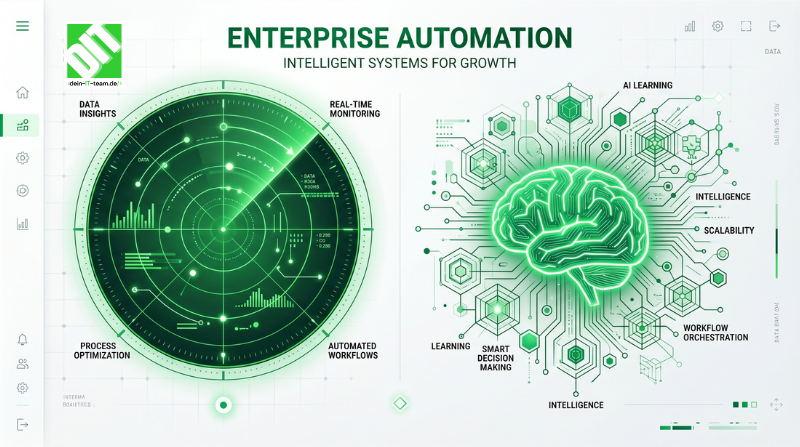
Stop wasting tech budget. Learn the architectural differences between predictive and generative AI to select the optimal model for enterprise automation.
The corporate race to integrate artificial intelligence often hits a major roadblock: mistaking all AI frameworks for the same general technology. When enterprise leaders look to optimize complex operational pipelines, they frequently assume a singular, all-purpose machine learning framework can handle every task. For example, deploying a highly conversational large language model to manage backend financial data sorting or supply chain log predictions will inevitably yield inaccurate outcomes. A creative model built to generate new data rows cannot cleanly compute rigid statistical math.
To drive meaningful efficiency gains, technical decision-makers must distinguish between creative and mathematical data structures. Choosing the right framework ensures that corporate automation engines operate with strict precision. Partnering with a specialized artificial intelligence development provider allows enterprises to map their specific business logic to the correct algorithmic model, protecting development budgets from being consumed by market hype.
Key Takeaways
Generative and predictive AI are fundamentally different data models designed for entirely distinct operational use cases.
Predictive AI models rely on deep statistical analysis of historical records to accurately forecast future business outcomes.
Generative AI excels at synthesizing, summarizing, and producing entirely new structured content types from complex data inputs.
Deploying the wrong model for strict calculations can lead to systemic algorithmic hallucinations and data compliance issues.
True intelligent automation combines both AI models with specialized software systems to replace manual bottlenecks.
The Analytical Foundation of Predictive Architecture
Predictive AI operates as a mathematical forecasting engine. Instead of creating something brand new, predictive machine learning models look deep into historical enterprise datasets to find hidden patterns, correlations, and trend lines. Once these statistical patterns are locked in, the algorithm calculates the statistical probability of a specific future event occurring within a set timeframe.
This mathematical certainty makes predictive models indispensable for structural risk management and resource distribution. In modern corporate ecosystems, predictive data models are deployed to manage warehouse supply chains, identify fraudulent credit card transactions, flag hardware maintenance needs on server farms, and score prospective sales pipelines. For highly regulated sectors, these numerical engines drastically reduce manual auditing timelines. Reading about what is AI in healthcare highlights exactly how predictive neural networks analyze clinical metrics to identify early patient risks long before physical symptoms appear.
The Creative Capabilities of Generative Frameworks
While predictive models focus on analysis and forecasting, generative AI is engineered to synthesize entirely new information layers. Built on neural networks containing billions of variable parameters, generative architectures read vast libraries of unstructured information to understand the fundamental relationship patterns between words, code blocks, or pixels.
This synthesis capability makes generative tools highly effective for automating human-to-computer interfaces. Generative systems excel at summarizing lengthy legal documents, generating clean software code snippets, and writing localized marketing materials.
However, because these systems function by predicting the most statistically likely next asset in a sequence rather than validating objective data tables, they are prone to structural errors or "hallucinations" if tasked with absolute mathematical logic. To prevent these performance gaps, enterprise tech stacks must isolate generative interfaces behind secure validation APIs engineered through precise custom software development protocols.
Architectural Alignment: Pairing Models with Business Tasks
Achieving a high return on investment (ROI) from enterprise automation requires technical leaders to match their explicit business problems with the correct backend engine. Using an advanced generative model to predict next quarter’s customer churn metrics will yield poor results, just as a rigid predictive model cannot draft an email response to an angry customer.
| Enterprise Automation Challenge | Primary AI Model Required | Core Technical Output |
| Inventory Shortage Forecasting | Predictive AI | Numerical Probability Matrix |
| Customer Support Ticket Categorization | Predictive AI | Algorithmic Routing Triage |
| Dynamic API Integration Drafts | Generative AI | Raw Code Base Output |
| Cross-Border Agreement Summaries | Generative AI | Natural Language Documentation |
The most effective modern automation platforms do not choose one model over the other; they orchestrate them together. For example, a predictive model identifies an impending supply chain delay, while a generative model drafts supplier alerts. To handle these heavy multi-model data transactions smoothly without creating systemic network lag, organizations rely on robust cloud integration services to balance the compute loads across distributed server farms. By cleanly separating tasks, enterprises can confidently scale their digital transformation roadmaps.
Conclusion
Maximizing the value of artificial intelligence requires leaving generalized assumptions behind and embracing precise engineering alignment. Predictive AI provides the deep analytical foresight needed to optimize data-heavy business pipelines, while generative AI delivers the semantic understanding required to streamline communication and content tasks. By deploying each data model to its full algorithmic strength, technology executives eliminate costly system errors, reduce operational overhead, and build a resilient digital architecture designed for continuous automation scaling.
Frequently Asked Questions
Can predictive AI models generate human-like text or customer email responses?
No. Predictive AI models are purely analytical engines built to output numerical forecasts, risk scores, and trend classifications based on historical records. Drafting natural human text requires a generative architecture, such as a Large Language Model (LLM).
What is an AI hallucination, and why does it happen in generative software models?
An AI hallucination occurs when a generative model creates a response that sounds confident but is factually incorrect or mathematically flawed. This happens because generative models are built to predict the most creative, plausible sequence of words or pixels rather than verify factual database tables.
How do engineering teams combine predictive and generative AI inside custom software?
Engineers use an orchestrated API layout. For instance, in an automated finance platform, a predictive AI model scans transactional data rows to flag an anomaly, and then triggers a generative AI model to automatically compile a summary report for human compliance teams to review.
Recent Posts



October 16, 2026