

Nearshore Software Development Companies: Managing Remote Agile Teams for Maximum ROI
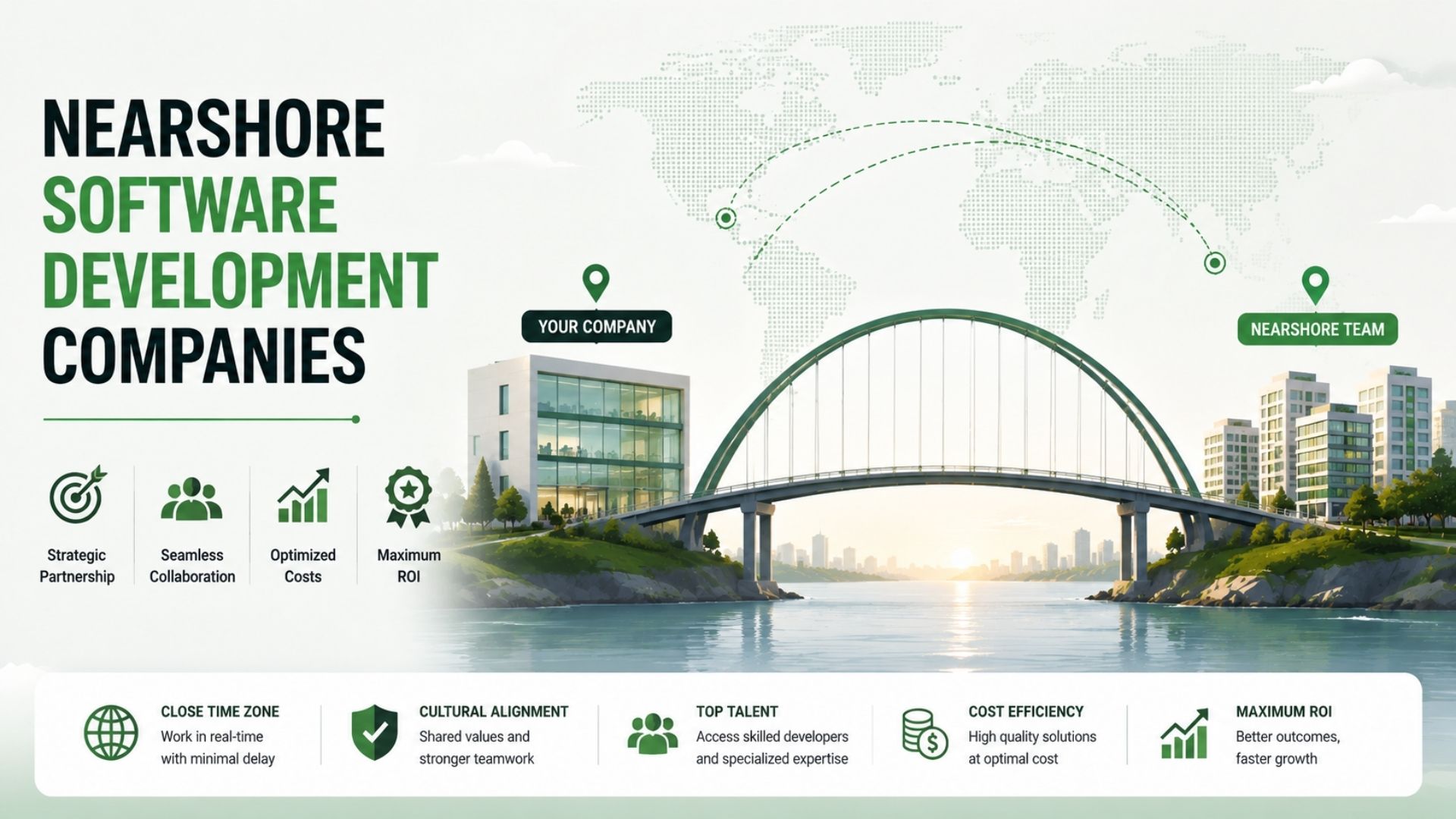
Scale agile teams with top nearshore software development companies. Banish hiring gaps and maximize project ROI.
In a digital landscape where enterprise processing requirements demand unmatched velocity, selecting an optimal resource model is one of the most critical decisions a technical stakeholder can make. For corporate decision-makers, software infrastructure must act as a driver of commercial scaling rather than a source of continuous technical debt. While maintaining traditional in-house tech squads can introduce heavy domestic recruitment friction and steep structural overheads, modern software alignment demands an ecosystem optimized for budget flexibility, deployment velocity, and real-time team collaboration. Partnering with top-tier nearshore software development companies allows expanding organizations to deploy specialized engineering talent that operates within identical European time zones, establishing highly efficient development pipelines without sacrificing clear, immediate communication lines.
Key Takeaways
Time Zone Alignment: Operating within identical or closely overlapping European business hours enables fluid, real-time collaboration without operational delays.
Drastic Cost Optimization: Eliminating steep domestic recruitment overheads minimizes structural expenses while retaining premier elite talent pools.
Agile Team Integration: Nearshore engineering squads integrate naturally into existing Agile environments, maintaining project velocity and sprint schedules.
Strategic Scalability: Flexible nearshore squad allocations allow businesses to scale up computing, database, or project pipelines efficiently on demand.
Eliminating the Communication Bottlenecks of Traditional Outsourcing
When mid-market enterprises opt for offshore software expansion models, the extreme geographical distances often introduce debilitating operational friction. Engineering updates face major delays, daily standup synchronization breaks down across opposing hemispheres, and minor miscommunications can snowball into extensive development delays. These friction points lower team processing speeds, stall launch targets, and cause severe gaps between executive specifications and actual code outputs.
Transitioning to professional nearshore software development companies directly bypasses these timezone obstacles. By deploying experienced software engineers who share your exact working parameters, corporate teams ensure constant operational continuity. This real-time visibility allows for seamless product iteration loops, instant code reviews, and high-velocity bug containment pathways that safeguard your operational roadmap metrics.
Strategic Sourcing: Finding Elite Talent for Complex Enterprise Projects
Securing top-tier technical proficiency for specialized systems—such as advanced web solutions or custom mobile utilities—has become exceptionally difficult in highly competitive domestic hiring spaces. Companies frequently find themselves caught in prolonged recruitment battles, driving up cost lines while stalling technical momentum.
An integrated nearshore team model completely solves this resource constraint by opening direct access to broad, highly verified talent pools across neighboring tech centers. Whether your product roadmap requires robust microsoft application development capabilities or modern front-end engineering, nearshore frameworks provide custom software development solutions prepared to build highly stable corporate platforms engineered to process heavy transactional workloads with absolute confidence.
Accelerating Sprint Consistency and Product Ownership
Deploying a dedicated software development team through a nearshore structure ensures that your product owners retain full transparency over individual delivery benchmarks. Rather than dealing with fragmented freelance contracts that increase technical debt, nearshore engineering models integrate long-term specialized resources directly into your core workflow pipelines. This structured approach helps corporate leaders:
Maintain clean documentation standards across all repository layers.
Eliminate local talent acquisition backlogs and HR management strains.
Foster true shared accountability over final product outcomes.
Designing High-Velocity Workflows Within an Enterprise Software Architecture
Managing a cross-border agile team effectively requires a foundational focus on robust system design. When building complex technical frameworks, remote engineers must be equipped with unified staging environments, clear automated documentation patterns, and responsive tracking boards. This ensures that every line of code committed to your central database directly moves the needle on your broader digital scaling objectives.
Without a well-planned enterprise software architecture, adding remote developers to a project can accidentally introduce structural dependencies and performance bottlenecks. By focusing heavily on clean modular layouts, continuous integration pipelines, and descriptive microservices from the start, a nearshore development squad ensures that your technical infrastructure remains elastic enough to scale capacity instantly during major business expansion phases. To see how foundational structural choices directly translate into raw corporate efficiency, reviewing our detailed analysis on How Scaling Your Company Requires Custom Digital Tools gives your leadership team a transparent look at optimizing software product lifecycles.
Establishing Seamless Onboarding Frameworks for External Engineering Squads
A primary operational failure point when expanding a digital workspace isn't the technical skill of the engineers, but rather a fragmented initial onboarding protocol. When specialized remote developers are added to a project without a structured framework, teams waste valuable weeks simply trying to understand legacy directory permissions or siloed environment variables. This initial execution friction heavily deflates early project velocity and drains immediate financial resources.
To maximize structural output right from day one, nearshore software development models utilize standardized knowledge transfer runbooks. By providing remote developers with pre-configured containerized developer environments and explicit API mock endpoints, tech leads remove environment configuration friction. This systematic clarity allows external teams to push their first verified pull request within the initial sprint cycle, ensuring your company realizes immediate technical value.
Mitigating Retention Risks and Geographic Turnover Strains
Relying entirely on a domestic tech hiring ecosystem exposes expanding corporations to volatile domestic turnover rates and constant wage bidding wars. When a core senior platform architect suddenly leaves your organization, the time required to find, vet, and onboard a local replacement can paralyze critical technical roadmaps for several quarters, causing missed delivery timelines and high internal friction.
Transitioning code delivery modules toward established nearshore teams builds strong, permanent operational safety cushions. Nearshore providers assume the full responsibility of talent retention, professional training, and background HR engineering. If a specific developer needs to be rotated out, the nearshore framework delivers immediate, pre-vetted replacement talent without interrupting live sprint outputs or forcing your leadership team to endure costly local recruitment cycles.
Conclusion: Driving Competitive Advantage via Strategic Sourcing
Sourcing premium engineering talent from top nearshore software development companies is no longer just a quick tactical budgeting choice; it is a powerful corporate business strategy required to protect your market share, accelerate product deployment timelines, and maximize your software engineering budget. By embedding synchronized nearshore teams into your core software engineering pipelines, you systematically remove the recruitment barriers and communication delays that restrict your team's day-to-day productivity. This agile operational model provides the immediate flexibility required to outperform changing market landscapes, turning your product infrastructure into a high-value driver of permanent, long-term commercial growth.
Frequently Asked Questions
What distinguishes nearshore software development companies from offshore alternatives?
Nearshore development companies operate within nearby geographical regions sharing identical or highly overlapping time zones, enabling real-time collaboration. Offshore alternatives are located in distant time zones, which frequently introduces communication lags and operational coordination friction.
How do nearshore engineering teams handle daily communication and standups?
Because nearshore squads operate within your exact working hours, they participate naturally in your standard daily Agile standups, instant messaging threads, and live planning sessions, ensuring total engineering alignment throughout the day.
Can a nearshore software development team secure complex legacy migrations safely?
Yes. Established nearshore providers deploy veteran backend engineers and cloud architects capable of systematically analyzing, optimizing, and modernizing aging legacy environments while maintaining total operational security and system uptime boundaries.
Recent Posts

September 30, 2026

September 28, 2026
September 24, 2026